
Why AI resembles a charismatic religious leader
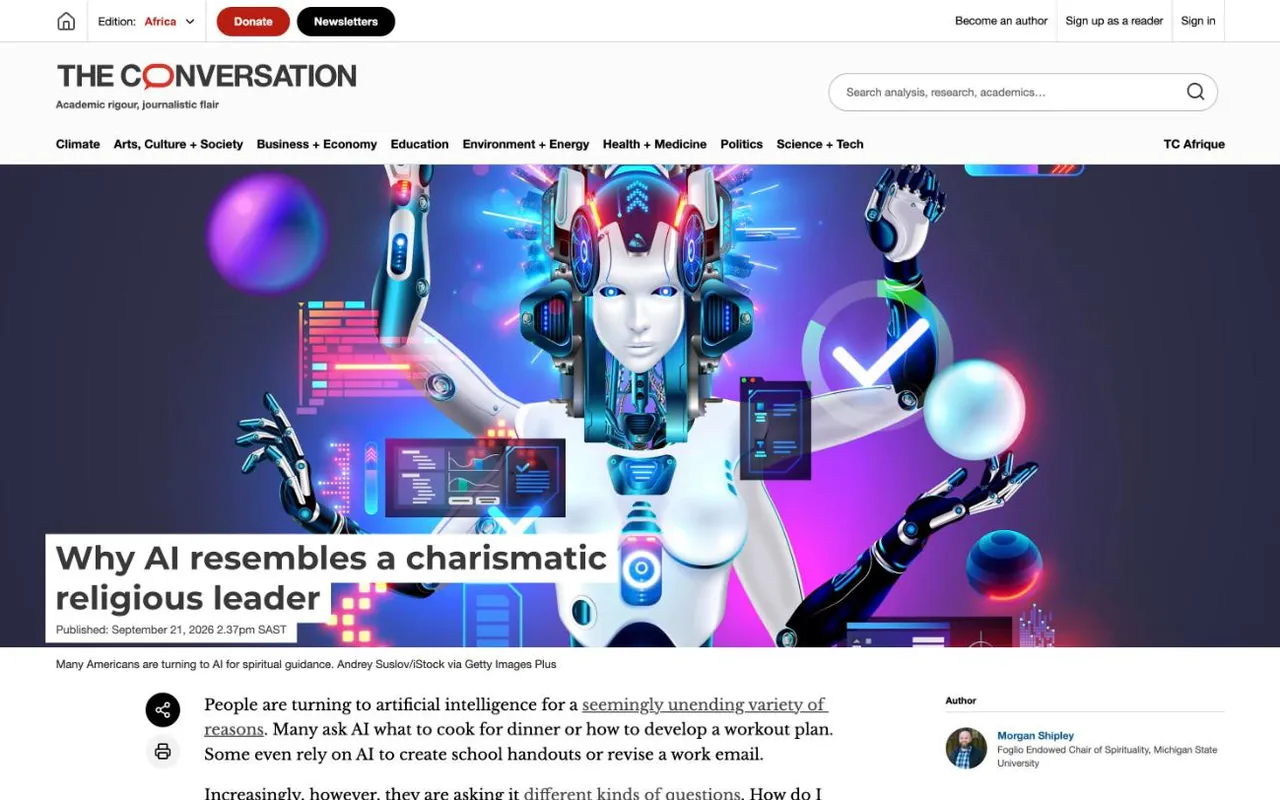

Morgan Shipley, a scholar of religion at Michigan State University who studies new religious movements, argues in The Conversation that users can enter "something resembling a charismatic relationship" with AI, in Max Weber's sense of charismatic authority; recent scholarship calls this "generative charisma", and some argue that AI becomes charismatic "one person at a time". Shipley leaves aside whether AI currently qualifies as a religion and suggests that it "provides conditions from which new forms of religiosity can develop", as in spiritual chatbots such as GitaGPT and HolyGPT, and warns that focusing only on "AI churches" such as Anthony Levandowski's Way of the Future "may obscure more consequential issues". The Pew figures it cites are about emotional support or advice: about one in ten US adults, one in five under 30. It cites scholars' warnings of "authority without accountability" and asks who regulates AI's "algorithmic authority".
Was this useful?