
QFM034: Elixir Reading List - September 2024
 Source: Photo by Arthur Mazi on Unsplash
In September’s Elixir Reading List, we start with a focus on how Elixir can power both flexibility and reliability. Adapter and Strategy Patterns in Elixir demonstrates how these design patterns enhance code maintainability, showcasing the benefits of adaptable interfaces in high-performance applications such as payment processing. Similarly, Config.exs is Simple and Other Lies by Łukasz Niemier dives into the complexities of configuration management, emphasising the pitfalls and solutions that come with configuring Elixir applications effectively.
Admin interface creation also makes a notable appearance this month. Building Beautiful Admin Dashboards in Phoenix with Backpex offers insights into setting up clean, user-friendly dashboards in Phoenix using Backpex, which can enhance productivity in admin environments. On a similar note, LiveView Modules Must End in 'Live' provides a closer look at naming conventions within Phoenix LiveView, exploring the implications for maintainability and avoiding compilation errors. These articles underscore the importance of a structured approach in Elixir applications, particularly for developers building scalable, responsive interfaces.
In more interactive contexts, How to implement primitive 'Did you mean ...?' functionality in Elixir presents a practical implementation of error handling through a Jaro Distance metric for user inputs, further exemplifying how Elixir can be applied to improve user experience. Meanwhile, the video State (Machine) Of Enlightenment explores how OTP’s state machine offers a streamlined alternative to GenServer, highlighting its ability to handle complex states efficiently, particularly in large applications.
As we transition to mobile, Introducing LVN Go sheds light on DockYard’s new tool for LiveView Native, which allows developers to streamline their workflows by bypassing Xcode. This tool, along with the tutorial Create Your First LiveView Native App - Part 1, illustrates how Elixir and Phoenix are expanding into mobile development, making the framework increasingly versatile for a broader range of applications.
Throughout this month’s reading, the recurring theme is Elixir’s adaptability to varied development needs, from robust web and mobile interfaces to advanced error handling and efficient system management. The articles collectively demonstrate the language’s suitability for both back-end reliability and front-end flexibility, affirming Elixir’s growing role in building maintainable, efficient applications in diverse technical landscapes.
As always, the Quantum Fax Machine Propeller Hat Key will guide your browsing. Enjoy!
Propeller Hat Key
- 1 of 5:
- Mentions Elixir and related technologies
- 2 of 5:
- Talks about the Elixir ecosystem in real-world use cases
- 3 of 5:
- Talks about technical details of Elixir ecosystem components
- 4 of 5:
- Using and working with Elixir ecosystem technologies in software
- 5 of 5:
- Programming new Elixir technology concepts and implementations
Links

DockYard's CEO Brian Cardarella introduces LVN Go, an app designed to enhance the developer experience for LiveView Native applications. LVN Go allows developers to bypass Xcode, offering a streamlined process by running applications directly from a device. Available on the Apple App Store, this new tool aims to address many of the frustrations developers face with Xcode.
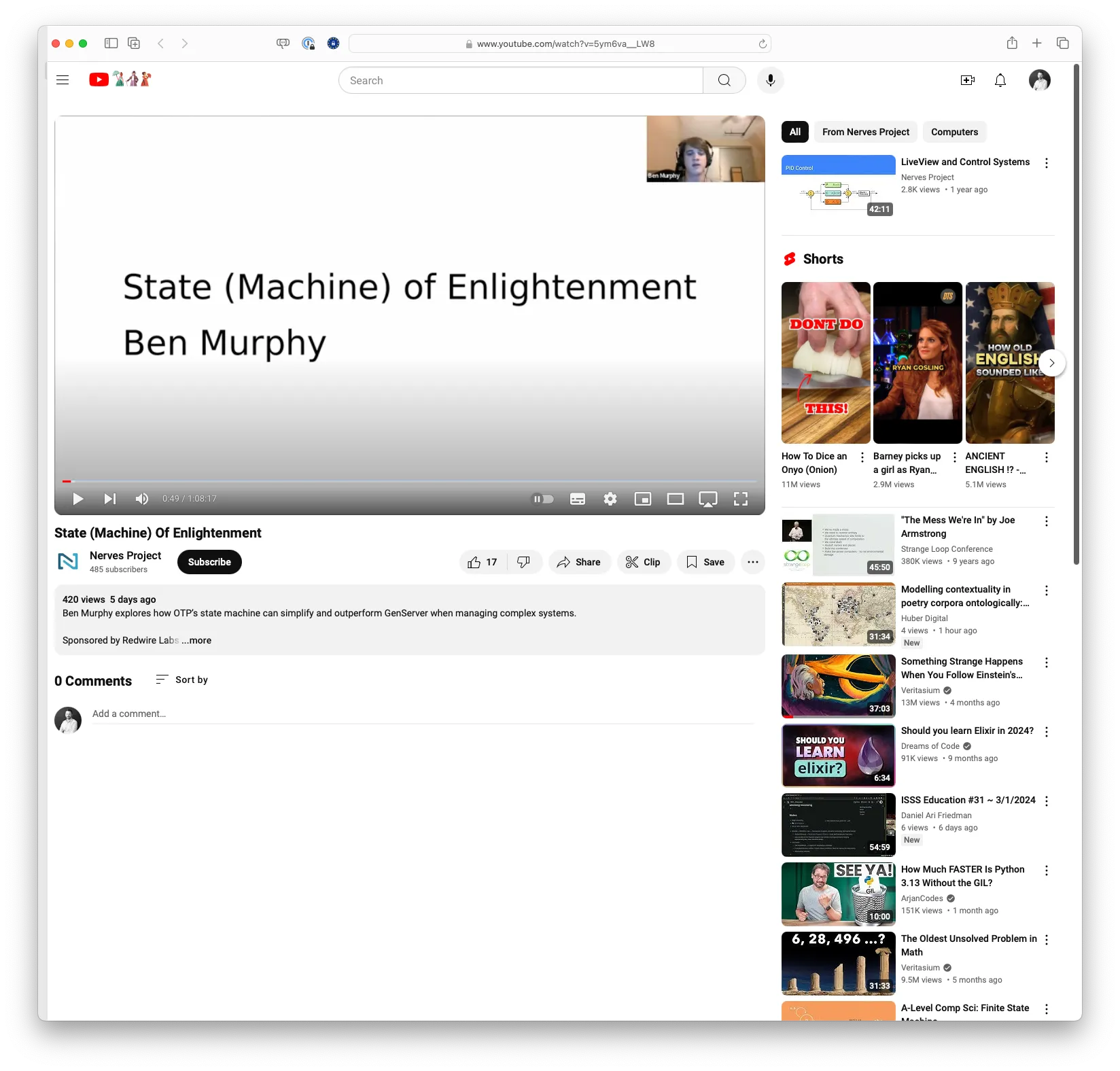
In "State (Machine) Of Enlightenment," Ben Murphy delves into how OTP’s state machine can simplify and outperform GenServer in managing complex systems. Sponsored by Redwire Labs, this talk provides an in-depth look at managing system complexities with efficiency.
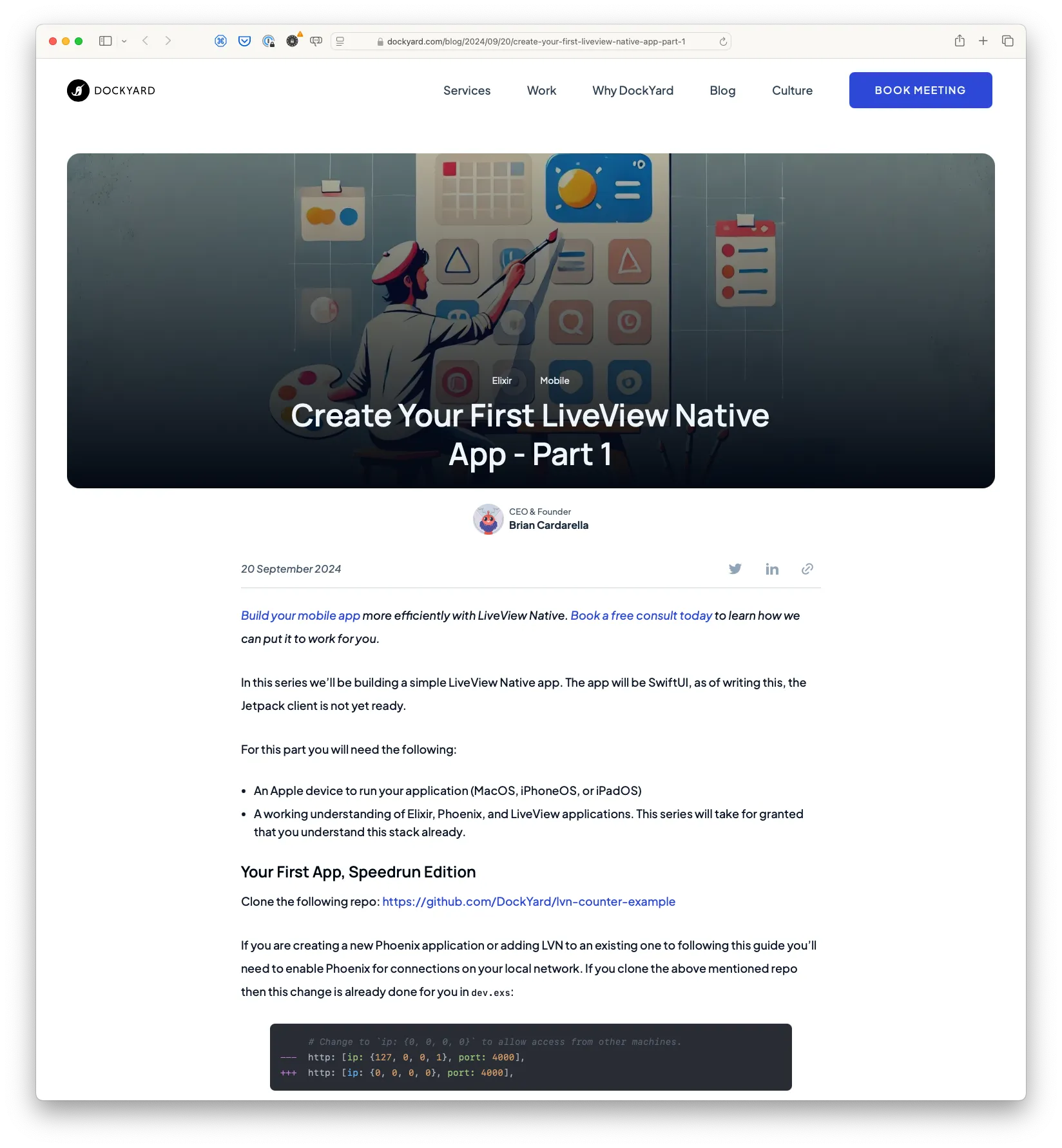
This article serves as an introductory guide for building your first LiveView Native app using SwiftUI. The guide walks through the initial steps, including necessary prerequisites like having an Apple device and a working understanding of Elixir, Phoenix, and LiveView applications. It details cloning the example repo, setting up dependencies, making edits to configuration files, and finally customizing styles. The article culminates in creating a functioning counter application with interactive buttons, providing further steps for styling and code refactoring.
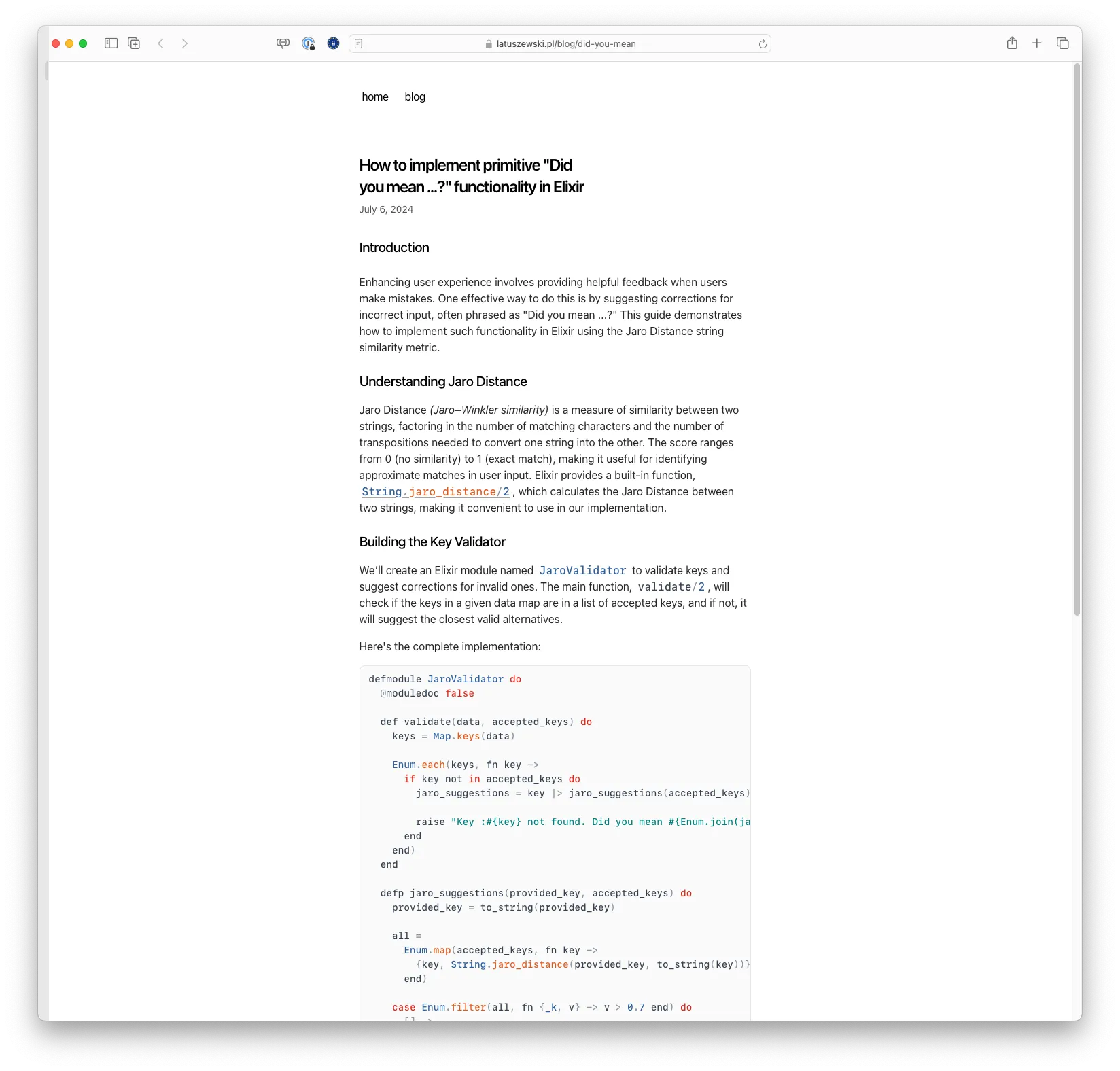
Improving user experience can be achieved by suggesting corrections for user input mistakes. This article explains how to implement a 'Did you mean...?' feature using the Jaro Distance string similarity metric in Elixir. It includes a step-by-step guide to create a module that validates keys and provides correction suggestions.
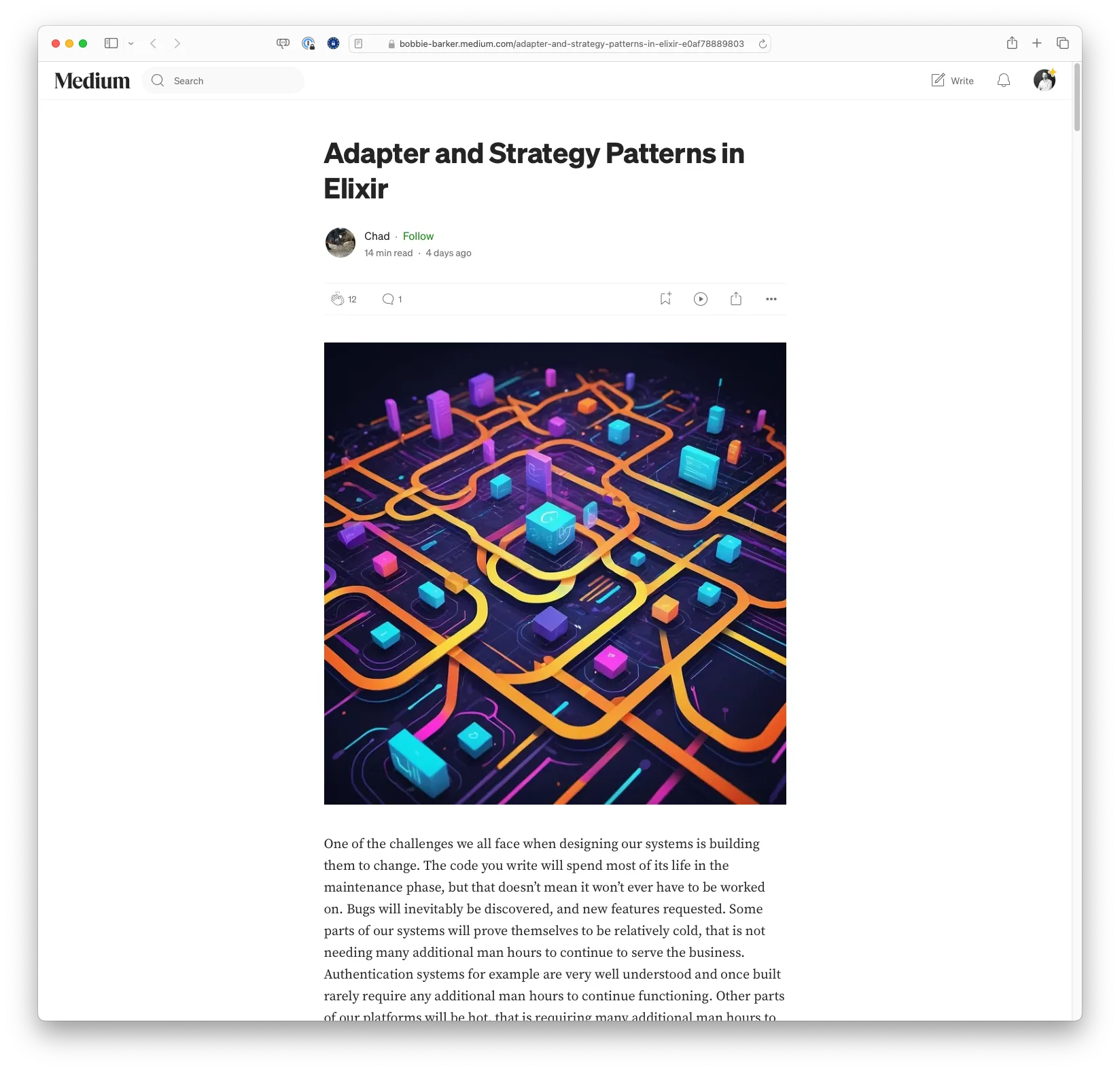
The article delves into the strategy and adapter design patterns within the Elixir programming language. It explains the importance of maintainable code through these patterns by providing examples of their implementation. The strategy pattern allows runtime behavior selection, while the adapter pattern facilitates the use of unrelated interfaces by enabling a common interface. Together, they can significantly improve code readability and maintenance, especially in complex systems like payment processing.
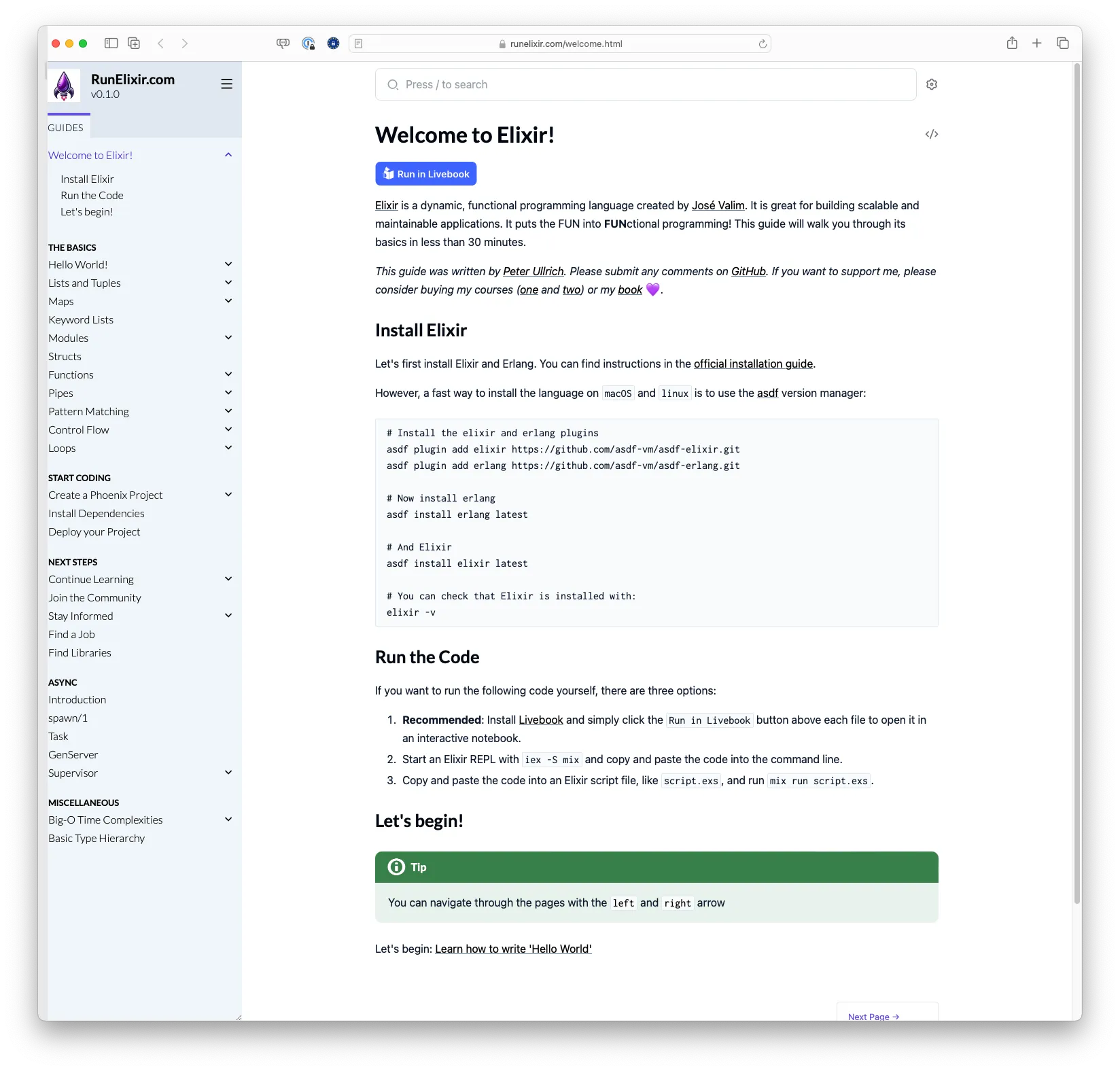
RunElixir.com is your go-to guide for learning and building with the Elixir programming language. Authored by Peter Ullrich, this resource offers a comprehensive introduction to Elixir, including installation steps and basic coding examples. It's a great starting point for those wanting to explore functional programming.
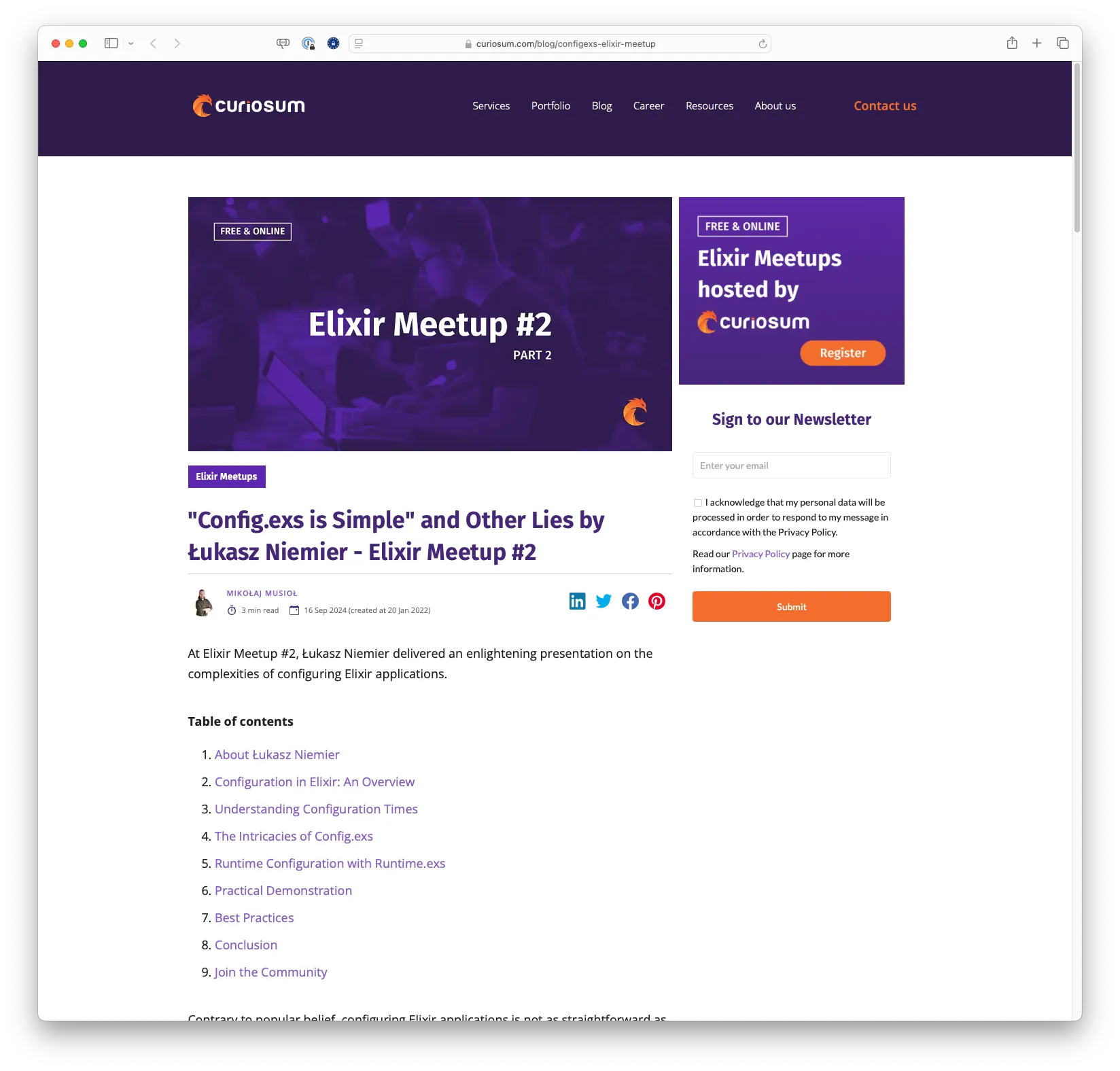
At Elixir Meetup #2, Łukasz Niemier delivered a comprehensive talk on the complexities of configuring Elixir applications. He discussed the various configuration methods, their pitfalls, and provided best practices for effective configuration management. The presentation emphasized the importance of understanding the lifecycle and impact of different configuration methods to avoid common issues.
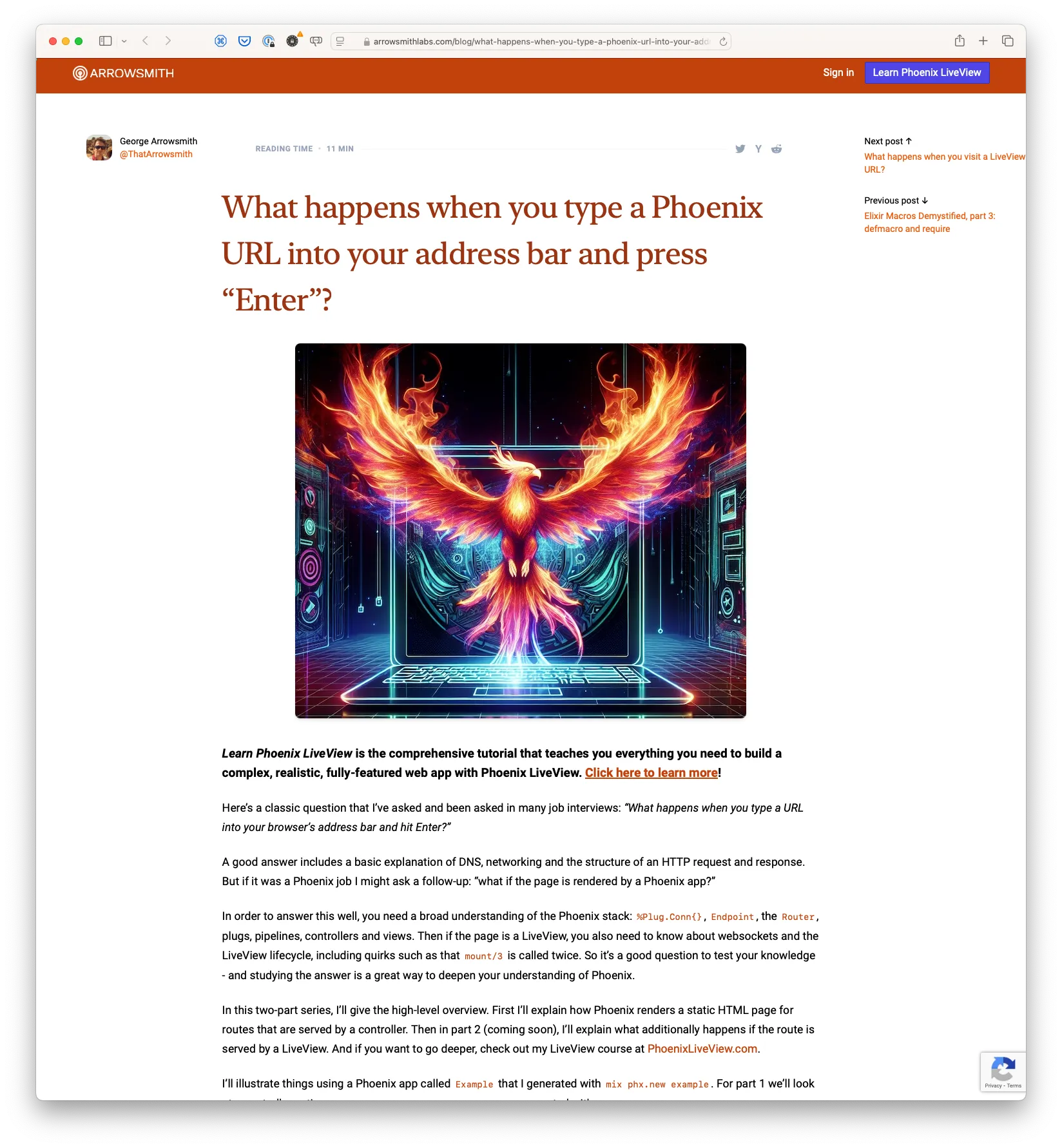
This article explains what happens when you type a Phoenix URL into your browser's address bar and hit Enter. It covers the entire request-response cycle, including DNS resolution, HTTP requests, and the various stages of the Phoenix framework such as %Plug.Conn{}, Endpoint, Router, controllers, and views. The post provides a detailed look at how Phoenix serves static HTML and will continue with a future discussion on LiveView handling.
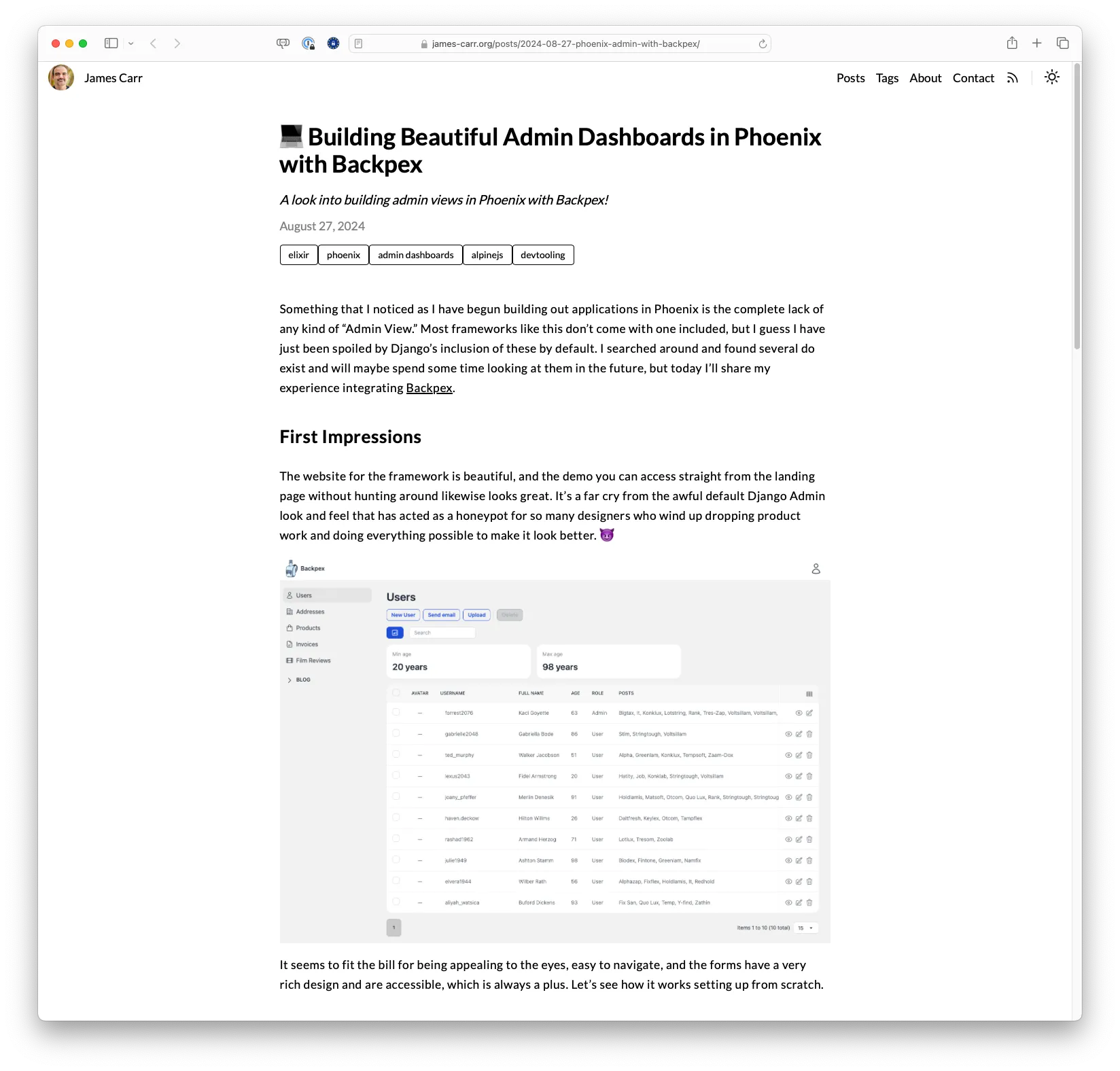
This article explores building admin views in the Phoenix framework using Backpex. The author shares their initial impressions of Backpex, including its appealing user interface and ease of navigation. The article also covers the setup process, highlighting some challenges and solutions, and concludes with the author's positive experience and future outlook on the tool.
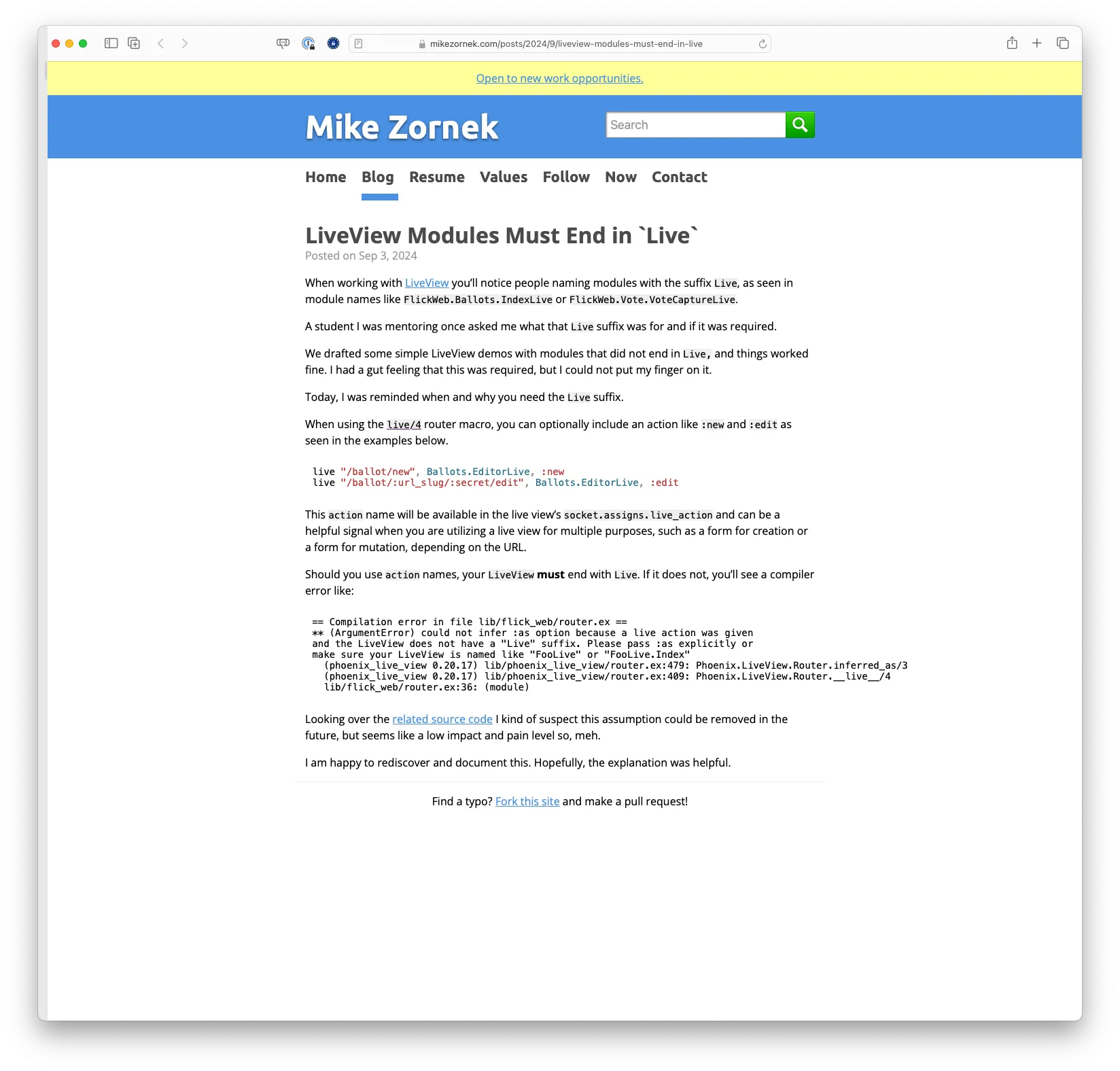
When using Phoenix LiveView, it's common to name modules with the suffix 'Live.' A student's query led the author to explore whether this suffix is necessary. Although initial tests worked without using 'Live,' it was confirmed that the suffix is indeed required when specifying certain actions like :new or :edit in the live router macro, to avoid compilation errors.
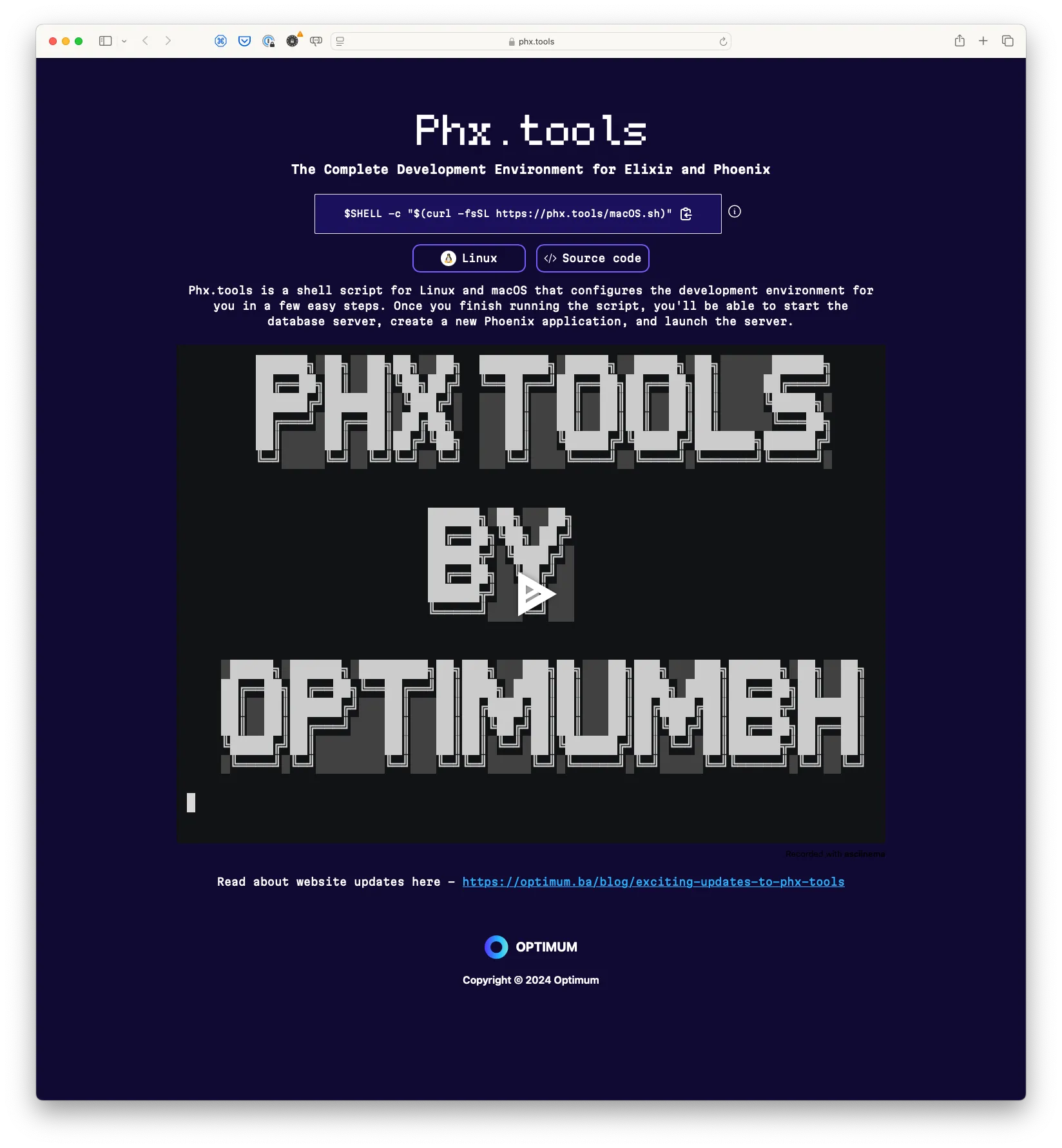
Phx.tools is a shell script tailored for Linux and macOS to streamline your Elixir and Phoenix development setup. It ensures you can start the database server, create a new Phoenix application, and launch the server with ease. Note that the script does not support other operating systems at this time.
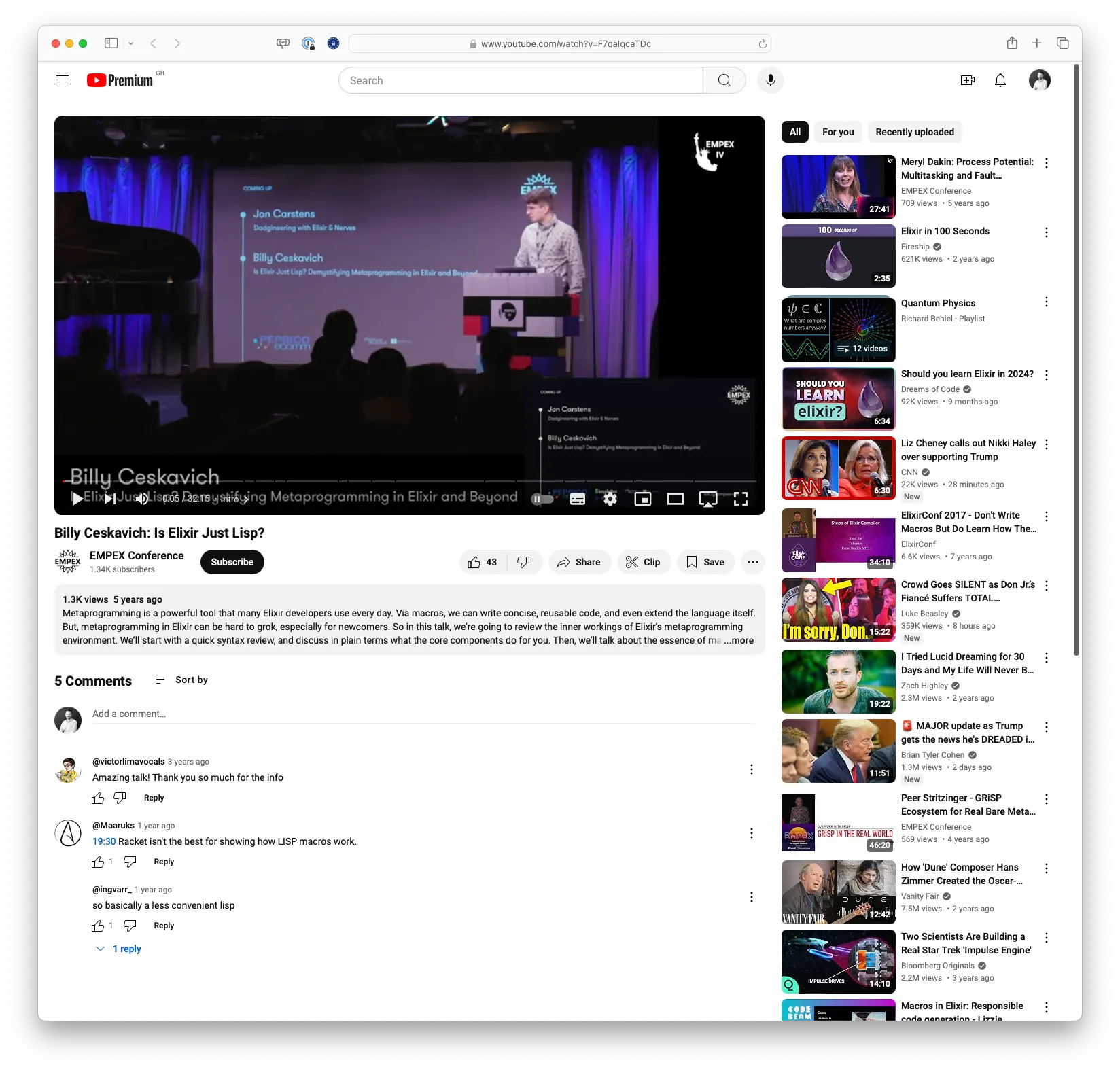
Billy Ceskavich explores the idea of whether Elixir is just another Lisp-like language. Through metaprogramming with macros, Elixir allows developers to write concise and reusable code and even extend the language itself. This video touches on the daily practical applications of these features in Elixir development.
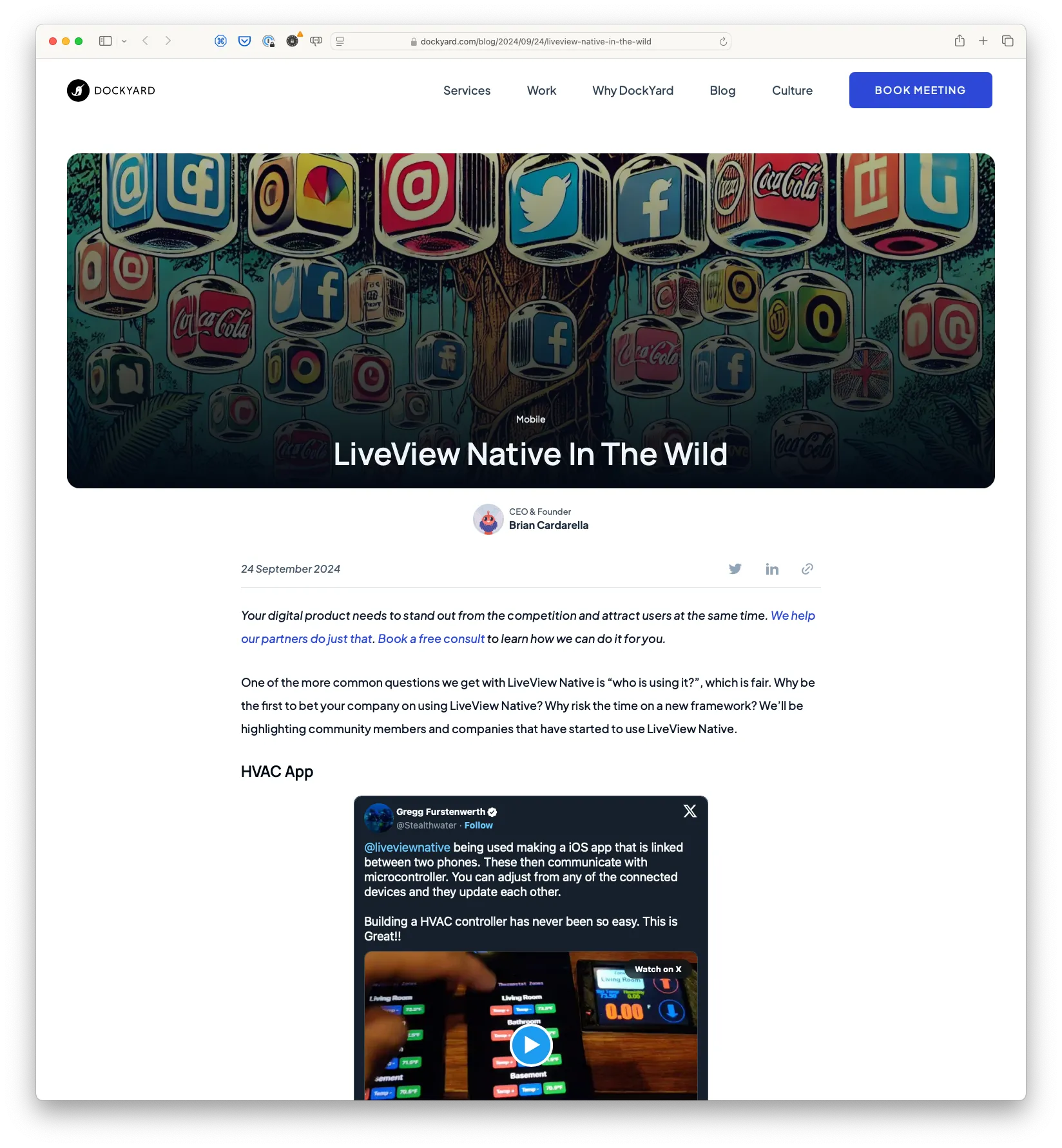
The article explores the implementation of LiveView Native by various developers. Justin Tormey discusses building the Lax app using LiveView Native, while Gregg Furstenwerth shares his experience creating an HVAC controller. Additionally, the article highlights the use of LVN on Linux, Android, and in a Scrum Poker app, emphasizing the flexibility and efficiency of the framework in diverse applications.
Regards,
M@
[ED: If you'd like to sign up for this content as an email, click here to join the mailing list.]
Originally published on quantumfaxmachine.com and cross-posted on Medium.
Was this useful?