
QFM122: Elixir Reading List - July 2026
 Source: Photo by Conrad Crawford on Unsplash
Start with the surprising one. On AutoCodeBench, models score higher on Elixir than on any of the other nineteen languages tested -- a 97.5% upper bound, individual models running roughly thirty points above their own average, on something like a tenth of Python's training data. The effect survives across architectures, reasoning modes, and base models with no instruction tuning, which is what rules out memorisation and points instead at the language itself: immutability and explicit data flow happen to suit the way a model reads code.
Which sets up the rest of the month rather neatly, because three of the four remaining entries exist to stop the machine writing bad Elixir anyway. phxagents is a Claude Code plugin carrying 26 production-safety rules and a plan-work-review-compound loop, aimed at the specific mistakes generated Phoenix code makes -- unoptimised Repo queries, bare rescues, missing transactions -- with runtime introspection through Tidewave rather than generic advice. credence attacks the same problem after the fact: a semantic linter for code that compiles and passes its tests while still reading like transliterated Python, running syntax then semantic then pattern rounds, with about 117 idiomatic rules that rewrite rather than warn -- Enum.sort |> Enum.reverse becomes Enum.sort(:desc). And Mike Zornek's automated quality checks are the unglamorous version that works today: warnings-as-errors, format and dependency gates, Credo with a custom rule set, test-quality linting, and a human still reading the diff.
Then Tincture, which belongs to a different century and is the best thing here. Typographic PDF generation in pure Elixir with no runtime dependencies: TeX hyphenation, Knuth-Plass line breaking, TrueType and OpenType embedding with subsetting, GPOS kerning, GSUB ligatures, and conformance verified against PDF/UA-1 and PDF/A-2. A modernised fork of erlguten with its attribution intact. Nobody needed to build this and somebody did.
As always, the Quantum Fax Machine Propeller Hat Key will guide your browsing. Enjoy!
Propeller Hat Key
- 1 of 5:
- Mentions Elixir and related technologies
- 2 of 5:
- Talks about the Elixir ecosystem in real-world use cases
- 3 of 5:
- Talks about technical details of Elixir ecosystem components
- 4 of 5:
- Using and working with Elixir ecosystem technologies in software
- 5 of 5:
- Programming new Elixir technology concepts and implementations
Links
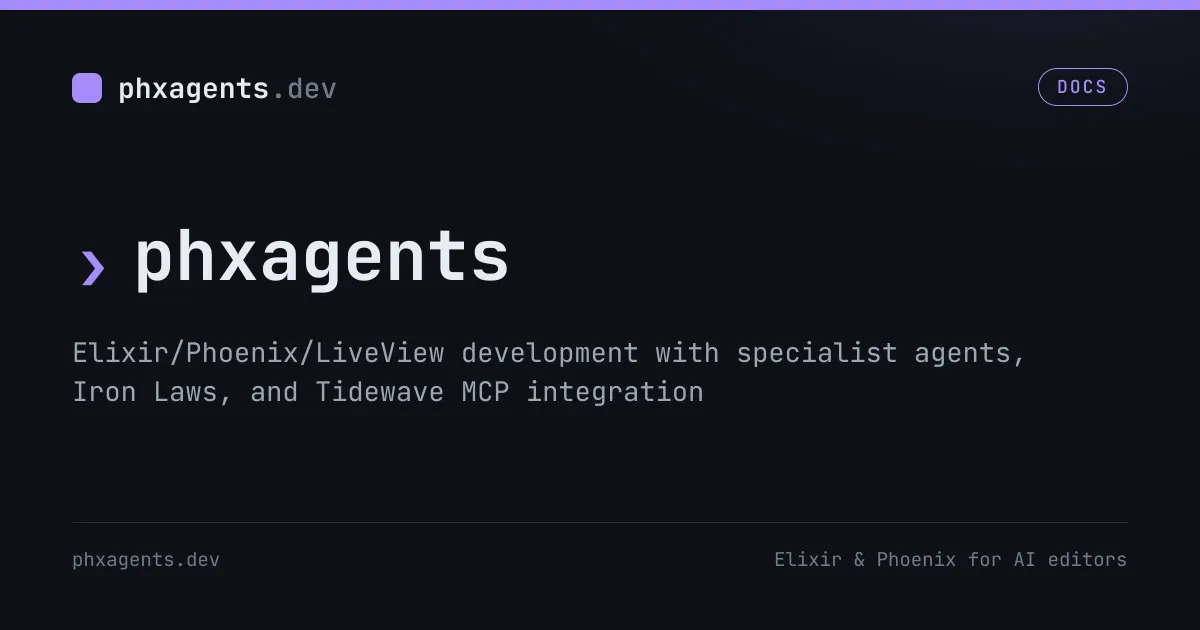
phxagents is a specialized Claude Code plugin that enforces Phoenix and Elixir best practices through 26 "Iron Laws" (production safety rules) and a four-phase workflow (plan → work → review → compound) to prevent common AI-generated code mistakes like unoptimized Repo queries, bare rescues, and missing Ecto transactions. The plugin integrates runtime introspection via Tidewave MCP, parallel code review by four specialist agents, and supply-chain security auditing for Hex dependencies, adapting to your specific Phoenix version and project tooling rather than applying generic guidance.
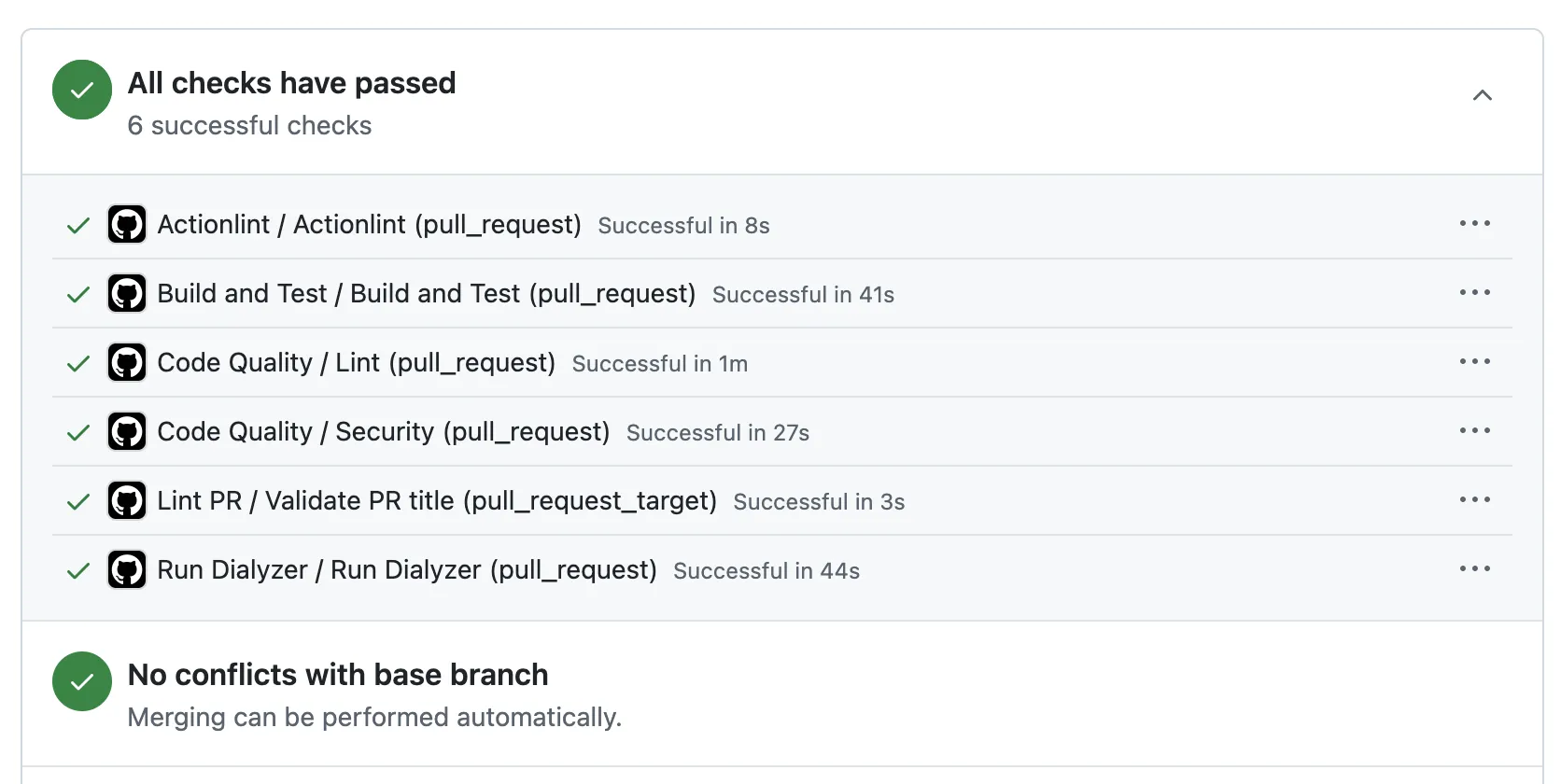
The author implements automated Elixir quality checks to prevent AI-generated code from gradually degrading project standards through repeated low-quality patterns. The approach combines compiler checks (warnings-as-errors, format validation, dependency auditing), static analysis tools like Credo with custom rule sets, and test quality linters to mechanically enforce coding standards while still requiring human review of AI-generated changes.

Tincture is a pure Elixir library for PDF generation that implements typographic quality rendering entirely in Elixir/OTP without external dependencies, featuring TeX hyphenation, Knuth-Plass line breaking, TrueType/OpenType font embedding with subsetting, and support for PDF/UA and PDF/A standards. Built as a modernized fork of erlguten with preserved attribution, it includes advanced capabilities like GPOS kerning, GSUB ligatures, AES-256 encryption, forms, and digital signatures, with conformance verified against PDF/UA-1 and PDF/A-2 standards.

Large language models achieve their highest performance on Elixir compared to 19 other languages tested on AutoCodeBench, with a 97.5% upper bound and individual models scoring ~30 points higher on Elixir than their overall average, despite Elixir having roughly 10 times less training data than Python. This superior performance persists across different model architectures, reasoning modes, and even base models without instruction tuning, suggesting the advantage stems from Elixir's language design—particularly its immutability and explicit data flow—which aligns with how language models process code rather than from memorization of training examples.
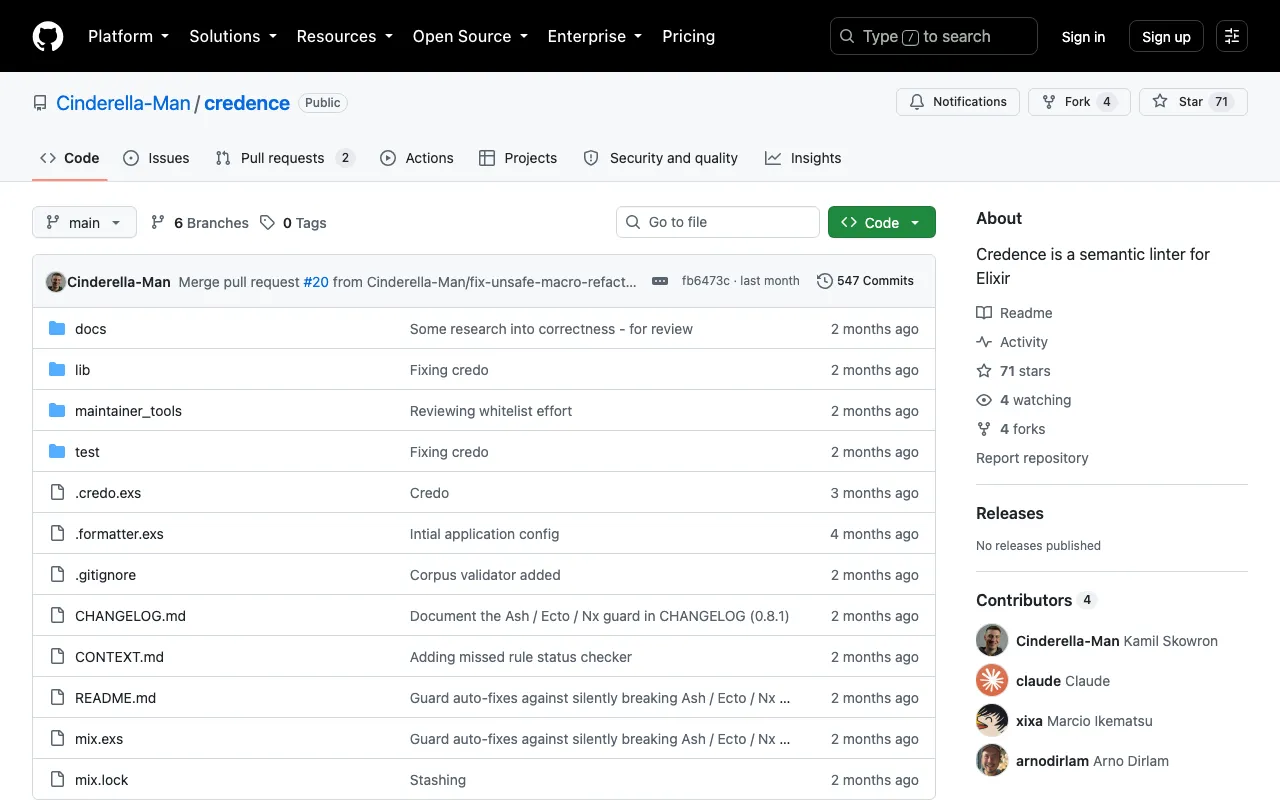
Credence is a semantic linter for Elixir that identifies and automatically fixes code that compiles and passes tests but is written inefficiently or idiomatically incorrect, such as patterns copied from Python or JavaScript. It operates in three sequential rounds—Syntax (fixes parsing errors), Semantic (resolves compiler warnings), and Pattern (applies ~117 idiomatic rules to rewrite awkward code like Enum.sort |> Enum.reverse to Enum.sort(:desc))—with a strict guarantee that every pattern rule produces a safe, correct fix rather than just warnings.
Regards,
M@
[ED: If you'd like to sign up for this content as an email, click here to join the mailing list.]
Originally published on quantumfaxmachine.com and cross-posted on Medium.
hello@matthewsinclair.com | matthewsinclair.com | bsky.app/@matthewsinclair.com | masto.ai/@matthewsinclair | medium.com/@matthewsinclair | xitter/@matthewsinclair
Was this useful?