
QFM134: Elixir Reading List - October 2026
 Source: Photo by Milad Fakurian on Unsplash
Ash had a busy month. Temporal resources let an application query its data as it stood at any moment, past or future, for four lines of configuration, and Signals, in this month's Machine Intelligence list, decouples side effects between domains. Mishka CMS builds on Ash and LiveView, compiling pages into LiveView modules at runtime so content goes live without a deploy.
Lower down the stack, ElixirSSI makes the BEAM the operating system across a cluster of Raspberry Pis, and yellowduck explains why PHP's latest critical RCEs could not happen on it. Pablo Meier explains why Ramp runs its authorization and risk systems on Elixir, and phoenix_project_guide gives a Phoenix project's documentation a structure that people and agents can both follow.
As always, the Quantum Fax Machine Propeller Hat Key will guide your browsing. Enjoy!
Propeller Hat Key
- 1 of 5:
- Mentions Elixir and related technologies
- 2 of 5:
- Talks about the Elixir ecosystem in real-world use cases
- 3 of 5:
- Talks about technical details of Elixir ecosystem components
- 4 of 5:
- Using and working with Elixir ecosystem technologies in software
- 5 of 5:
- Programming new Elixir technology concepts and implementations
Links
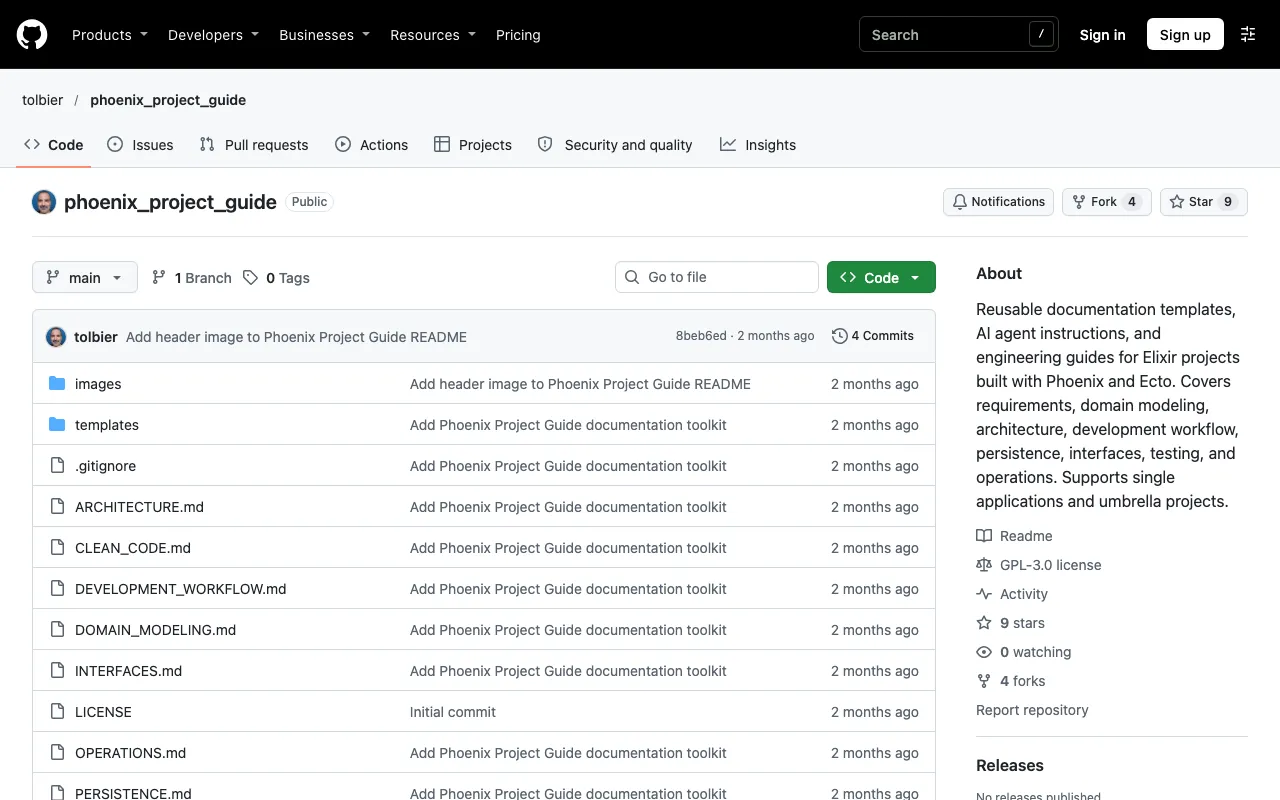
phoenix_project_guide is a set of markdown templates and engineering guides for documenting a Phoenix project: requirements, domain model, architecture, development workflow, persistence, testing and operations. It lays out a directory structure for single applications and umbrella projects, with shared documents at the root and each application's guides under docs/phoenix_project_guide/. The templates are written for AI agents as much as for people: an agent generates and maintains the documentation by following the guides, and a team adapts the templates to its own conventions.
Temporal resources, an experimental Ash feature, let an application read and write its state at any point in time, past, present or future, without changing ordinary application code. Four lines of configuration add a valid_at period to each record, and an as_of option queries the data as it stood at a given moment, on standard tables. The post sets it against paper trails, event-driven design and event sourcing: here, history is queryable with ordinary filters and relationships, retroactive changes are possible, and so are updates scheduled for the future.
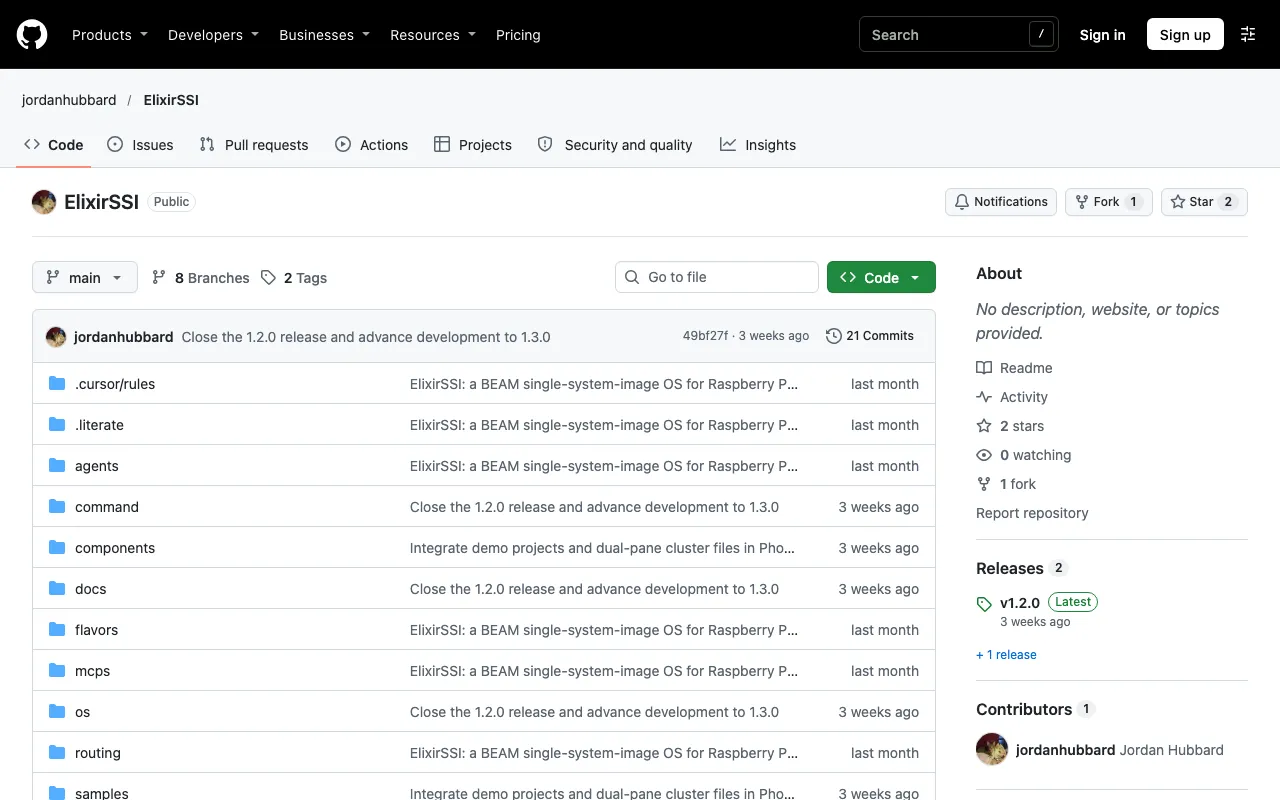
ElixirSSI is a distributed operating system with the BEAM as the system and Elixir as its language: the runtime runs as PID 1, and Linux is only the hardware layer. Several Raspberry Pi Compute Module 5 boards act as one machine, sharing process visibility, a filesystem and workload scheduling, and when a node fails its services migrate and the desktop state is restored. It can be developed against a full CM5 emulator or flashed to real hardware.
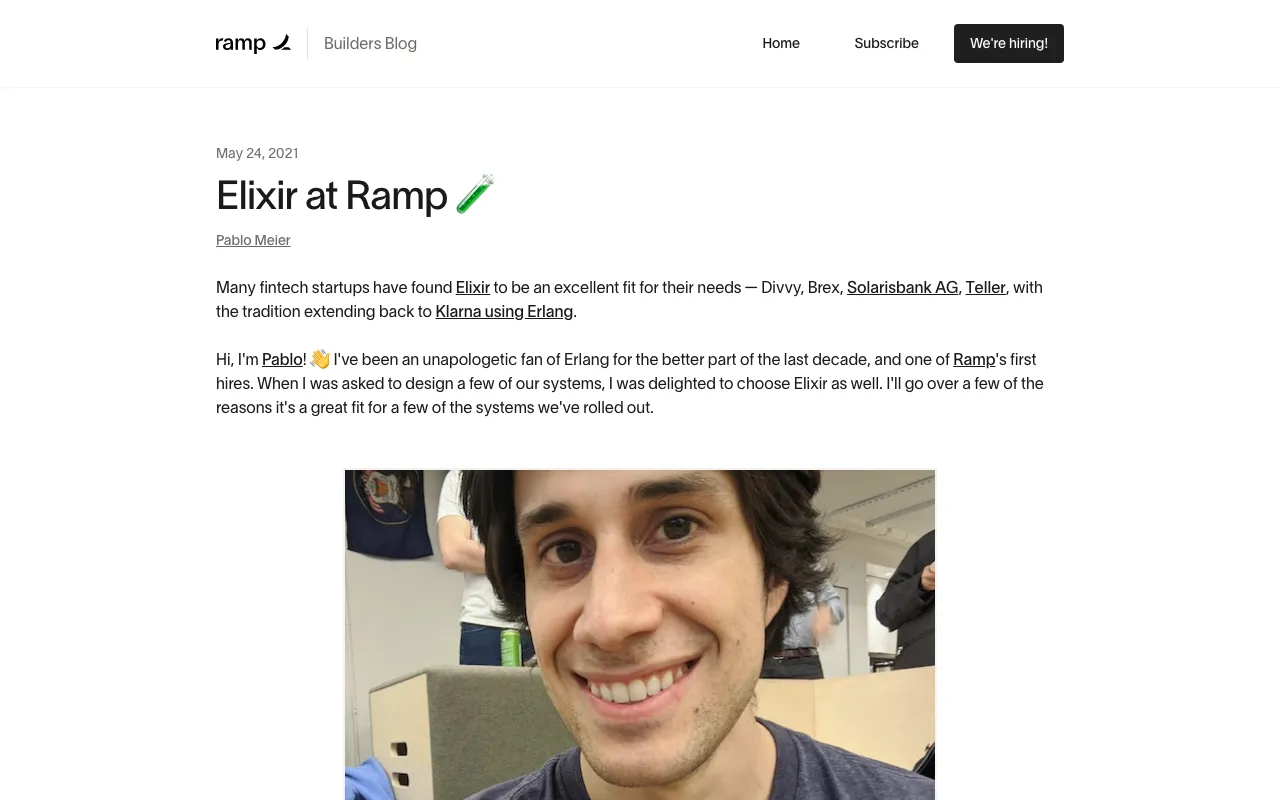
Pablo Meier, one of Ramp's first hires and a long-time Erlang fan, explains where Ramp uses Elixir: the real-time authorization engine, which needs very high uptime, and the risk analysis platform, which needs concurrency and data-pipeline ingestion. He credits the BEAM and OTP with the concurrency, fault tolerance and handling of transient errors he has missed elsewhere, and Elixir with friendlier syntax and tooling than plain Erlang. The trade-offs he names are a steeper adoption curve, some dislike of the syntax, and Dialyzer being weaker than mypy, TypeScript or Sorbet. Ramp's largest service is still Python, and he argues that team culture matters more than the language.
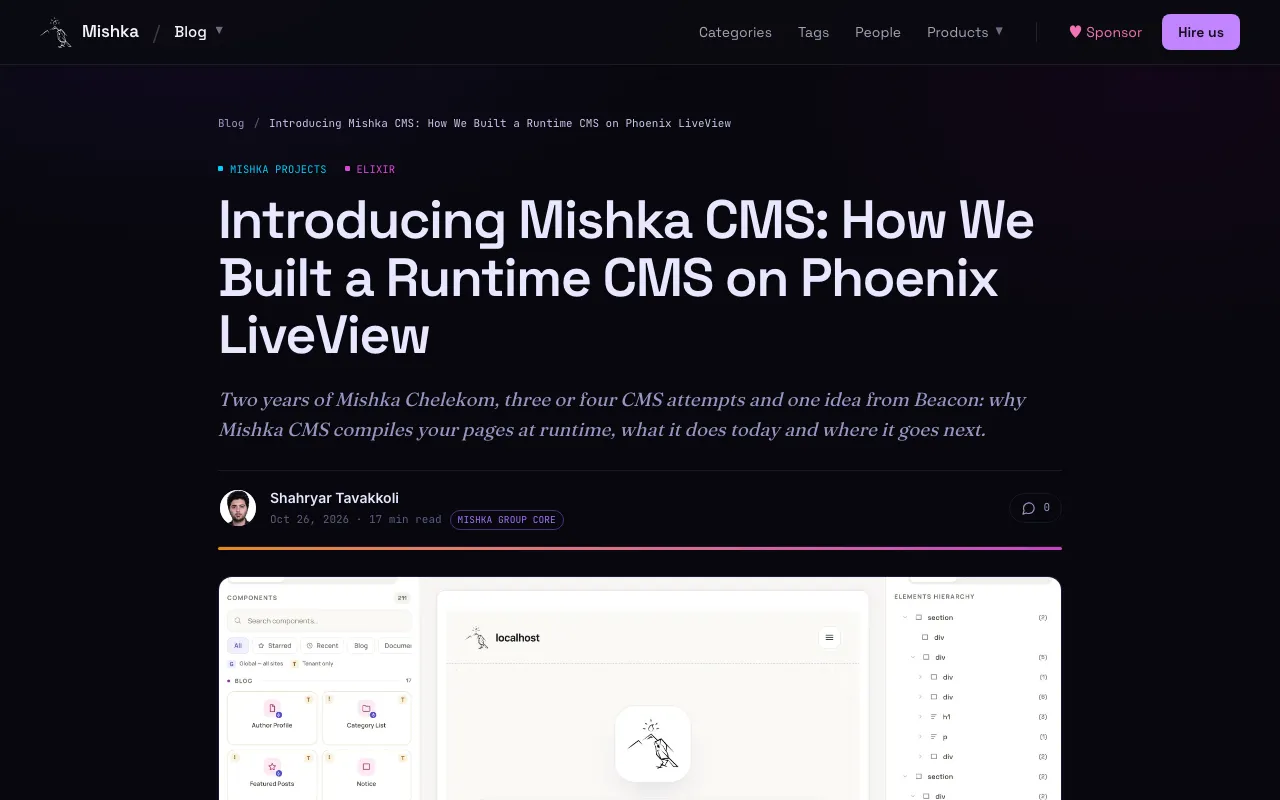
Mishka CMS is an open-source CMS built on Elixir, Phoenix LiveView and Ash that compiles pages and components from the database into LiveView modules at runtime, so content changes publish without a redeploy. It grew out of the team's earlier libraries, Mishka Chelekom (components, over 76,000 downloads) and Mishka Gervaz (declarative admin screens for Ash), and out of the admin, permissions and publishing that every such application ends up needing. It runs several sites on one installation, with live editing in the admin and extensions for blogs, documentation and social sign-in; the core library is out as mishka_cms_core 0.0.2.
Two unauthenticated remote code execution bugs in PHP 8.2 to 8.5, disclosed in October 2026 and rated 9.2 under CVSS v4.0, prompt this argument for the BEAM. CVE-2026-109618 is an out-of-memory failure during request start-up that leaves data half-built for PHP's cleanup to misread as valid pointers; CVE-2026-109619 is a use-after-free in which a reused worker hands stale request data to a later request. Neither can happen in Elixir, the author argues, because each request runs in its own process with a private heap, a failed allocation kills only that process, and nothing mutable is shared or carried between requests. The concessions are fair ones: a runaway process can still starve the machine, so set :max_heap_size, and a smaller ecosystem still carries supply-chain risk, so run mix hex.audit and Sobelow in CI.
Regards,
M@
[ED: If you'd like to sign up for this content as an email, click here to join the mailing list.]
Originally published on quantumfaxmachine.com and cross-posted on Medium.
hello@matthewsinclair.com | matthewsinclair.com | bsky.app/@matthewsinclair.com | masto.ai/@matthewsinclair | medium.com/@matthewsinclair | xitter/@matthewsinclair
Was this useful?