
QFM099: Engineering Leadership Reading List - January 2026
 Source: Photo by Sable Flow on Unsplash
This month's Engineering Leadership Reading List covers AI's impact on engineering roles and scaling fundamentals. AI's Impact On Engineering Jobs argues the effects may differ from what most leaders expect, while Steve Yegge's Software Survival 3.0 lays out what engineering teams need to do to stay relevant. The awesome-cto and awesome-agentic-patterns collections are useful reference libraries, and How to Scale from 0 to 10M+ Users covers system scaling fundamentals.
As always, the Quantum Fax Machine Propeller Hat Key will guide your browsing. Enjoy!
Propeller Hat Key
- 0 of 5:
- Unrelated to technology, management, or leadership
- 1 of 5:
- Suitable for management and leadership novices
- 2 of 5:
- Topics of interest for the new manager or leader
- 3 of 5:
- Technology management and leadership in real-world use cases
- 4 of 5:
- Topics for experienced managers and leaders
- 5 of 5:
- Advanced topics in management and leadership
Links
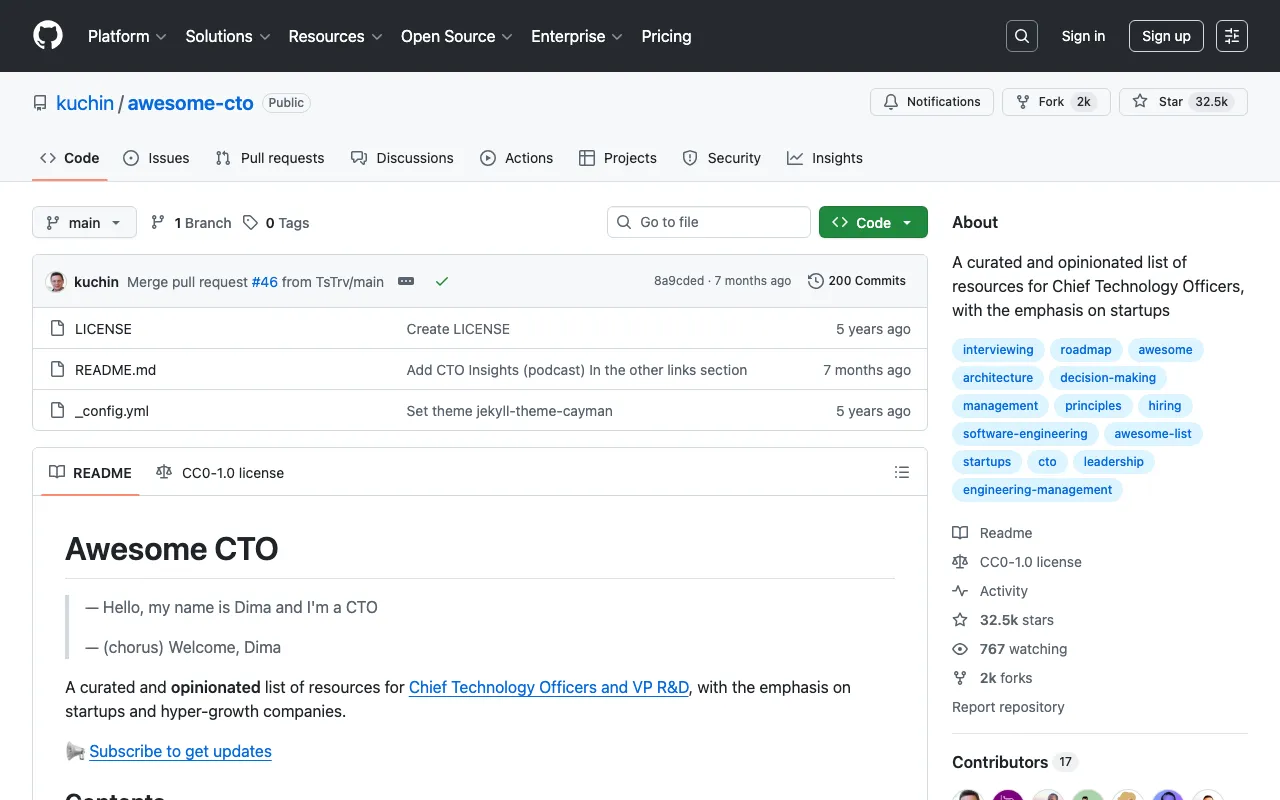
This is a curated, opinionated collection of resources aimed at Chief Technology Officers and VPs of R&D, with a particular focus on startups and hyper-growth companies. It organises hundreds of links to articles, guides, and tools across categories including the CTO role definition, hiring practices, people management, career growth, project management, development processes, architecture, and technology choices.
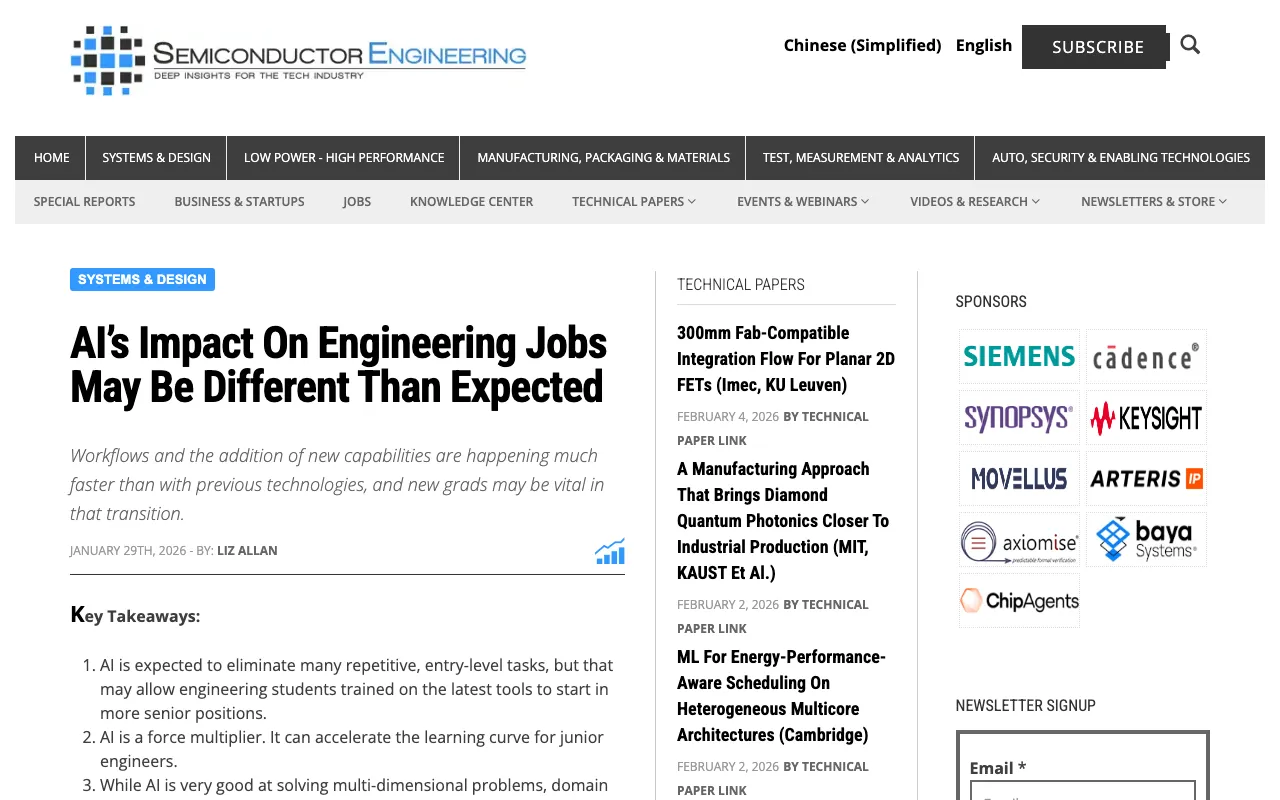
AI is expected to automate many repetitive, entry-level tasks in chip design and engineering, but industry leaders argue this may allow new graduates to enter the workforce at higher levels of abstraction and seniority. The article presents two schools of thought: one that uses AI to enhance existing workflows, and another that advocates re-engineering entire workflows from scratch to leverage AI's strength at solving high-dimensional problems.
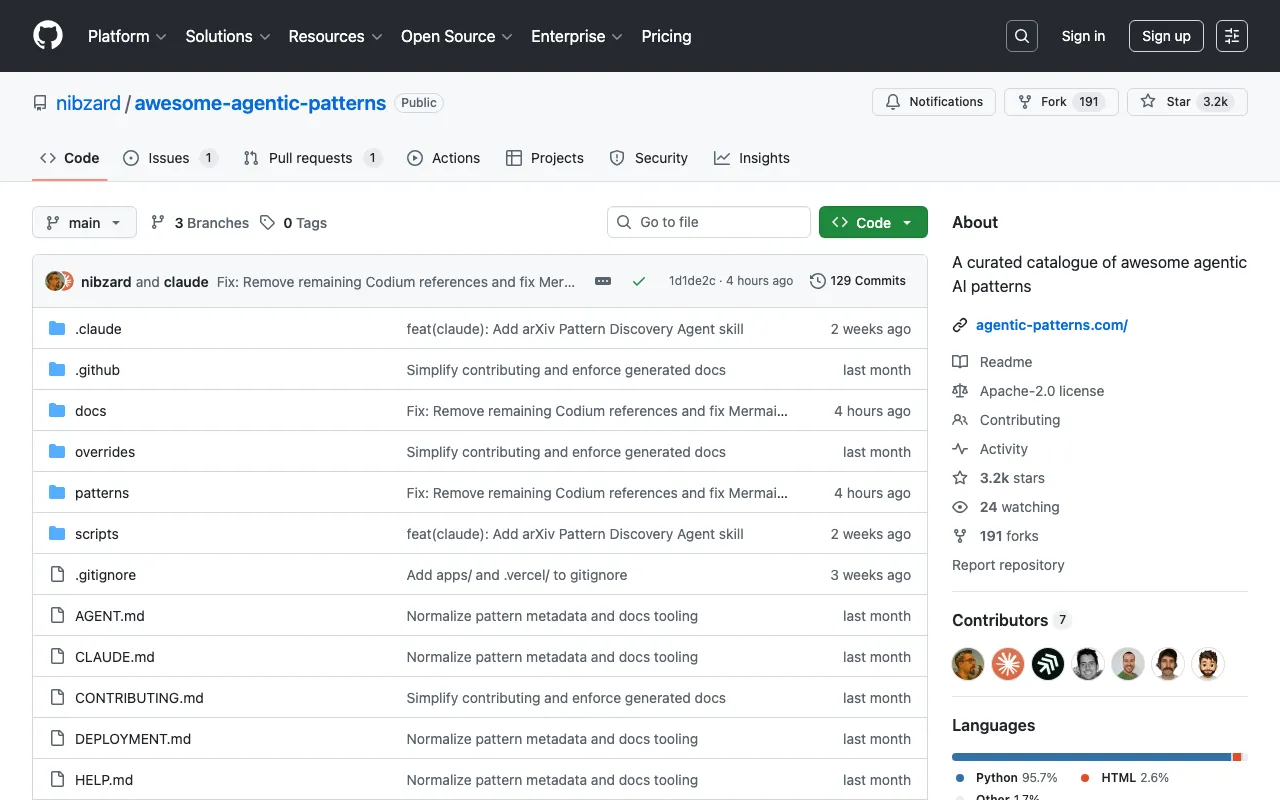
This repository catalogues repeatable, real-world patterns for building autonomous or semi-autonomous AI agents in production, distinguishing itself from toy demos by surfacing the practical "messy bits" that working teams actually use. The patterns are organised into categories including Context & Memory, Feedback Loops, Learning & Adaptation, Orchestration & Control, Reliability & Eval, Security & Safety, Tool Use & Environment, and UX & Collaboration.
The article walks through seven progressive stages of scaling a web system, starting from a single server handling 100 users up through architectures supporting 10 million or more, emphasising that teams should avoid over-engineering and instead scale incrementally in response to real bottlenecks. Early stages cover separating the database from the application server and adding caching, while later stages address read replicas, CDNs, message queues, and microservice decomposition.
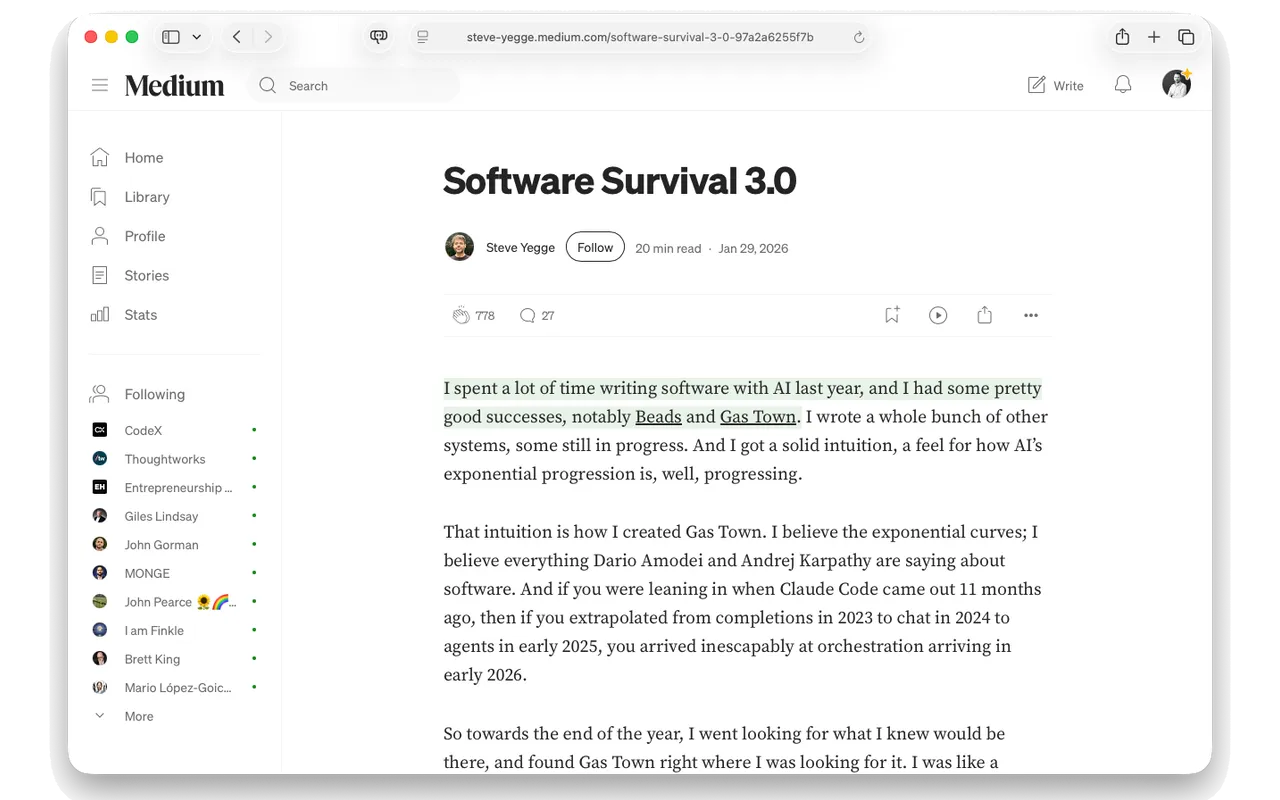
The article proposes a selection framework for which software will survive in a world where AI can write most code: software that saves more cognitive effort than it costs to discover and use will endure, a concept Yegge calls "Squirrel Selection." The practical advice for builders is to create tools with genuine "insight compression" -- holding unique data or logic that agents cannot easily replicate -- as the only durable moat against AI-driven commoditisation of software.
Regards,
M@
[ED: If you'd like to sign up for this content as an email, click here to join the mailing list.]
Originally published on quantumfaxmachine.com and cross-posted on Medium.
hello@matthewsinclair.com | matthewsinclair.com | bsky.app/@matthewsinclair.com | masto.ai/@matthewsinclair | medium.com/@matthewsinclair | xitter/@matthewsinclair
Was this useful?