
QFM103: Engineering Leadership Reading List - February 2026
 Source: Photo by Denise Jans on Unsplash
This month's Engineering Leadership Reading List covers AI-augmented development, disciplined prioritisation, and the craft of engineering thinking. Simon Willison profiles StrongDM's "Software Factory" where AI agents build serious software without anyone looking at the code — using scenario-based testing and "digital twin" clones of third-party services to validate unreviewed agent-generated code.
On the leadership side, Saying No to Good Ideas examines one of a leader's hardest decisions — rejecting promising opportunities that would dilute focus — while Nicole Tietz makes a compelling case for using an engineering notebook, arguing that hand-writing detailed, dated notes while working improves memory retention, clarifies thinking, and enhances productivity despite being remarkably uncommon among software engineers.
As always, the Quantum Fax Machine Propeller Hat Key will guide your browsing. Enjoy!
Propeller Hat Key
- 0 of 5:
- Unrelated to technology, management, or leadership
- 1 of 5:
- Suitable for management and leadership novices
- 2 of 5:
- Topics of interest for the new manager or leader
- 3 of 5:
- Technology management and leadership in real-world use cases
- 4 of 5:
- Topics for experienced managers and leaders
- 5 of 5:
- Advanced topics in management and leadership
Links
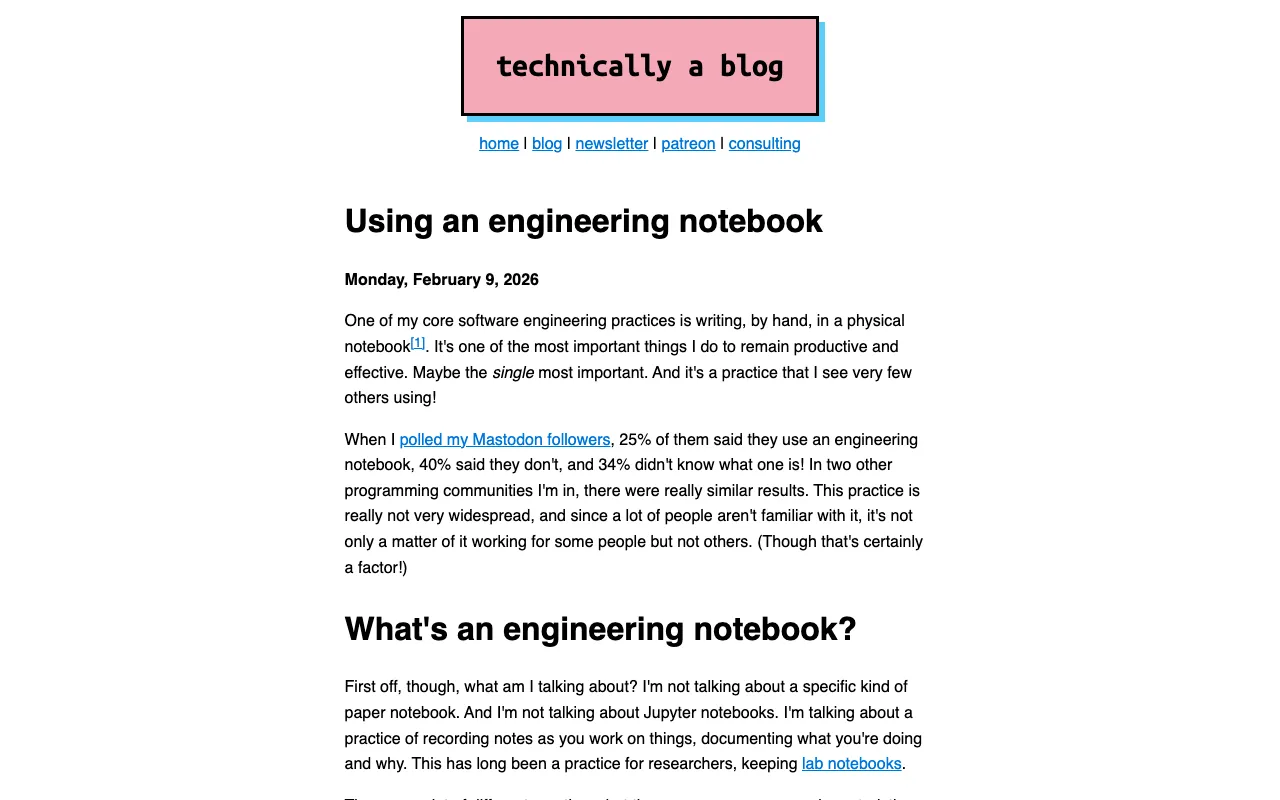
The author describes their practice of keeping a physical engineering notebook, started during consulting work, where they write dated, append-only notes about their work -- including sketching out code changes by hand before typing them into an editor. They argue the notebook serves as both a memory aid (handwriting being more effective for retention) and a tool for thought that forces deliberate reasoning before implementation.
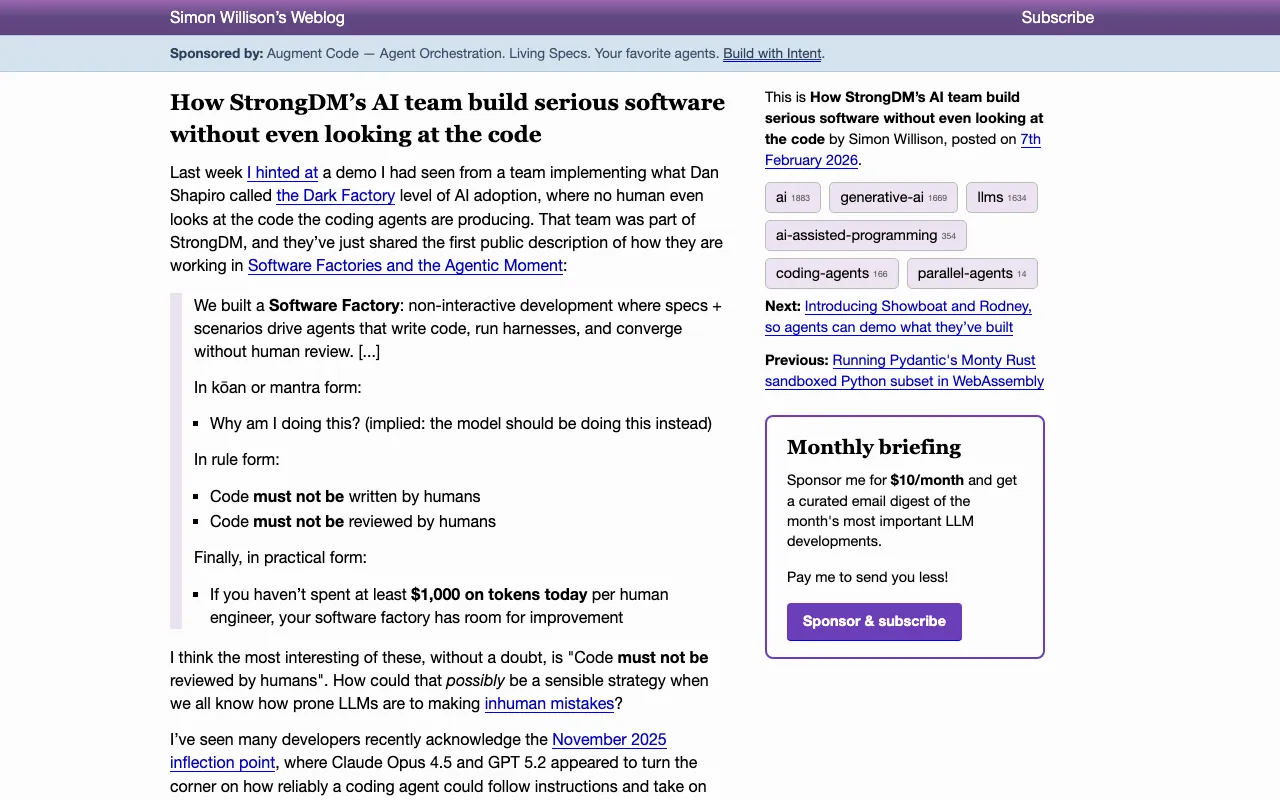
This piece examines StrongDM's "Software Factory" approach, where non-interactive AI agents write code driven by specs and scenario-based tests, with no human code review. The author explores the core challenge of verifying agent-produced software when both implementation and tests are generated by AI, and notes StrongDM's benchmark that teams should be spending at least $1,000 per engineer per day on tokens if the factory is operating at full capacity.
The article argues that the hardest part of maintaining focus as a leader is not rejecting bad ideas but learning to turn down genuinely good ones, because saying yes to everything dilutes team capacity and leaves existing work incomplete. It offers a framework for evaluating incoming ideas: asking whether they contain new information that changes your assumptions, and then deciding whether the right response is a pivot, a "not now," or a firm no.
Regards,
M@
[ED: If you'd like to sign up for this content as an email, click here to join the mailing list.]
Originally published on quantumfaxmachine.com and cross-posted on Medium.
hello@matthewsinclair.com | matthewsinclair.com | bsky.app/@matthewsinclair.com | masto.ai/@matthewsinclair | medium.com/@matthewsinclair | xitter/@matthewsinclair
Was this useful?