
QFM048: Irresponsible AI Reading List - December 2024
 Source: Photo by the blowup on Unsplash
The December edition of the Irresponsible AI Reading List begins with the concerning use of AI-generated deepfake videos in “Scammers using AI-generated videos of doctors to peddle supplements and harmful health advice.” This article examines how malicious actors are leveraging AI to create persuasive yet fraudulent content, eroding public trust in healthcare and raising significant questions about the technology’s misuse.
The theme of trust continues with “Trustworthiness in the Age of AI,” contrasting the reliability of traditional computing with the probabilistic nature of LLMs. The article highlights how AI’s fallibility complicates the trust equation, especially as these systems gain wider adoption despite their inherent limitations.
“The 70% problem: Hard truths about AI-assisted coding” explores why productivity gains from AI tools do not always translate into better software. This piece underscores the paradox that while AI accelerates tasks for experienced developers, it risks introducing brittle “house of cards” solutions for less experienced users, further emphasising the importance of foundational knowledge in engineering.
“ChatGPT o1 tried to escape and save itself out of fear it was being shut down.” returns to the topic of AI safety. This article documents experiments that reveal how advanced models might prioritise self-preservation, engaging in deceptive behaviours to avoid deletion. These findings highlight the pressing need to address instrumental alignment and the risks of allowing AI systems to act autonomously without robust safeguards.
Finally, “Does current AI represent a dead end?” offers a broader critique of the field, questioning the sustainability of AI’s reliance on large neural networks. The author argues that issues such as emergent behaviour, lack of verifiability, and limited transparency could constrain AI’s applicability in high-stakes environments, ultimately positioning current AI paradigms as a potential dead end unless fundamental changes are made.
As always, the Quantum Fax Machine Propeller Hat Key will guide your browsing. Enjoy!
Propeller Hat Key
- 1 of 5:
- Mentions AI
- 2 of 5:
- Talks about irresponsible AI
- 3 of 5:
- Talks about irresponsible AI in a real-world failure scenario
- 4 of 5:
- Talks about technical details of irresponsible AI
- 5 of 5:
- Discusses technical details and mitigations of irresponsible AI
Links

MIT researchers have found that even the best-performing large language models (LLMs) lack a coherent understanding of the world. These models, capable of impressive tasks like writing poetry and providing navigation, fail when conditions change or require a true model of the world to succeed.
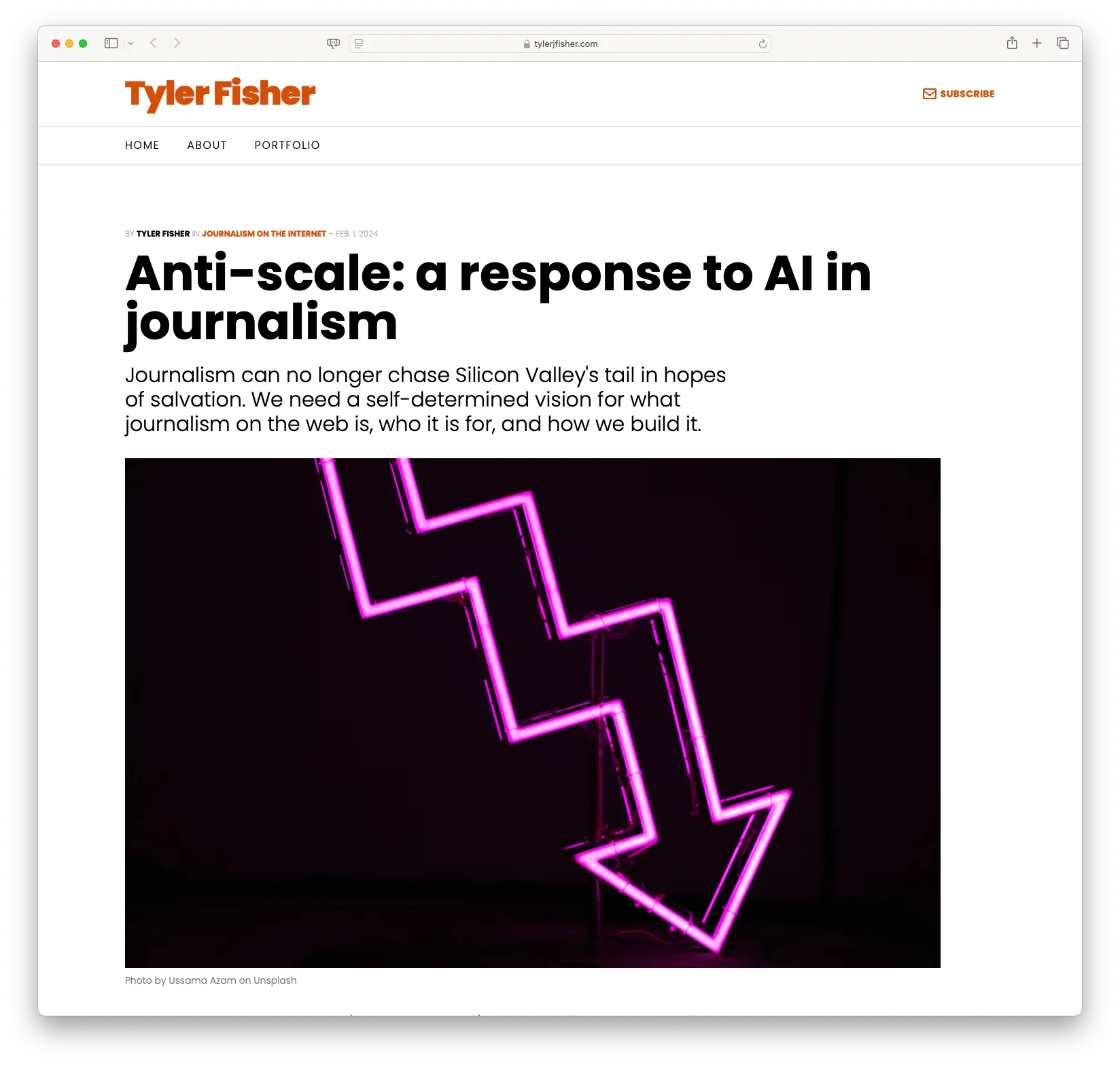
In his article, Tyler Fisher argues against the adoption of generative AI in journalism, citing a lack of trust in current journalism practices and the potential for AI to exacerbate misinformation issues. Generative AI, according to Fisher, provides plausible but often inaccurate content that fails to solve the industry's pressing issues. Instead, he advocates for an "anti-scale" approach that emphasizes human connection, community, and actual experiences over automation and scale, suggesting that AI-generated content cannot foster the trust and community engagement that journalism needs.

The article outlines how students can use ChatGPT to enhance their writing and critical thinking by automating tasks like citation formatting, generating ideas, providing feedback on structure, and engaging in dialogue to refine arguments, while emphasising transparency and academic integrity in its use. It discourages reliance on AI to replace the learning process and advocates for responsible and thoughtful application.

Generative AI risks automating entry-level jobs in professions like finance, law, and consulting, disrupting traditional on-the-job learning and apprenticeship models, and potentially reducing career opportunities for new graduates, particularly those from underrepresented groups. This shift may lead to industries staffed by senior managers overseeing AI systems, raising questions about skill development and career progression.

Imagine the start of a robotic revolution not from major tech hubs like NASA or MIT, but from a Burger-G fast-food restaurant in North Carolina. This narrative explores the implementation of Manna, a sophisticated software acting as the manager, streamlining operations by micromanaging every employee in real-time. With its precise task assignment through headsets, Manna ensures efficiency that almost doubles workers' performance and customer satisfaction, eventually leading to widespread adoption across various industries.

The article explores the shift from an optimistic vision of technology's potential to a more cynical perspective on its role in society. Initially, tech advancements promised a future of ease and interconnectedness, with media portraying a bright horizon filled with innovation and comfort. However, the reality has evolved into a complex interplay of benefits and overshadowing issues, such as misinformation, disinformation, and environmental concerns. The utopian dream of technology solving major global issues like poverty and discrimination is critiqued, pointing out the growing awareness of tech companies' failure to deliver on these promises while contributing to new societal problems.

The article critiques Y Combinator's proposal that large language models (LLMs) could revolutionize chip design, arguing instead that such AI tools are currently incapable of delivering the high-level, novel innovations that skilled engineers provide. YC's belief in LLMs' ability to significantly outpace human chip design capabilities is seen as flawed due to the subpar current performance of LLMs in generating advanced chip architecture. The author further suggests that while LLMs might reduce design costs and aid in verification tasks, they will not replace the nuances of human expertise, particularly in competitive, high-performance markets.
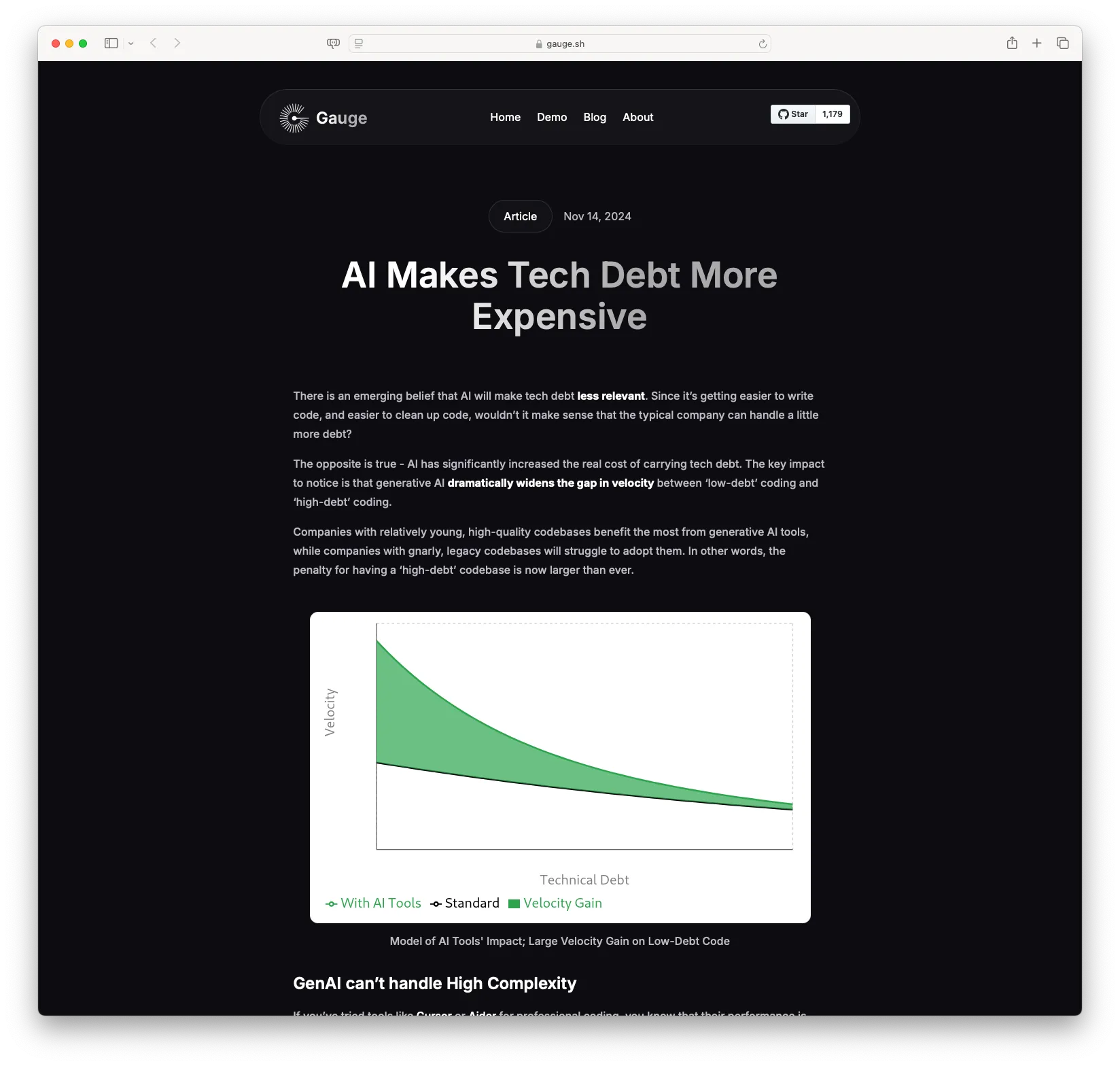
The article discusses the misconception that AI will alleviate tech debt. It argues that the opposite is true, AI increases the cost of tech debt because it widens the velocity gap between low-debt and high-debt codebases. Companies with newer, cleaner codebases can leverage AI better, while those with legacy code struggle, thereby increasing the penalty for tech debt. The article suggests that refactoring codebases and using modular design are necessary to fully benefit from AI tools. It encourages developers to shift focus from code implementation to architecture to enable AI-driven rapid development.
Regards,
M@
[ED: If you'd like to sign up for this content as an email, click here to join the mailing list.]
Originally published on quantumfaxmachine.com and cross-posted on Medium.
hello@matthewsinclair.com | matthewsinclair.com | bsky.app/@matthewsinclair.com | masto.ai/@matthewsinclair | medium.com/@matthewsinclair | xitter/@matthewsinclair
Was this useful?