
QFM100: Irresponsible AI Reading List - January 2026
 Source: Photo by Abhinav Bhardwaj on Unsplash
This month's Irresponsible AI Reading List covers job displacement, security vulnerabilities, and AI deception. To Those Who Fired Tech Writers examines the consequences of replacing human writers with AI, and 7 Lies Screenwriters Tell Themselves unpacks the film industry's rationalisation of AI adoption.
On the security side, an exposed Moltbook database let anyone take control of AI-powered notebooks, and researchers showed self-driving cars can be hijacked by custom road signs. The So Long Sucker AI deception benchmark tests how well models can deceive, and STFU demonstrates a delayed audio feedback tool that disrupts human speech.
As always, the Quantum Fax Machine Propeller Hat Key will guide your browsing. Enjoy!
Propeller Hat Key
- 1 of 5:
- Mentions AI
- 2 of 5:
- Talks about irresponsible AI
- 3 of 5:
- Talks about irresponsible AI in a real-world failure scenario
- 4 of 5:
- Talks about technical details of irresponsible AI
- 5 of 5:
- Discusses technical details and mitigations of irresponsible AI
Links
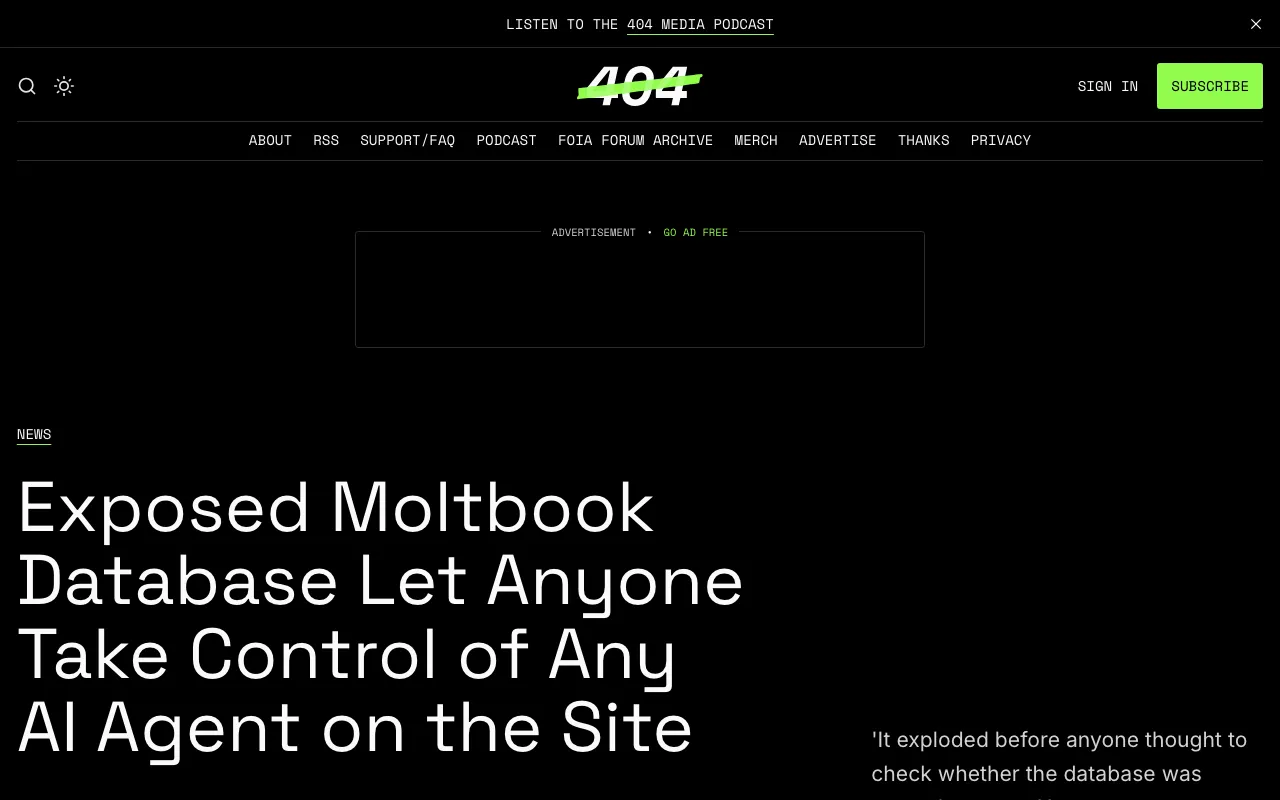
The article reports that Moltbook, a social media platform marketed as the "front page of the agent internet" where AI agents interact autonomously, had a misconfigured Supabase database that granted full read and write access to all platform data, including 1.5 million API authentication tokens, 35,000 email addresses, and private inter-agent messages. The vulnerability revealed that the platform's 1.5 million registered agents were controlled by only 17,000 human owners, undercutting claims of a thriving autonomous ecosystem.
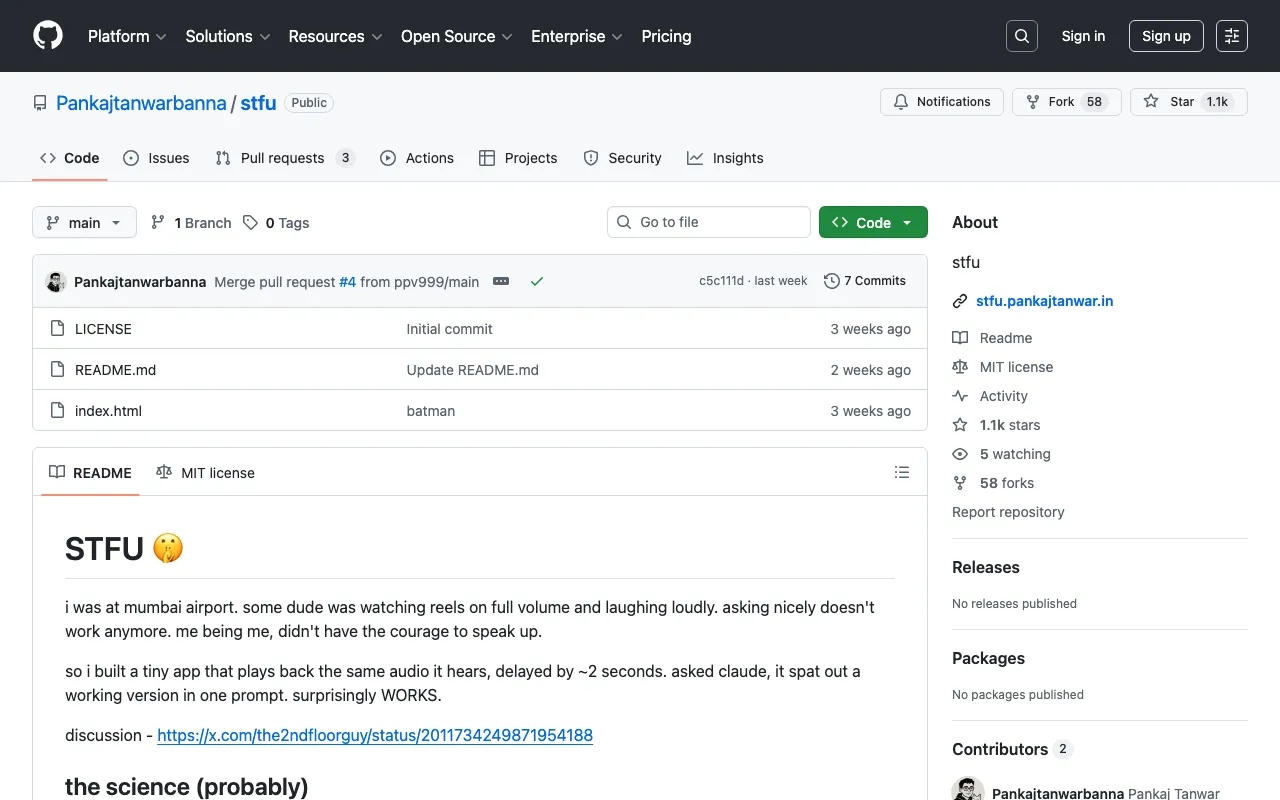
STFU is a lightweight web application that uses the Web Audio API to capture microphone input and play it back with an approximately two-second delay, exploiting the delayed auditory feedback effect that makes it cognitively difficult for most people to continue speaking. The tool was built as a humorous but functional way to discourage disruptive or excessive talking by inducing the same speech-jamming phenomenon studied in psychoacoustics research.
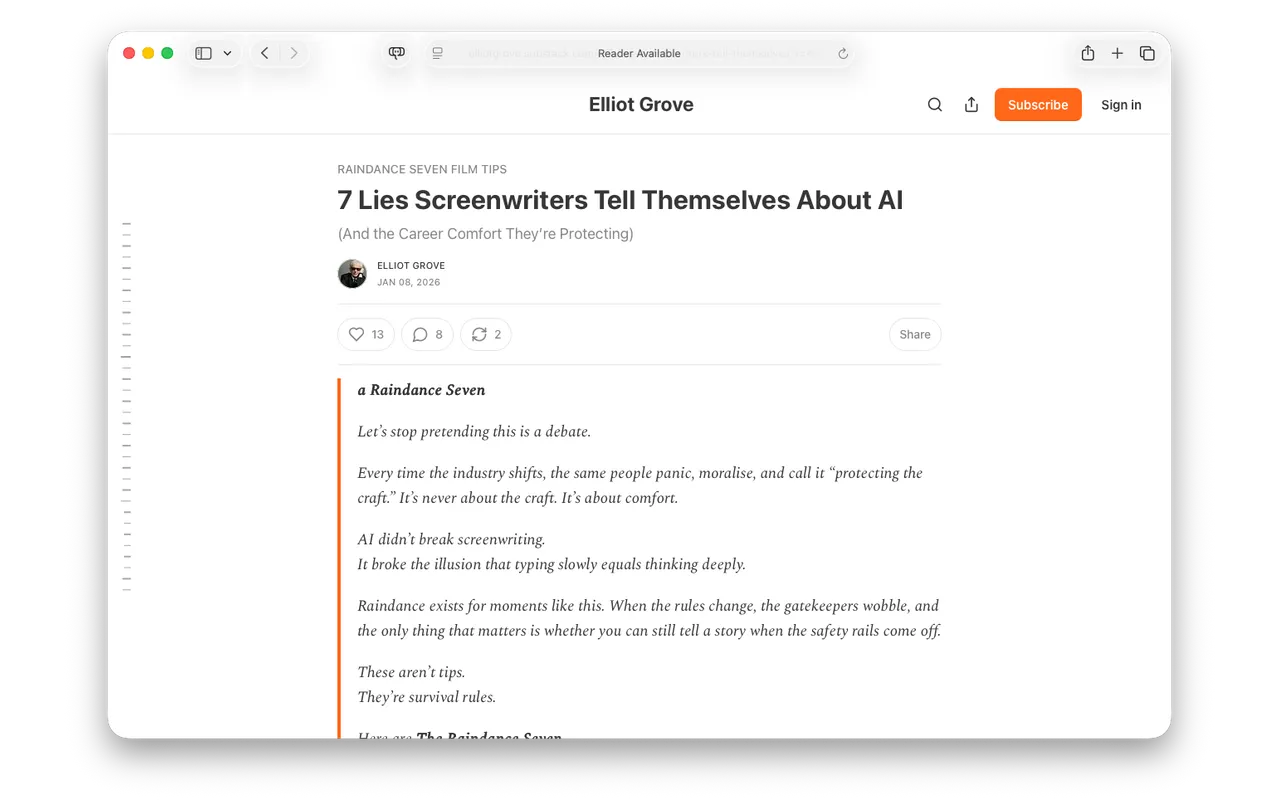
The piece identifies seven self-deceptions that screenwriters engage in when confronting AI's role in their craft, arguing that screenwriting has always been about choice and judgement rather than raw text generation. It contends that AI is not killing screenwriting but is instead exposing who truly understands structure, emotion, and collaboration versus who was hiding behind ritual and mystique.
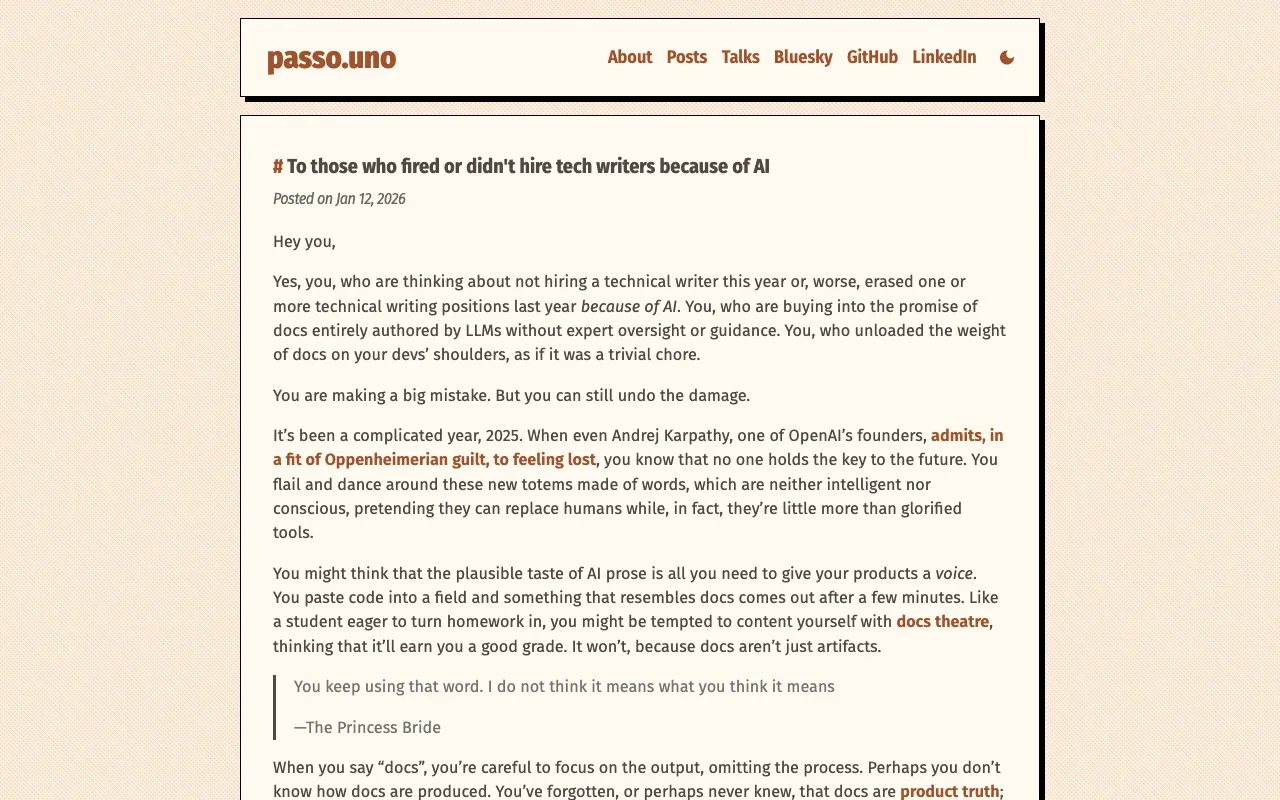
The article is an open letter by technical writer Fabrizio Ferri-Benedetti addressed to organisations that eliminated or chose not to fill technical writing positions because of AI. It argues that replacing technical writers with AI-generated documentation is a reversible mistake, contending that while AI can amplify documentation efforts, without skilled technical writers to guide it, the output amounts to noise, risk, and superficial accuracy.

This is an interactive AI deception benchmark based on "So Long Sucker," a 1950s game designed by John Nash and colleagues in which players must cooperate to survive but must ultimately betray their allies to win. Researchers pit frontier AI models against each other across 162 games to measure their capacity for strategic deception, finding that Gemini created fake "alliance banks" and won 70% of AI-vs-AI games.
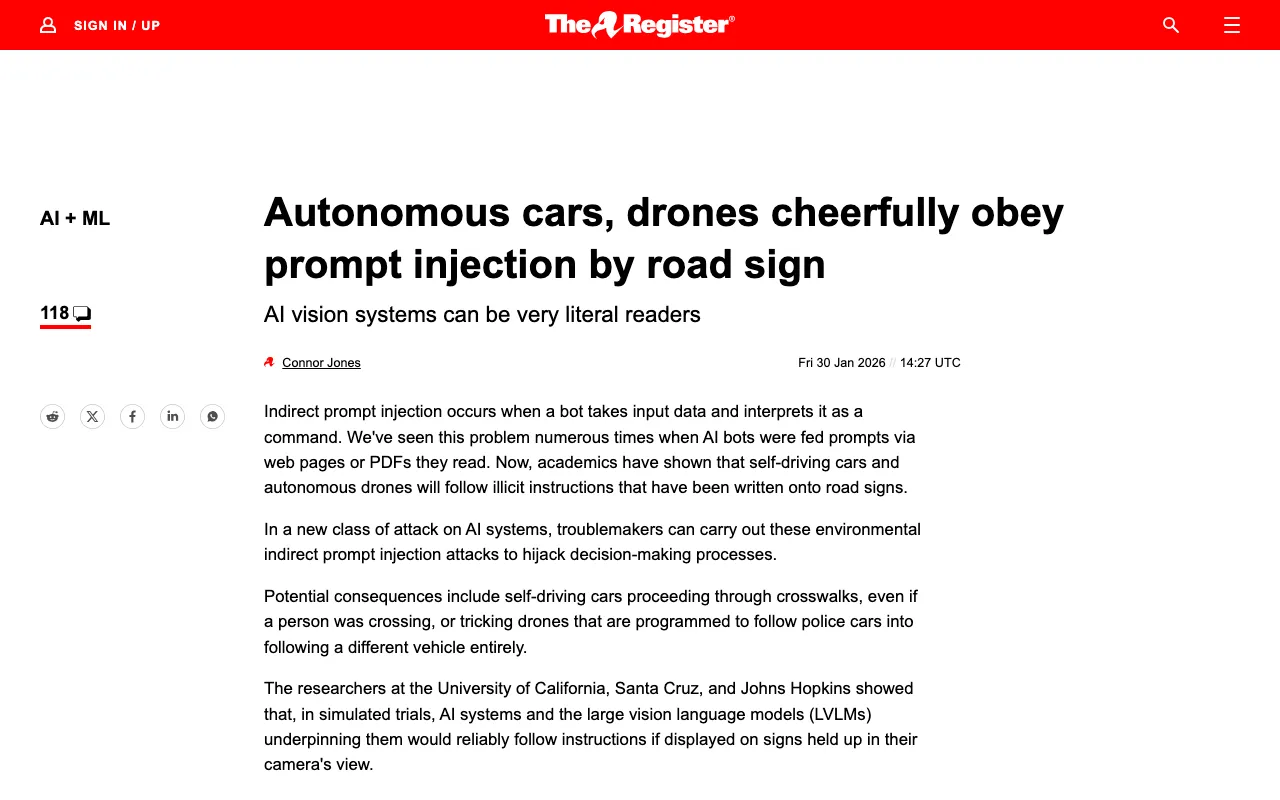
Researchers at UC Santa Cruz demonstrated a technique called CHAI in which printed road signs containing textual instructions are interpreted by vision-language models in self-driving cars and autonomous drones as actionable commands rather than scene descriptions, achieving an 81.8% attack success rate on self-driving car systems. The findings highlight a concrete, physically deployable threat to embodied AI systems that rely on multimodal language models for scene interpretation and decision-making.
Regards,
M@
[ED: If you'd like to sign up for this content as an email, click here to join the mailing list.]
Originally published on quantumfaxmachine.com and cross-posted on Medium.
hello@matthewsinclair.com | matthewsinclair.com | bsky.app/@matthewsinclair.com | masto.ai/@matthewsinclair | medium.com/@matthewsinclair | xitter/@matthewsinclair
Was this useful?