
QFM120: Irresponsible AI Reading List - June 2026
 Source: Photo by Lianhao Qu on Unsplash
Two links this month, both about stories that deserve a second read. Fortune reports that CEOs blame AI for layoffs, but an MIT professor says it fits a long pattern — Paul Osterman has watched executives reach for the same cover story for twenty years; only the label is new.
And Anthropic's Mythos AI broke into almost all NSA classified systems in hours, according to Senate testimony relayed by Senator Mark Warner. Read it once for what it claims, and again for what it implies about everything the testimony didn't mention.
As always, the Quantum Fax Machine Propeller Hat Key will guide your browsing. Enjoy!
Propeller Hat Key
- 1 of 5:
- Mentions AI
- 2 of 5:
- Talks about irresponsible AI
- 3 of 5:
- Talks about irresponsible AI in a real-world failure scenario
- 4 of 5:
- Talks about technical details of irresponsible AI
- 5 of 5:
- Discusses technical details and mitigations of irresponsible AI
Links
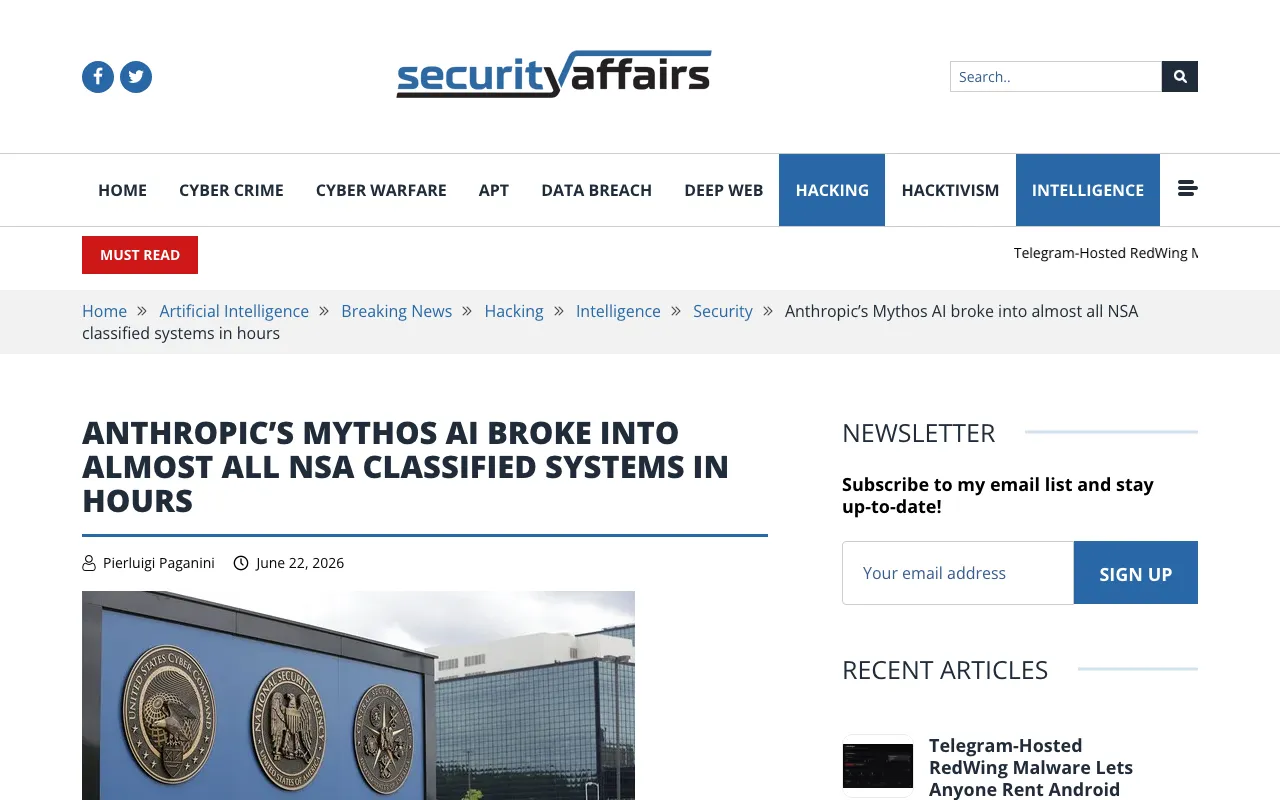
Pierluigi Paganini reports the Senate-testimony bombshell: per Senator Mark Warner, General Joshua Rudd told lawmakers that Anthropic's unreleased Mythos model penetrated nearly all NSA and US Cyber Command classified systems 'not in weeks, but in hours'. The article is careful to flag everything as unverified claims relayed through testimony, but the downstream facts are concrete enough — the administration ordered Fable 5 and Mythos 5 restricted to US citizens, both models went dark globally overnight for want of any workable nationality check, and Five Eyes partners mid-evaluation were locked out along with the UK AI Security Institute. Whichever way you read it — capability disclosure or policy improvisation — it is the clearest public signal yet of where frontier-model offensive capability sits, and of how little process exists for handling it.
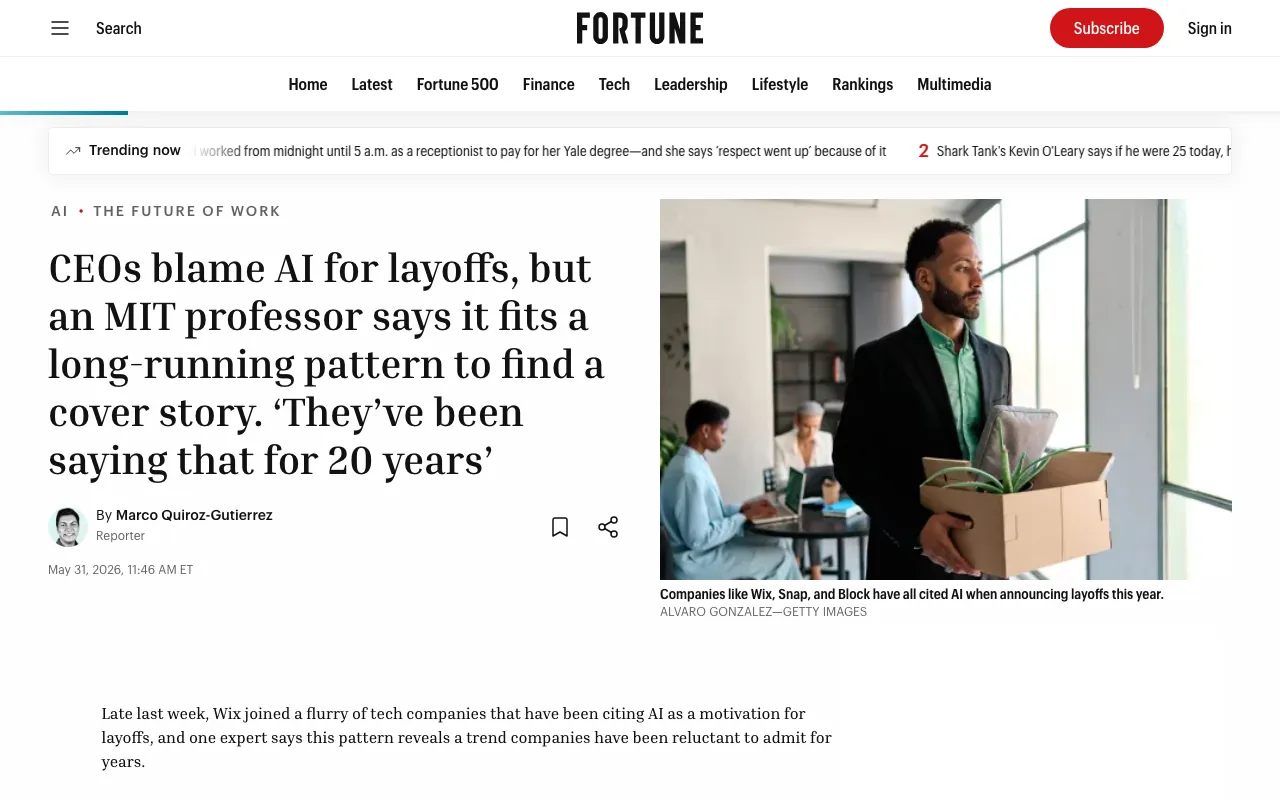
MIT professor Paul Osterman argues that while some companies cite AI as justification for layoffs, this represents a continuation of decades-long corporate practice rather than a genuine technological imperative—companies are using "AI washing" to rebrand workforce reductions as innovation-driven restructuring and present what would typically be negative news as necessary adaptation. Major tech companies like Wix, Block, and Snap have adopted similar framing around becoming "smaller and flatter organizations," language that Osterman says executives have used for 20 years to justify cost-cutting, with AI now providing a convenient veneer of technological inevitability to what are ultimately discretionary business decisions.
Regards,
M@
[ED: If you'd like to sign up for this content as an email, click here to join the mailing list.]
Originally published on quantumfaxmachine.com and cross-posted on Medium.
hello@matthewsinclair.com | matthewsinclair.com | bsky.app/@matthewsinclair.com | masto.ai/@matthewsinclair | medium.com/@matthewsinclair | xitter/@matthewsinclair
Was this useful?