
QFM041: Machine Intelligence Reading List - November 2024
 Source: Photo by julien Tromeur on Unsplash
This month's edition of the Machine Intelligence Reading List starts with: Graph-based AI model maps the future of innovation that explores an approach leveraging category theory to identify creative connections across disciplines. This technique not only enhances material science but also underscores AI's growing ability to support interdisciplinary discovery. Similarly, Archetypes of LLM apps categorises large language model (LLM) applications, offering insights into how foundational and advanced technologies, like retrieval-augmented generation and autonomous agents, are reshaping industries by improving efficiency and decision-making.
The concept of accessibility and ease of implementation emerges as a recurring theme. Agentic Websites and Apps demonstrates how no-code platforms enable non-technical users to harness AI capabilities for dynamic, personalised applications, streamlining workflows such as on-boarding and sales automation. This trend of lowering barriers is echoed in We can all be AI engineers – and we can do it with open source models, which argues for the democratisation of AI engineering through open-source models and simple development tools. Together, these articles reveal a shift towards making sophisticated AI tools accessible to a broader audience.
The practical implications of AI in professional settings are also examined. How AI-Powered Vertical SaaS Is Taking Over Traditional Enterprise SaaS highlights the growing importance of specialised, industry-specific SaaS platforms that leverage AI to deliver tailored, efficient solutions. Similarly, AI is the Future of Development, But Not as I Imagined offers a personal perspective on AI's transformative role in software development, moving beyond automation to augment strategic thinking and problem-solving.
The infrastructure supporting AI-driven applications continues to evolve. Model Context Protocol (MCP) Quickstart introduces a universal framework for integrating AI with local and remote resources, addressing inefficiencies in early large language models by offering a standardised protocol for managing context and tool usage. Meanwhile, OCR: Document to Markdown illustrates how specific tools are adapting to niche needs, such as converting images into structured markdown for seamless digitisation.
Finally, the broader societal and economic implications of AI are considered in Artificial Intelligence and the Future of Work. This report examines how generative AI technologies like ChatGPT are reshaping labour markets, balancing opportunities for increased productivity with concerns about job displacement and inequality.
As always, the Quantum Fax Machine Propeller Hat Key will guide your browsing. Enjoy!
Propeller Hat Key
- 1 of 5:
- Mentions technology
- 2 of 5:
- Talks about technology in real-world use cases
- 3 of 5:
- Talks about details of machine intelligence technologies
- 4 of 5:
- Using and working with machine intelligence technologies in software
- 5 of 5:
- Programming new machine intelligence concepts and implementations
Links
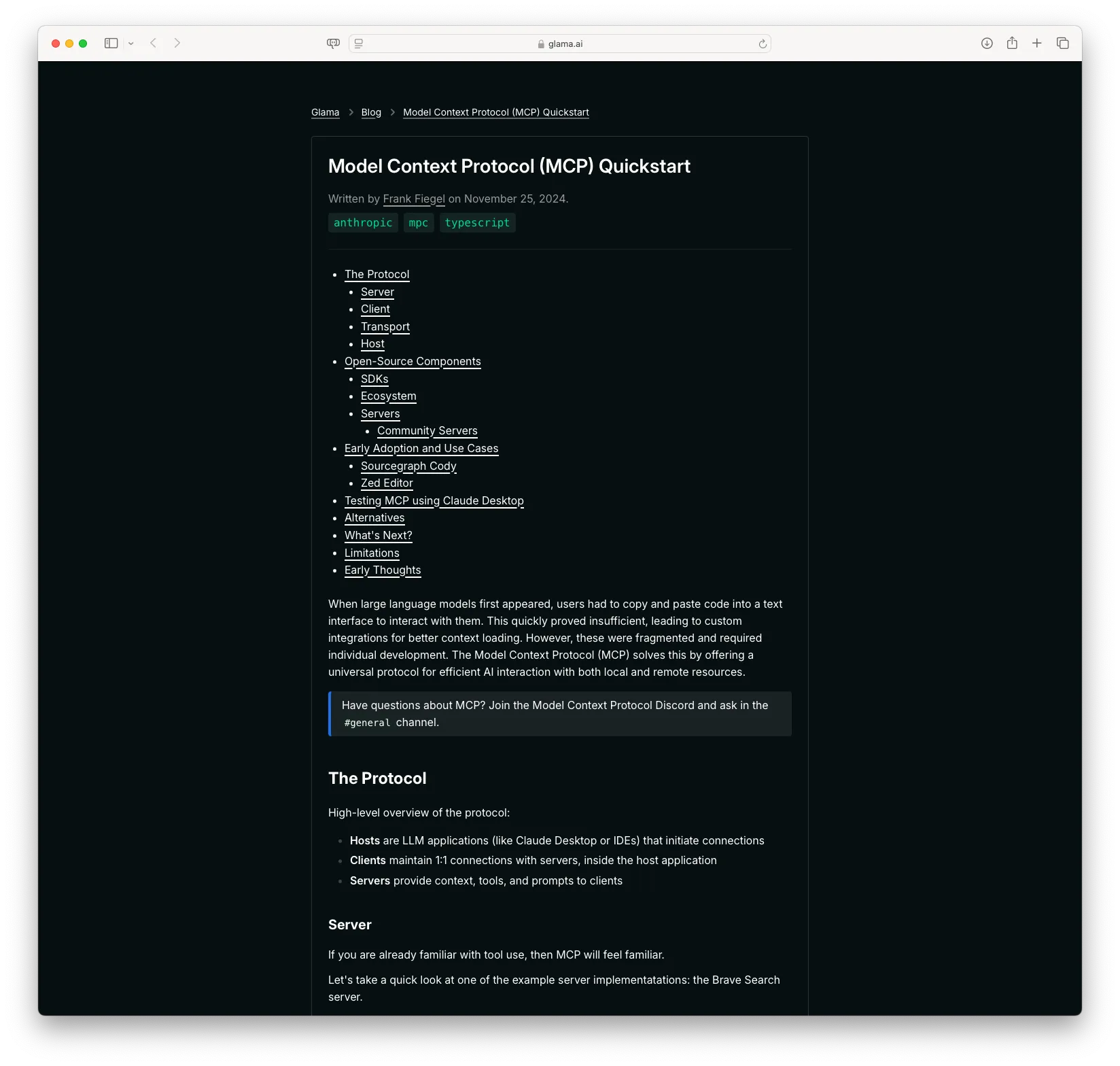
The article introduces the Model Context Protocol (MCP), a universal framework designed to standardize AI interactions with local and remote resources. This protocol addresses the inefficiencies of early large language models that relied on fragmented custom integrations by offering a unified method for handling context and tools. MCP enables seamless communication across AI applications by defining roles for hosts, clients, and servers, and employing various transport mechanisms like Stdio and HTTP with SSE. With examples and open-source components, the article outlines the protocol's potential to enhance AI interaction seamlessly, although its widespread adoption remains contingent on the support of HTTP transport.
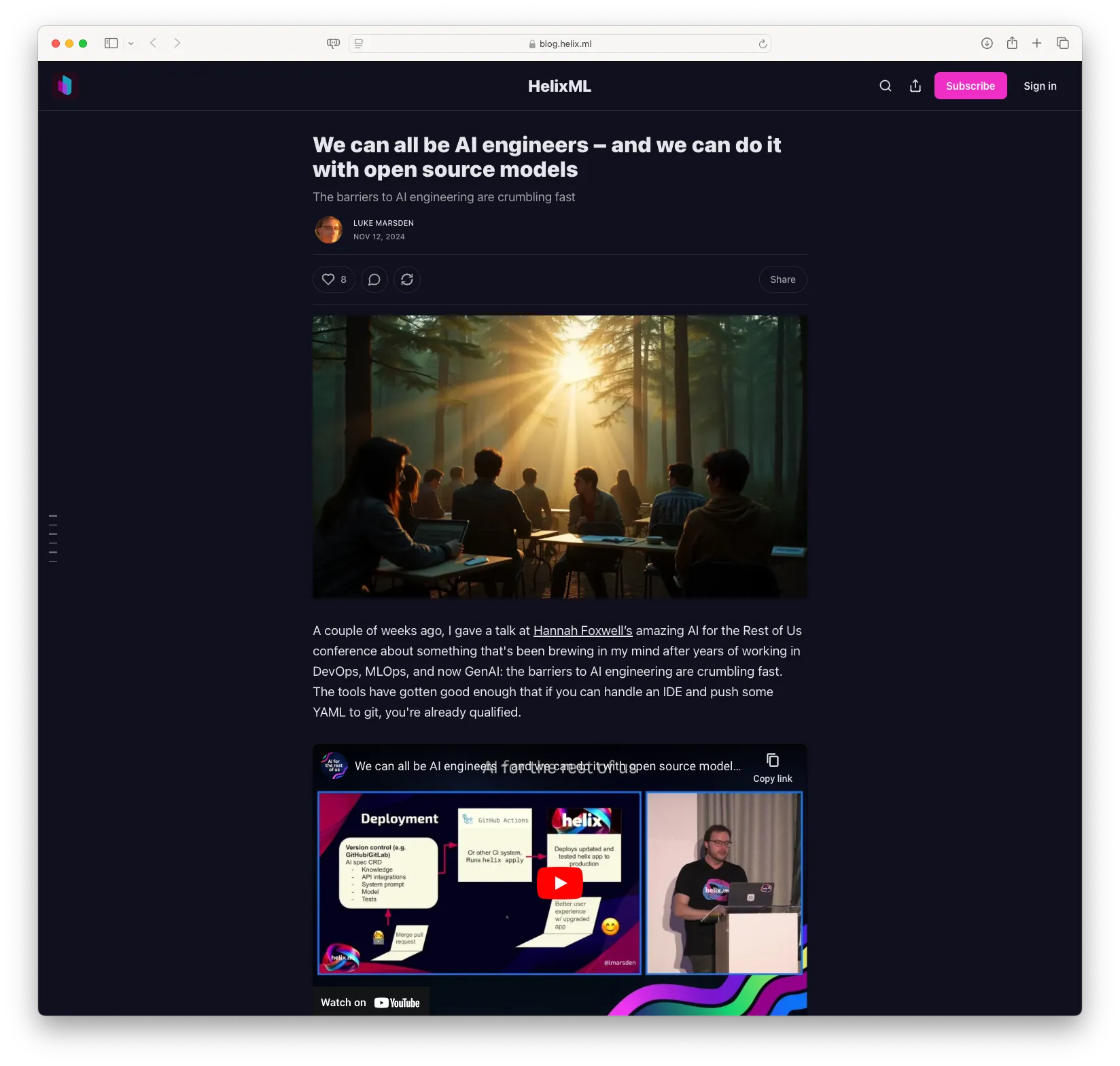
The barriers to becoming an AI engineer are rapidly diminishing thanks to the advancement in tools and the availability of open source models. With skills like basic Integrated Development Environment (IDE) handling and Git usage, individuals are increasingly capable of developing AI applications. The blog emphasizes the simplicity of building AI systems which involve using models, prompts, knowledge bases, integrations, tests, and deployment on servers, advocating for open source models to keep data secure within a company's infrastructure.
The National Academies report on 'Artificial Intelligence and the Future of Work' examines recent advances in AI technologies and their implications for economic productivity, job stability, and income inequality. It highlights how AI is at an inflection point, driving the rapid development of systems like ChatGPT, which can generate text and other content, potentially reshaping job markets by complementing or replacing human labor. The report emphasizes the need for real-time data collection and dissemination to help workers and policymakers adapt to technological changes, and considers the unknowns about new AI capabilities and their future impacts.
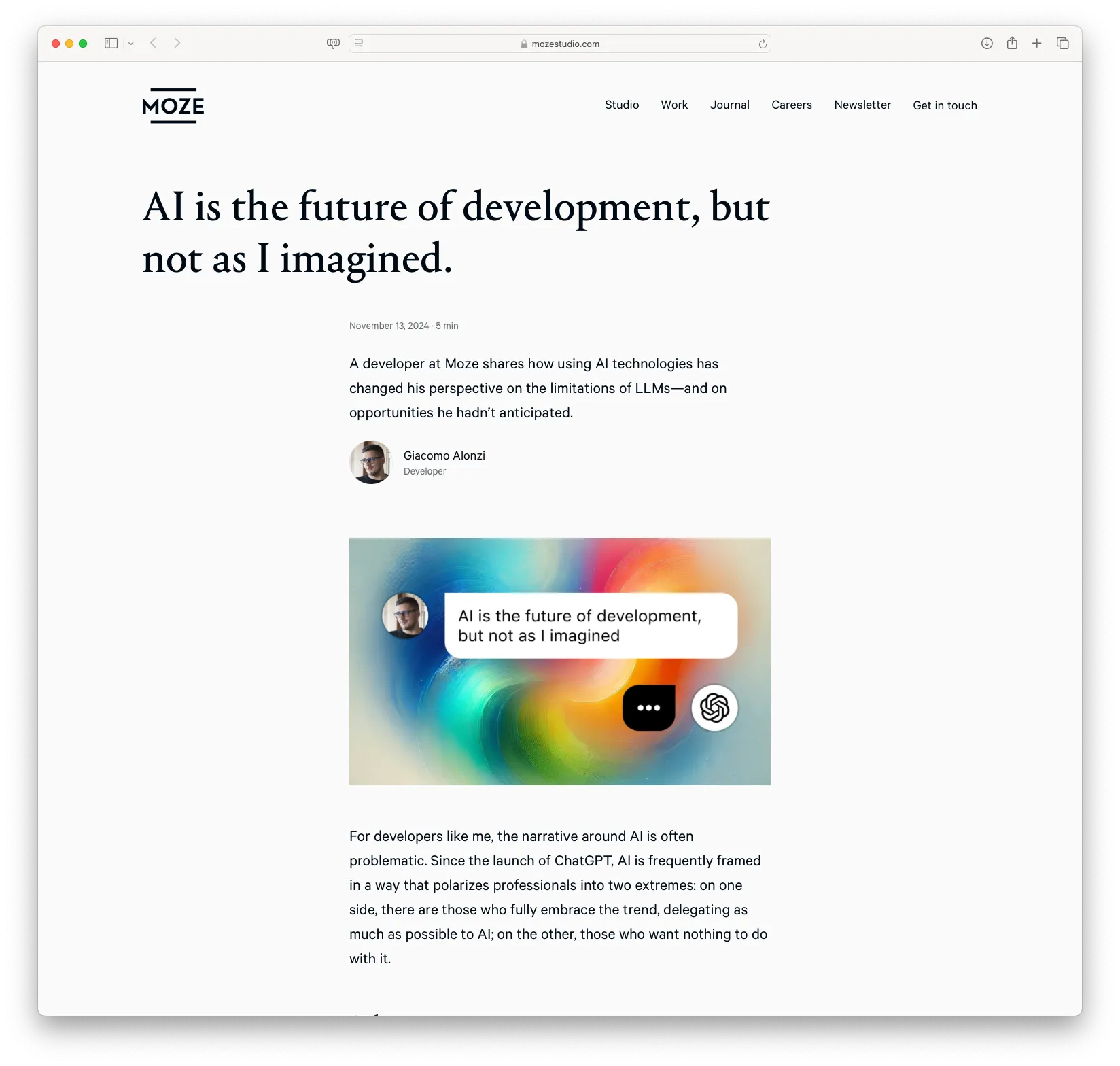
A developer discusses the evolving role of AI in software development, highlighting its divisive nature among professionals. Initially skeptical, the author describes how AI tools like OpenAI's Assistant API and GitHub's Copilot X have expanded their capabilities and efficiency in projects, transforming their approach from execution to strategic planning. By leveraging AI, they managed to optimize tasks and find innovative solutions to complex problems, underscoring AI's potential as a significant career advancement tool.
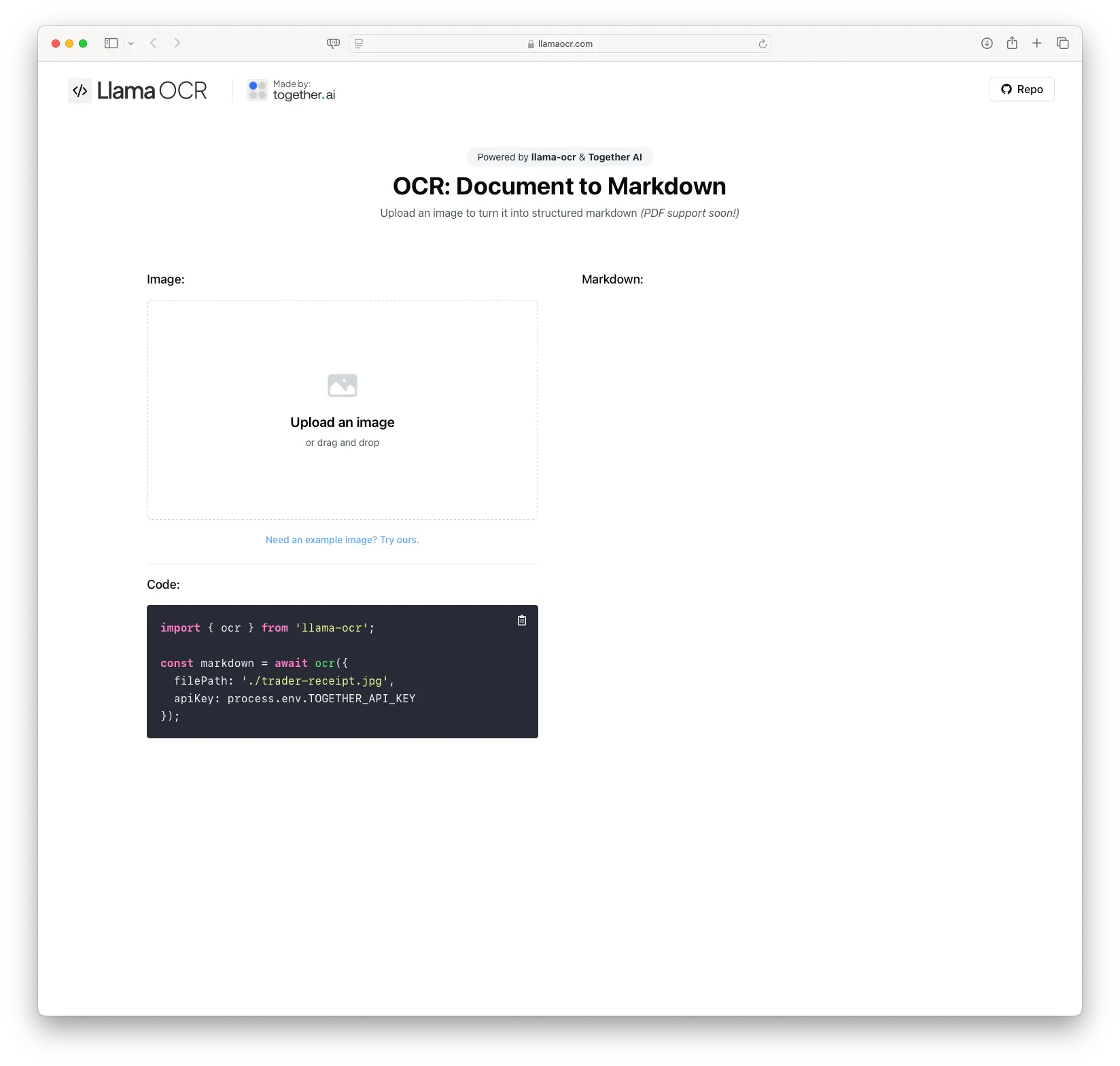
The new OCR tool powered by llama-ocr and Together AI allows users to convert images into structured markdown formats. Ideal for those looking to digitize their documents, the tool also promises future PDF support. Users can upload images directly or use example images provided for convenience.

The article titled "Archetypes of LLM apps" by Philip I. Thomas discusses the actual applications of AI in businesses, focusing on startups leveraging AI to innovate across various industries. It explores three main categories of AI-driven applications: basic technologies forming foundational "building blocks" like chat, embeddings, and semantic search; basic LLM applications such as code generation and summarisation; and advanced applications involving retrieval-augmented generation, agents, and swarms. The presentation aims to highlight how these LLM-powered technologies are shaping the next generation of products, offering efficiency improvements and innovation opportunities in business processes.
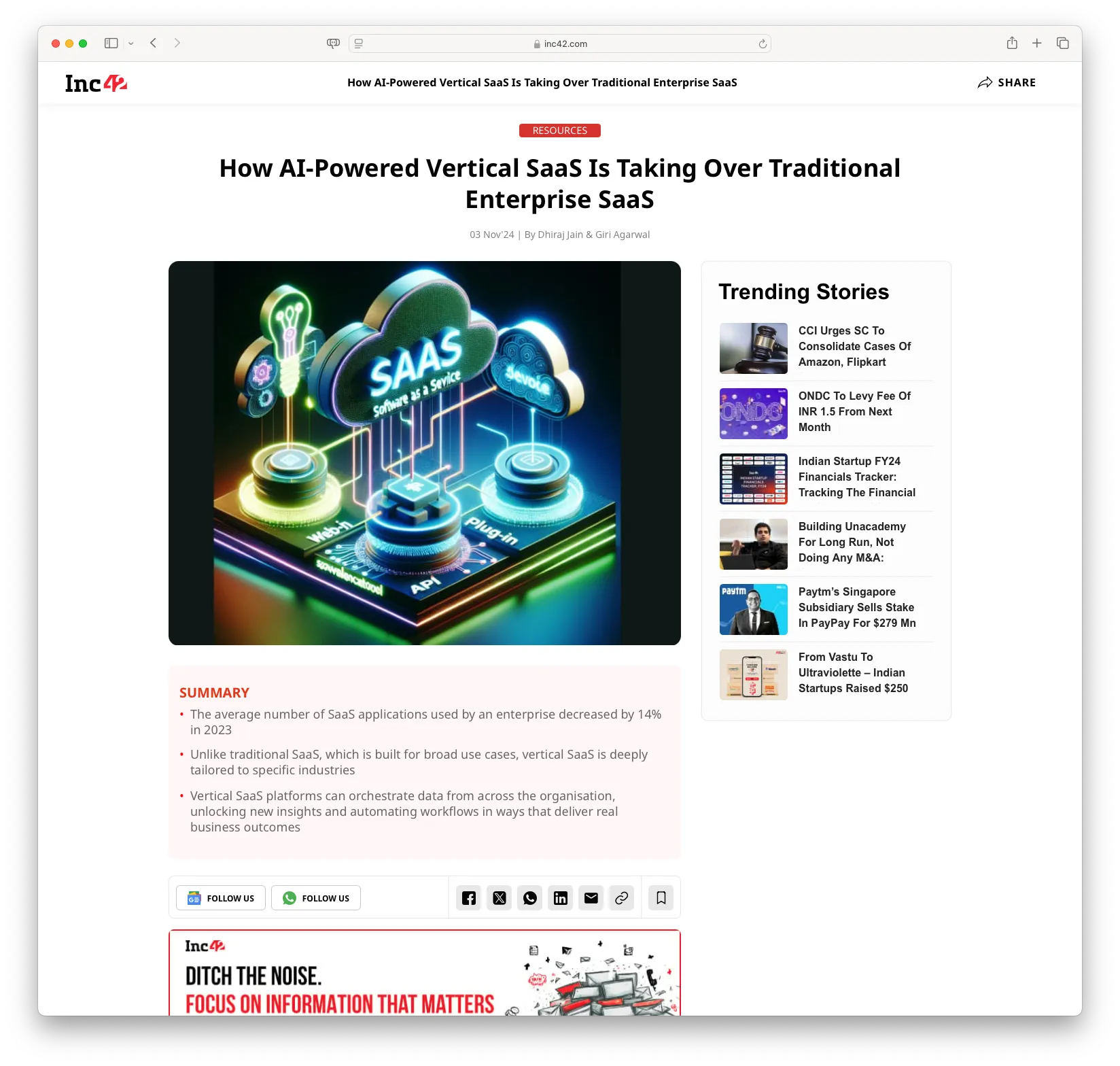
This article discusses the emergence of AI-powered vertical SaaS as a transformative force in enterprise software. Unlike traditional SaaS, which provides broad-based solutions, vertical SaaS offers industry-specific tools tailored to address specific business challenges. By leveraging AI, these platforms can automate workflows, provide real-time insights, and deliver tangible business outcomes, making them particularly valuable for companies seeking personalized and efficient software solutions.
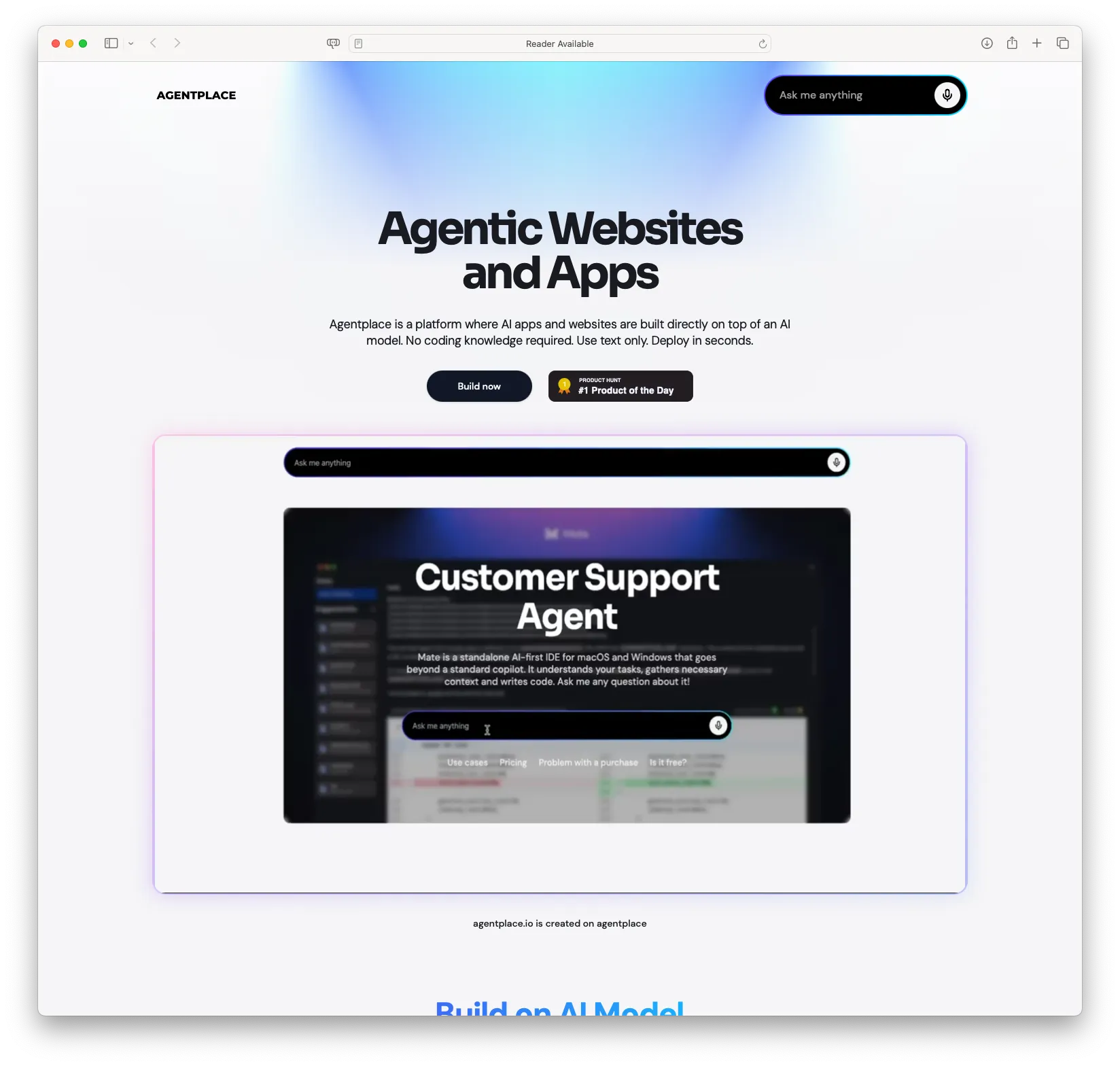
Agentplace is a no-code platform that enables users to build AI-powered, dynamic websites directly on top of a GPT-4 model, facilitating applications such as sales automation, interactive product demos, onboarding, and customer support. The platform supports voice and image understanding, personalized content, and dynamic user interfaces without requiring coding skills.
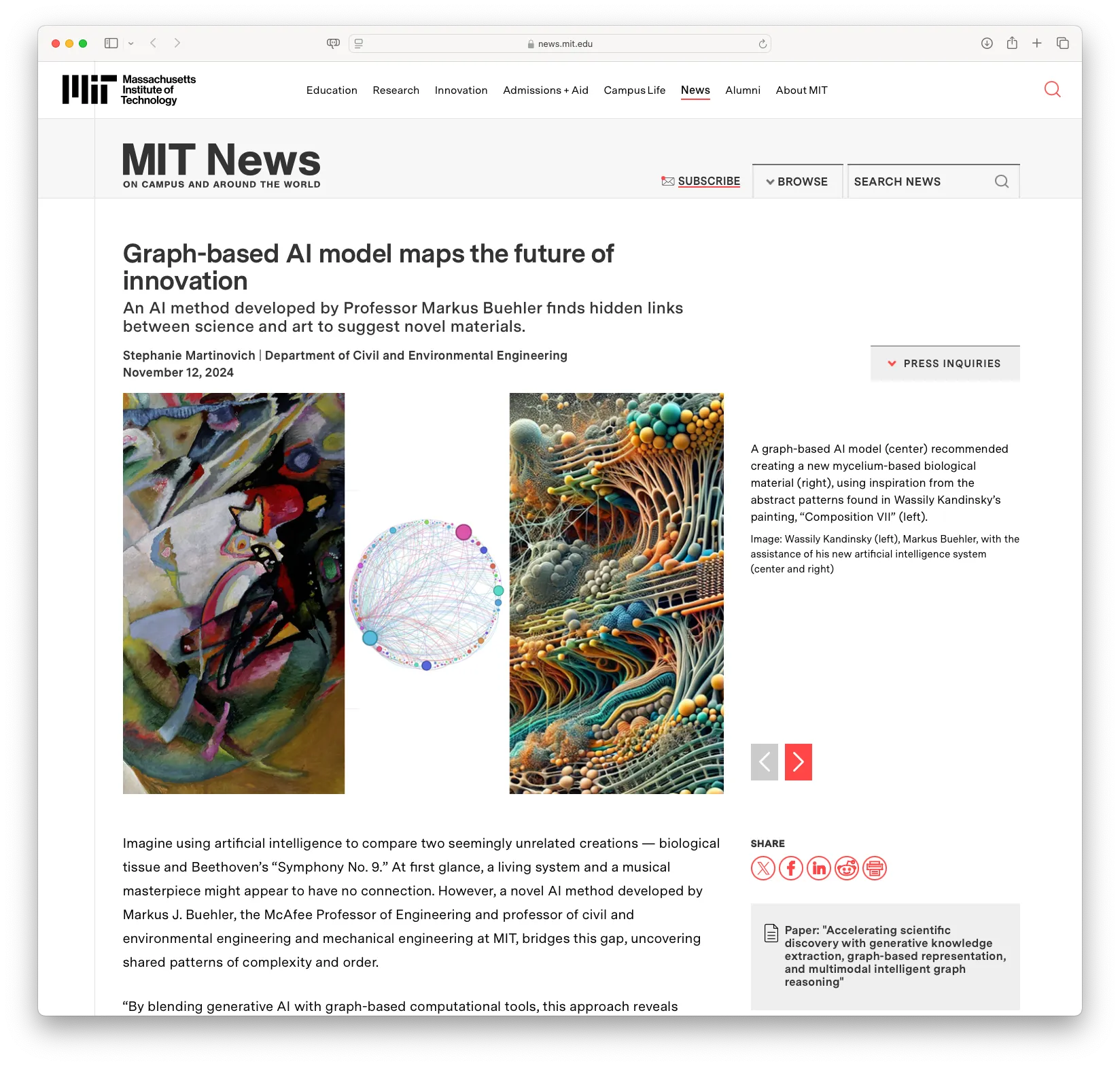
MIT Professor Markus Buehler has developed an advanced AI method that bridges the creativity of art with scientific discovery. By using graph-based computational tools inspired by category theory, this AI model uncovers innovative connections between seemingly unrelated fields such as biology and music. The model has already suggested novel material designs inspired by the patterns found in abstract art, showcasing its potential to revolutionize material science, art, and technology.
Regards,
M@
[ED: If you'd like to sign up for this content as an email, click here to join the mailing list.]
Originally published on quantumfaxmachine.com. Also cross-published on Medium.
hello@matthewsinclair.com | matthewsinclair.com | masto.ai/@matthewsinclair | medium.com/@matthewsinclair | bsky.app/@matthewsinclair.com | twitter.com/@matthewsinclair
Was this useful?