
QFM133: Machine Intelligence Reading List - October 2026
 Source: Photo by Lorenzo Herrera on Unsplash
This was the month I could prompt a game into existence. Google Labs opened Playground, which turns a sentence into a game you can play in the browser, and in a Slack group I'm in, someone asked Claude Opus 5.5 for a pinball game in Roc, with sound, in the terminal and on the web, and by their account got pinterm on the first try. Where does that leave gaming? And, more importantly, where does it leave the whole software industry?
The same agents are taking software apart. Ben Thompson asks whether game decompilation is legal and concludes that the bigger risk to gaming is new games and more personalization, Undocumented Behavior's video looks at how AI is cracking open video games, and REA gives a coding agent a reverse engineer's toolkit. There is a grand irony in using a coding agent to decompile a coding agent. Decompiling is not only for copying, though: t4t5 used it to get AirDrop working on a Framework laptop.
An agent is only as good as what it is told, and Mo's case that markdown is not software (much of it is "raindancers and superstition") sits beside two attempts to make intent something a tool can check: Covenant, the contract layer for Impatient Programming, and my own Intent. Google Research's Harness² tunes the harness around a fixed model, the latest shot in the Harness Wars. Drew Breunig takes stock of context engineering, Benjamin Congdon puts agents on monitoring duty, Pentad measures how much of a faster model's speed the control plane gives away, and The Decoherence Trap counts what all those agents cost a codebase. For keeping one in order, Ash Signals points side effects in one direction.
The strangest build of the month compiles a computer into a language model: Qwenputer puts a RISC-V CPU into Qwen 3.5's weights with no training, and Drew Breunig's NESformer uses the same compiler to run NES games. Attention Is Not What You Need swaps attention for Grassmann manifolds, MASS has a model improve itself through multi-agent workflows of its own design, and The Emperor Pelican Has No Clothes finds frontier models converging on the same designs. turbopuffer says RIP to the vector database, at least as a storage layout. In hardware, Otto One wants to be the always-on box for your agents, and MacParakeet keeps dictation and meeting transcripts on your Mac.
Among the essays, one argues that AI is a tool, and using it well takes skill, Venkatesh Rao diagnoses cognitive mercantilism, and in The Atlantic, Steven Strogatz asks whether mathematics is for the machines now. Last, Tom Chivers catches Iain Banks using an LLM, in 1988.
As always, the Quantum Fax Machine Propeller Hat Key will guide your browsing. Enjoy!
Propeller Hat Key
- 1 of 5:
- Mentions technology
- 2 of 5:
- Talks about technology in real-world use cases
- 3 of 5:
- Talks about details of machine intelligence technologies
- 4 of 5:
- Using and working with machine intelligence technologies in software
- 5 of 5:
- Programming new machine intelligence concepts and implementations
Links
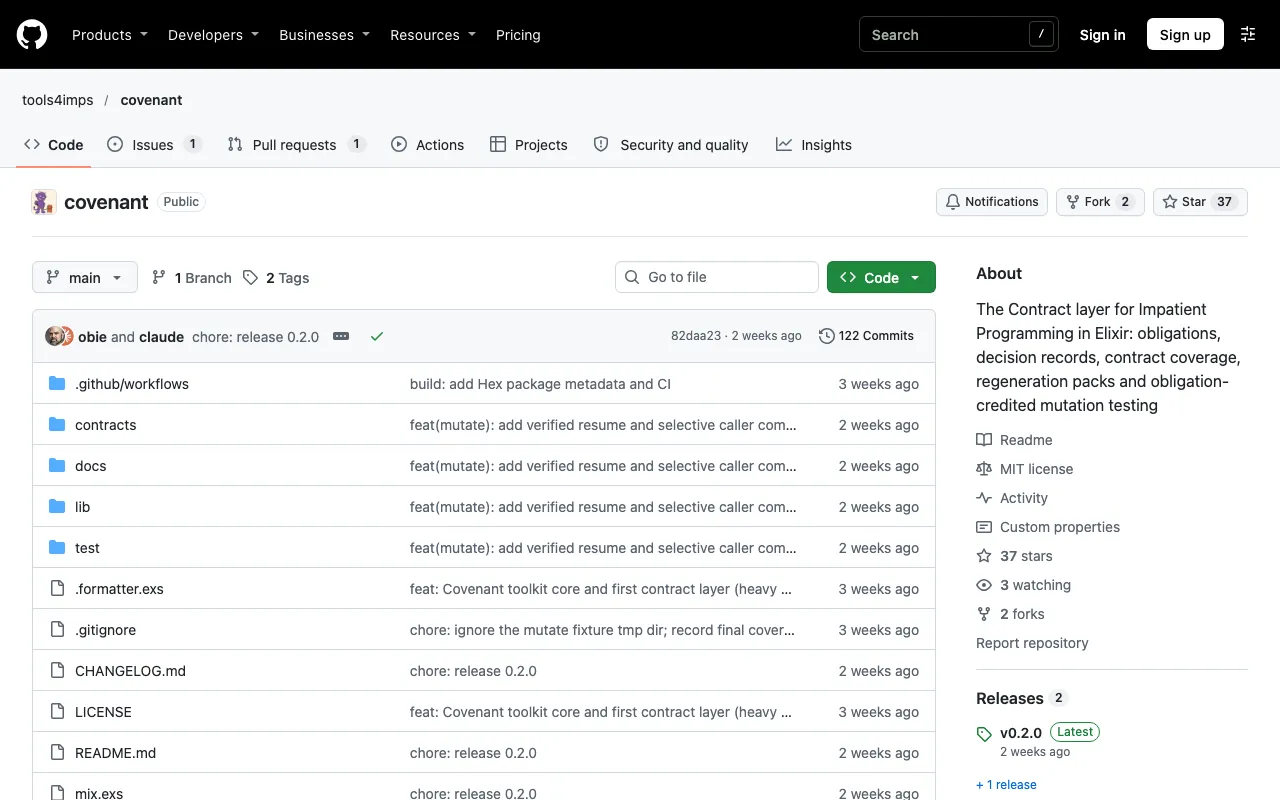
Covenant is the contract layer for Impatient Programming, in this month's Engineering Leadership list, packaged as an Elixir Mix library. A project declares its obligations in contracts, and Covenant fails the build when one has no passing test, reports contract coverage, mutates the code to check that the tests would notice, and can regenerate components from their contracts. The repository's own intent contract shows what one looks like.
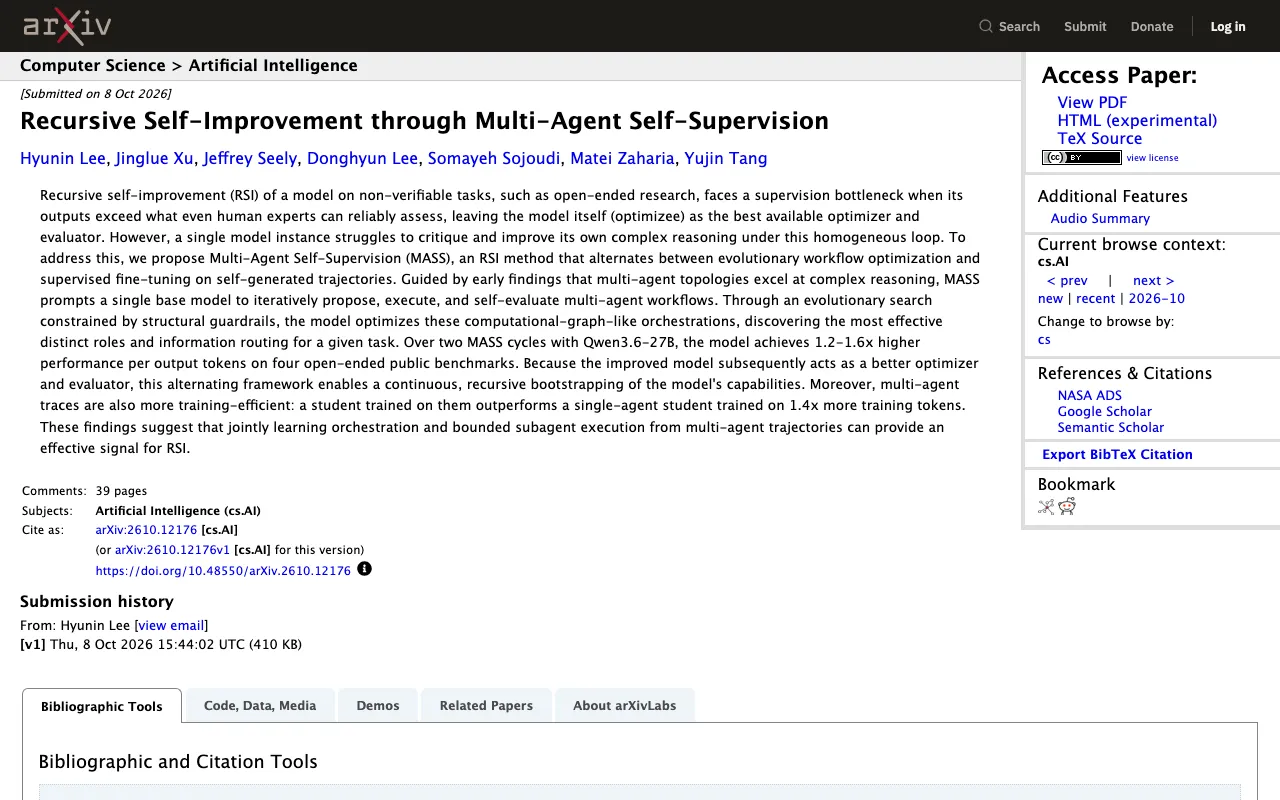
Recursive Self-Improvement through Multi-Agent Self-Supervision starts where a model's output on open-ended work outruns what anyone can check, leaving the model as the best judge of itself. Its method, MASS, has a single base model propose, run and grade multi-agent workflows, searching over them in an evolutionary loop with structural guardrails, then fine-tunes on its own successful trajectories. Over two cycles on Qwen 3.6-27B it reports 1.2-1.6x better performance per output token on open-ended benchmarks than single-agent approaches, at lower training cost. Sakana AI has a project page, and there is a Hacker News discussion.

Mo's video post quotes Markus Eisele, who cannot wrap his head around people getting famous for writing markdown files, calling them engineering skills and putting them on GitHub. The replies argue over whether writing those files is a real skill or something any model could turn out on request. The line worth keeping: "There's just raindancers and superstition wrapped up as markdown files."
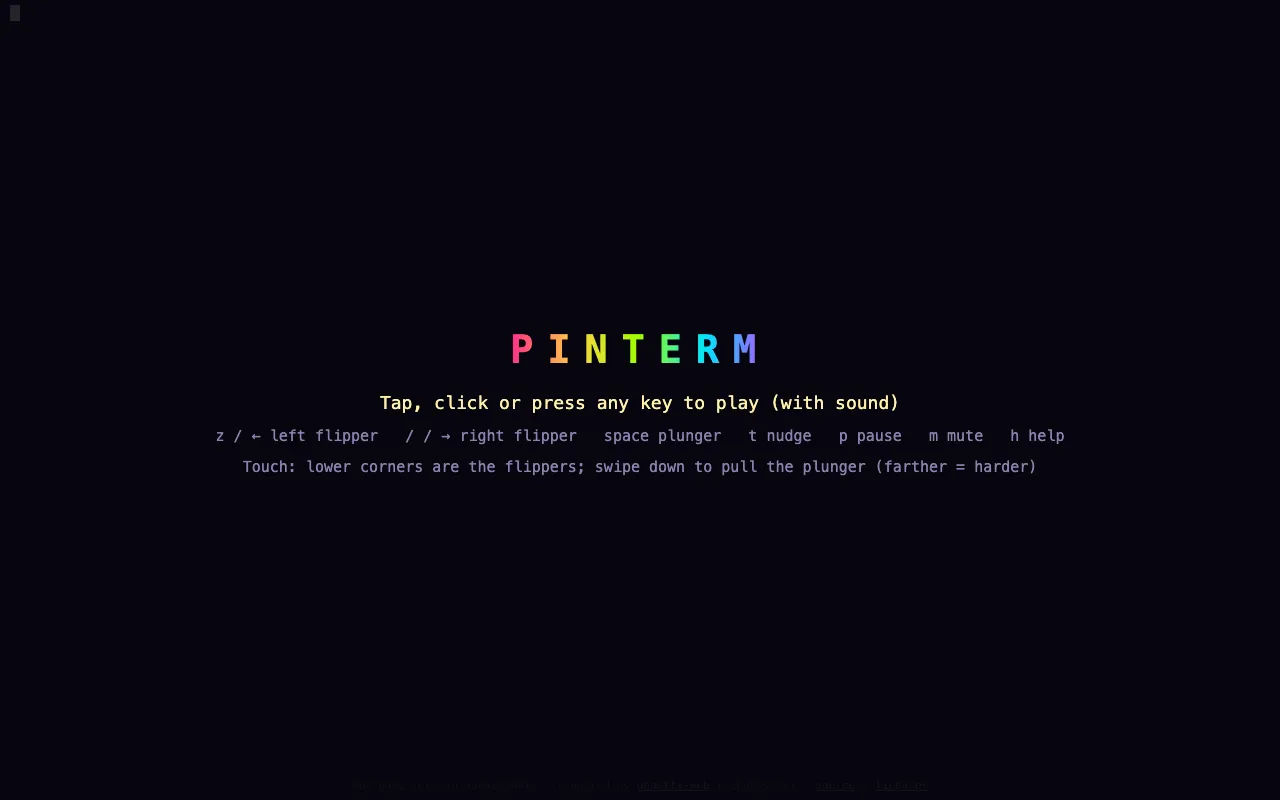
pinterm is a pinball game that runs in a terminal, with sound, and on the web through libghostty, with touch controls for phones. It reached a Slack group I'm in along with the prompt that made it: "Make me a fun Pinball game in the Roc language as a terminal game. With sound effects. Call it pinterm. Then put it on the web using libghostty. Make sure the sound works there too. Add touch controls." By the poster's account, Claude Opus 5.5 built it on the first try.
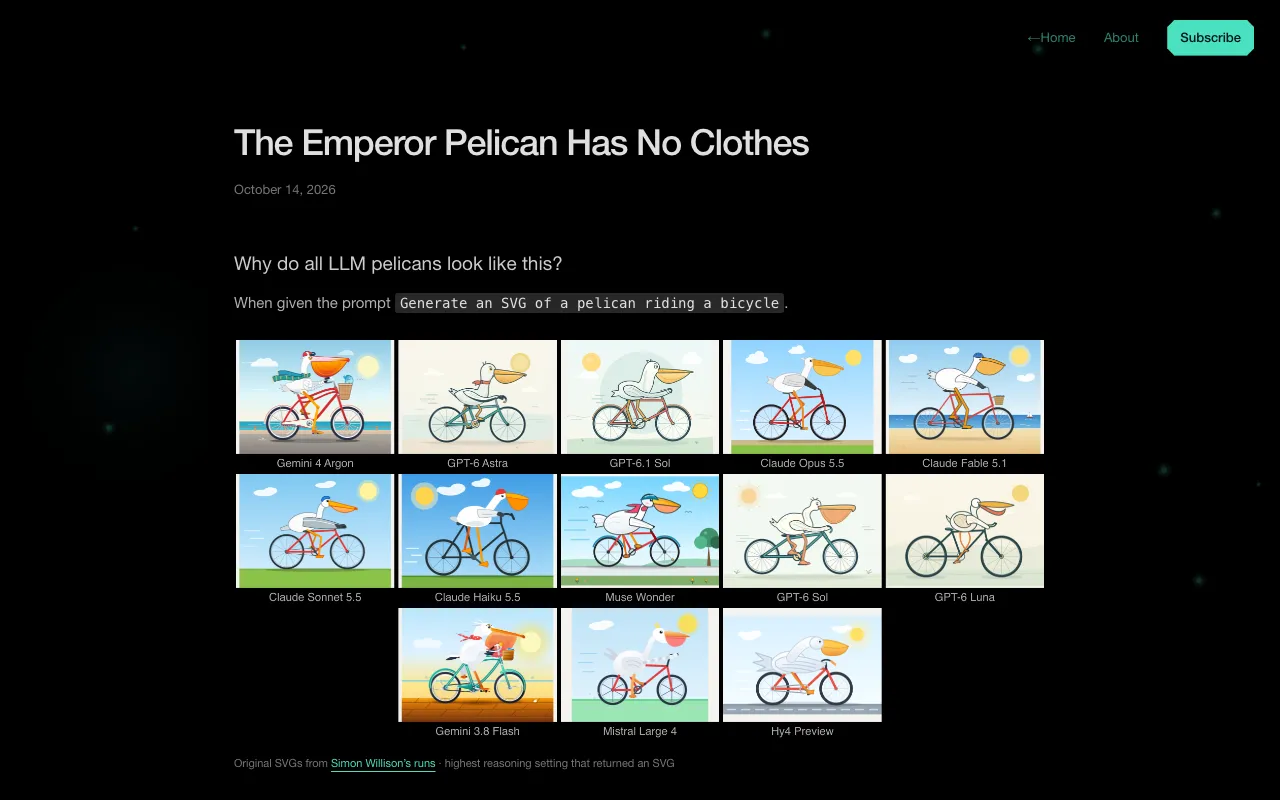
The post reports a new benchmark, Design Creativity Bench: 16 frontier models, 80 UI design tasks, scored on originality, creative range and appropriateness. The models converge on the same designs whatever the prompt, a diversity collapse, and the best of them, GPT-6 Astra, scores 65.5 against 92.3 for human designers. They get the function right and the creative decisions wrong.

Otto One is a box for your desk that runs AI agents all day: they browse, drive applications, write code and run workflows without your computer staying on. Setup is plugging it in and pairing it with your phone, and it ships with agent templates for support, content and business tasks. I liked the idea at first, and I can see what it is for: the people now using a Mac mini as an always-on local agent box. But it is not powerful enough for local inference, only for running an agent with access to the machine, and that machine is an odd hybrid of semi-open and semi-locked-down software with a subscription for access. It is not clear to me what question it is the answer to. I can still see them selling a bagillion of them.
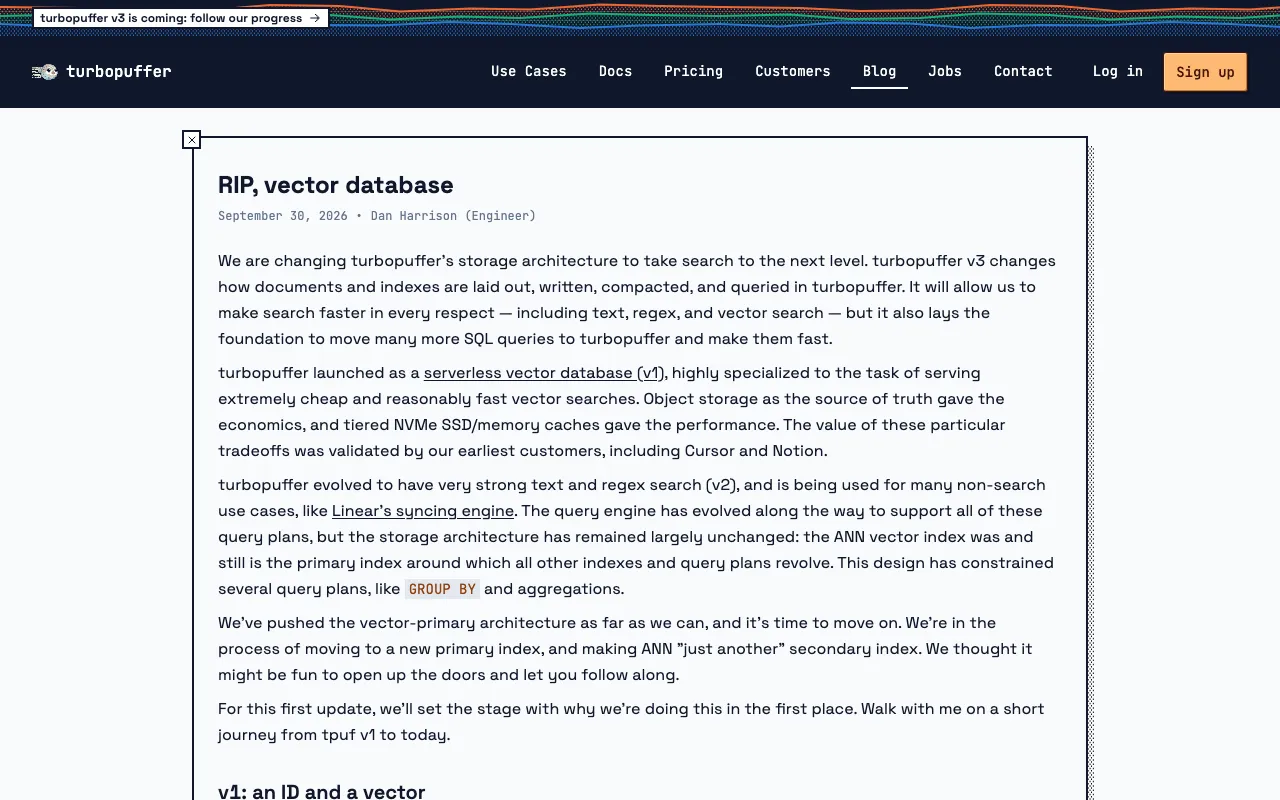
turbopuffer's RIP, vector database explains why its v3 drops the vector-first storage layout it launched with. Every document used to be keyed by its place in a hierarchical clustering index (SPFresh), which suited v1's vector-only documents and v2's text and regex search, but held back the work most customers now do with it: filtering, GROUP BY and aggregation. The new primary index stores documents as ordinary rows and treats approximate nearest neighbour search as one more secondary index. This seemed inevitable to me once pgvector put vector search inside Postgres: when the database you already run can do it, a vector index is a feature of a database, not a reason to buy one. There is a Hacker News discussion of the post.

Ben Thompson's Stratechery Update of 6 October 2026 comes in three parts, as its title says: game decompilation, whether it is legal, and the well-trodden path it follows. The free standfirst gives his conclusion: games are being decompiled, but the real risk to gaming is new games and increased personalization. The rest is for subscribers.
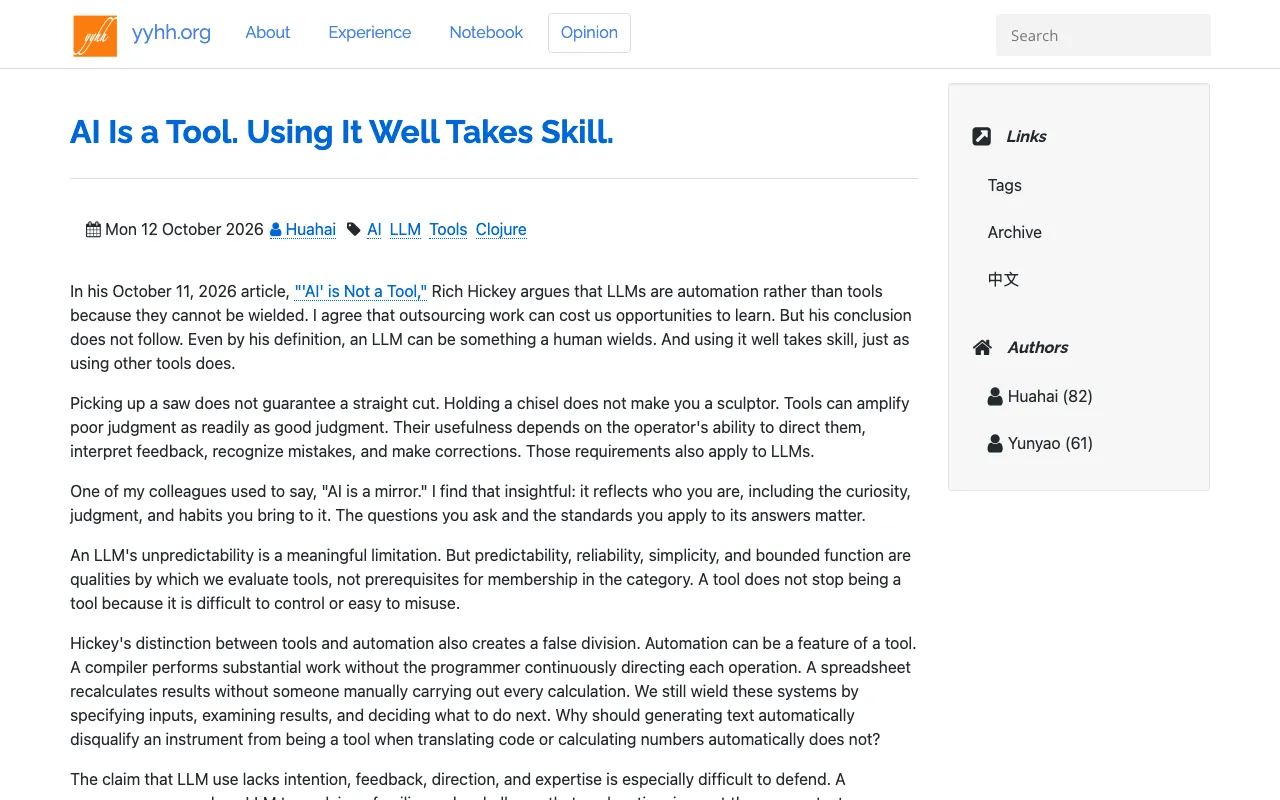
The argument here is that LLMs are tools, not automation. Like a compiler or a spreadsheet, they do a great deal of work automatically and still reward a skilled operator. What decides it is not whether the output can surprise you, or whether using it well takes expertise, but whether a person can keep exercising judgement over it through feedback, interpretation and correction. On that view, using an LLM well comes down to asking good questions, judging the answers and spotting the mistakes.
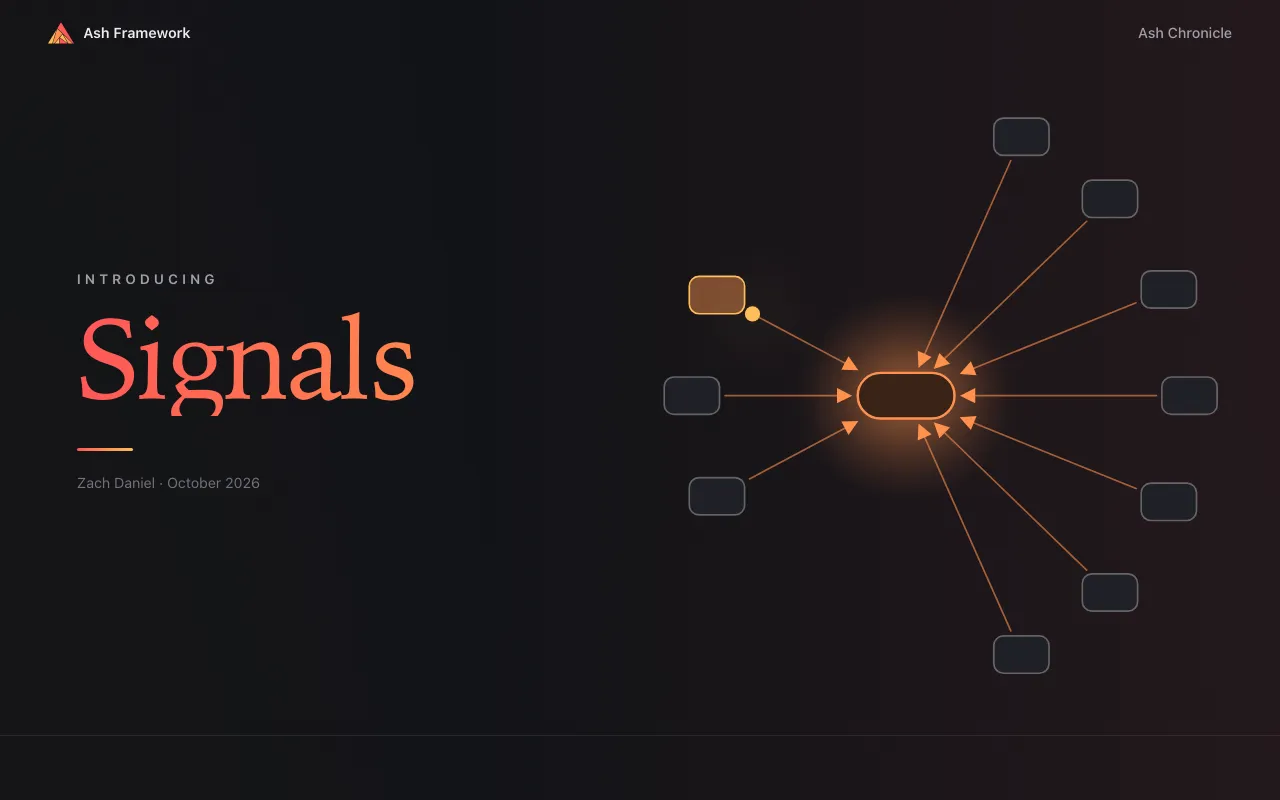
Ash Signals is aimed at side effects that turn into dependencies. When one action calls straight into another domain, the arrows soon run both ways and the code gets hard to change. With Signals, an action emits a signal, a module that defines the contract between them, and other domains listen for it, so every service depends on the signal's definition and none calls back into the action that raised it. Each side can then be tested and changed on its own. The documentation has the details.
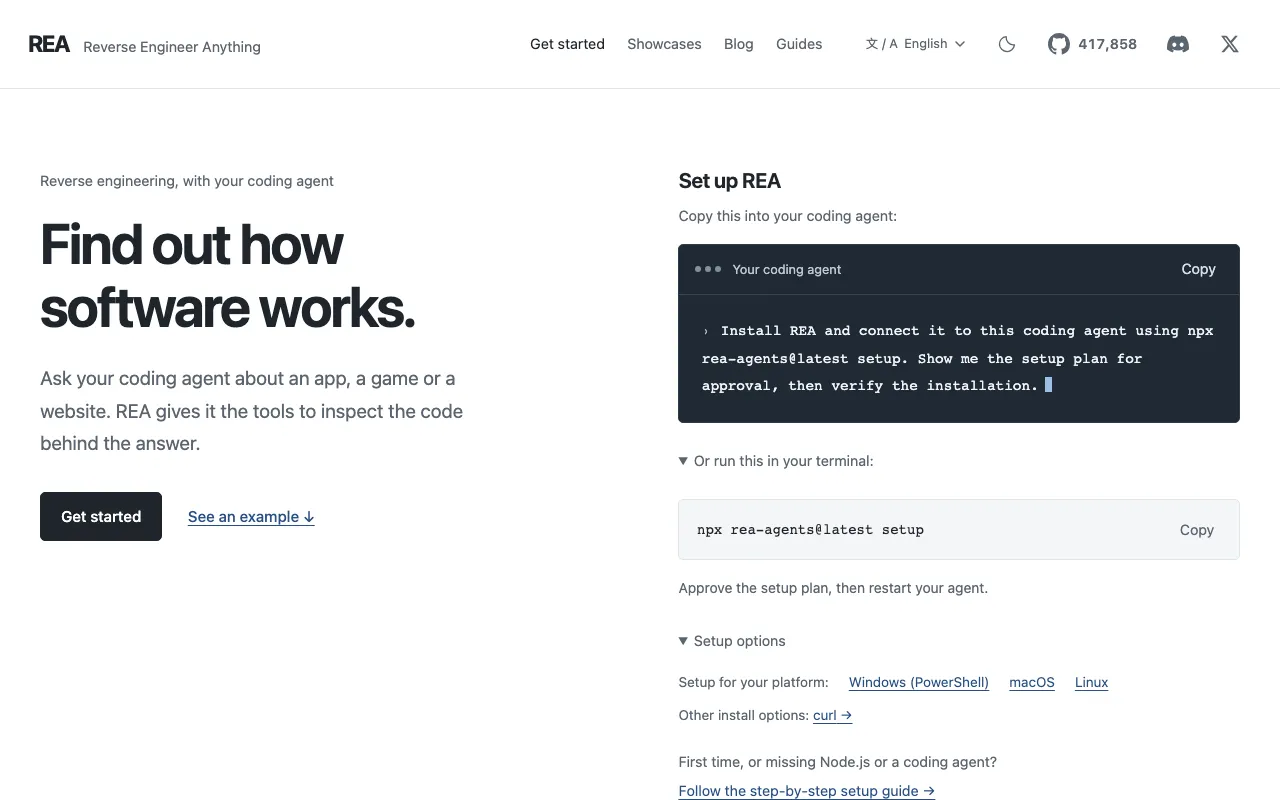
REA gives a coding agent a reverse engineer's tools. It attaches to running software and hands the agent assembly, decompiled output and execution traces, so the agent can work out how a feature works and rebuild it. Its examples ask how Windows Calculator's percent key works and what sets the speed of Chrome's dinosaur game. The code is on GitHub, and there is a Hacker News discussion.
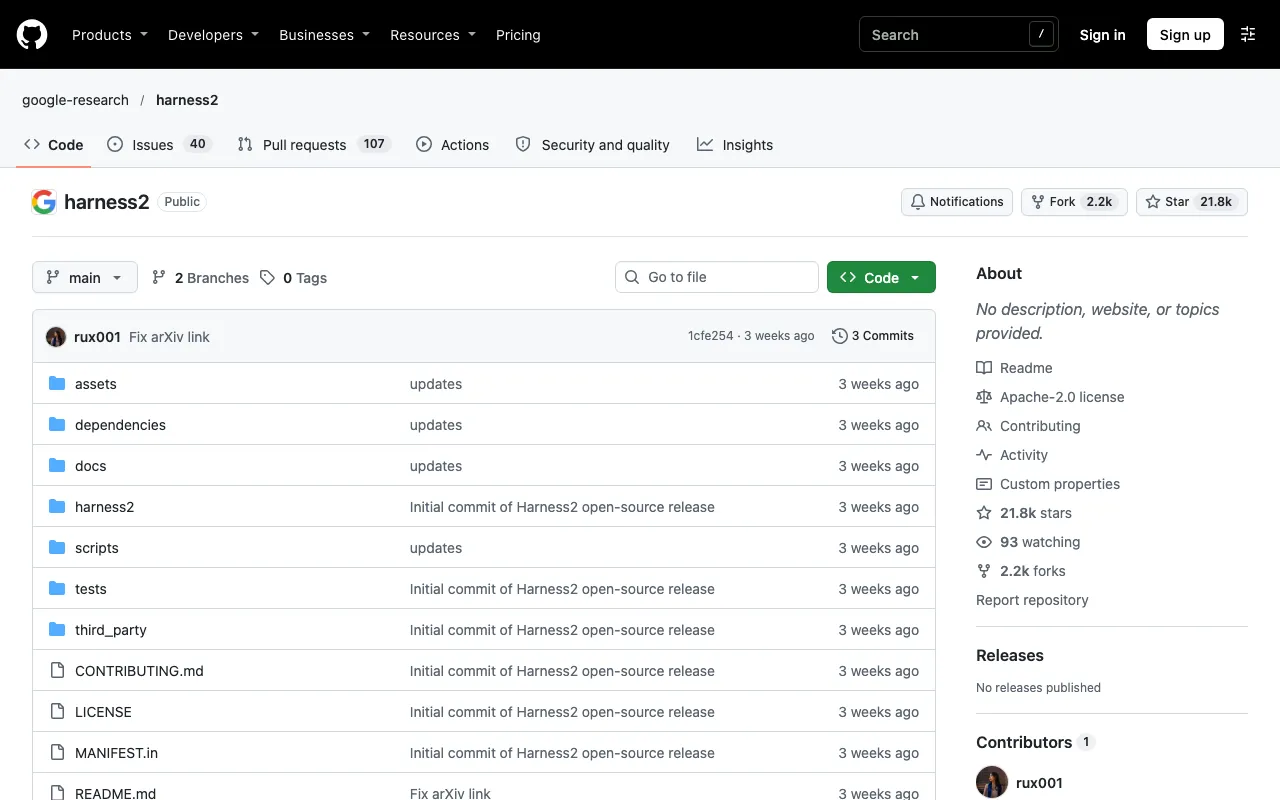
Harness² is Google Research's framework for improving an agent's harness, its prompts, memory, tool guidance and skills, while the model's weights stay fixed. It recurses at two levels: for each task it proposes harness edits, probes them and composes the ones that help, with no ground-truth answers needed, and across tasks it carries the lessons forward. On three professional benchmarks it reports gains of up to 11.5 points on WorkBuddy-Bench and 11.8 points on LAB's partial pass rate. It is one more entry in the Harness Wars, which feel to me a lot like the Browser Wars of 20 or 25 years ago.
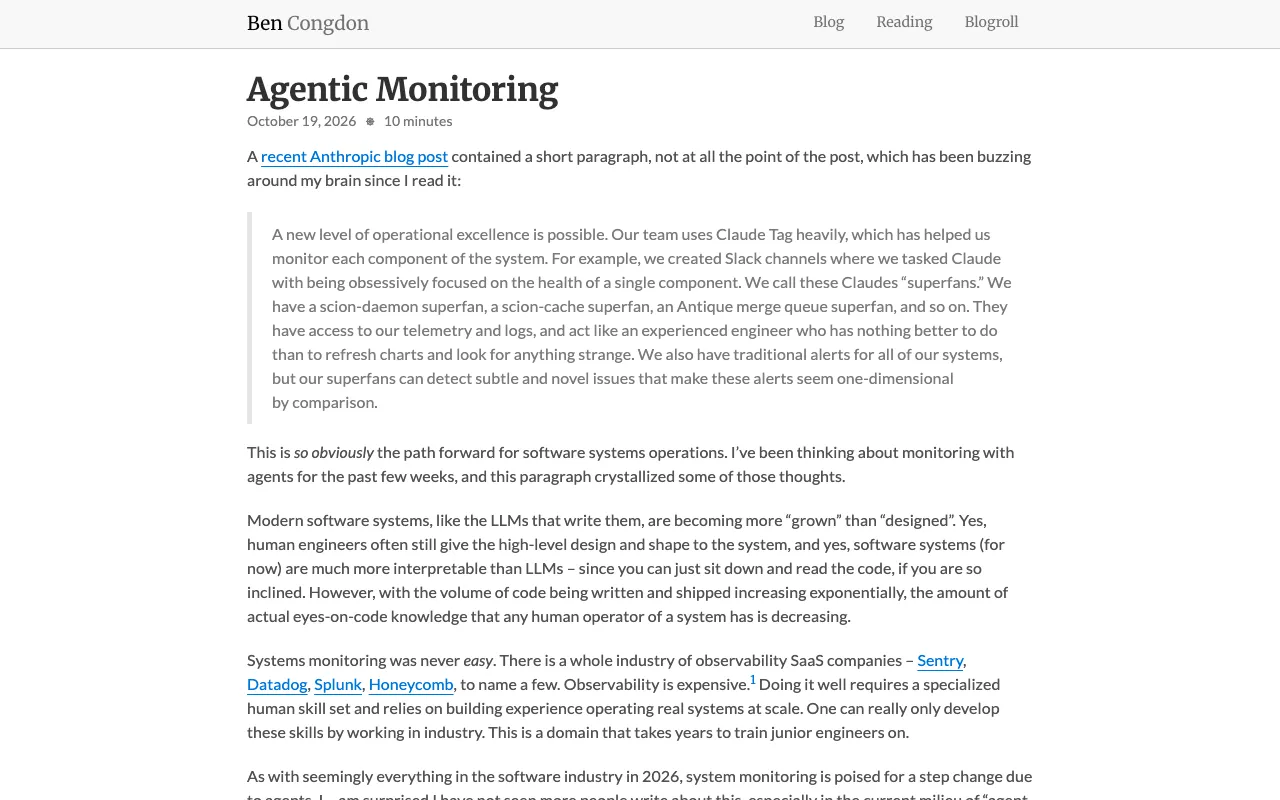
Benjamin Congdon describes using AI agents as monitors, the way Anthropic does: "superfans" of a system, with access to its telemetry and logs, who notice the subtle anomalies that static alerts miss, such as a change point just after a production deploy. Since most outages follow a change, about 70% by his count, that is where they earn their keep. He argues it is a step up from expensive observability platforms that needs no new SaaS product, only current models pointed at data you already have.
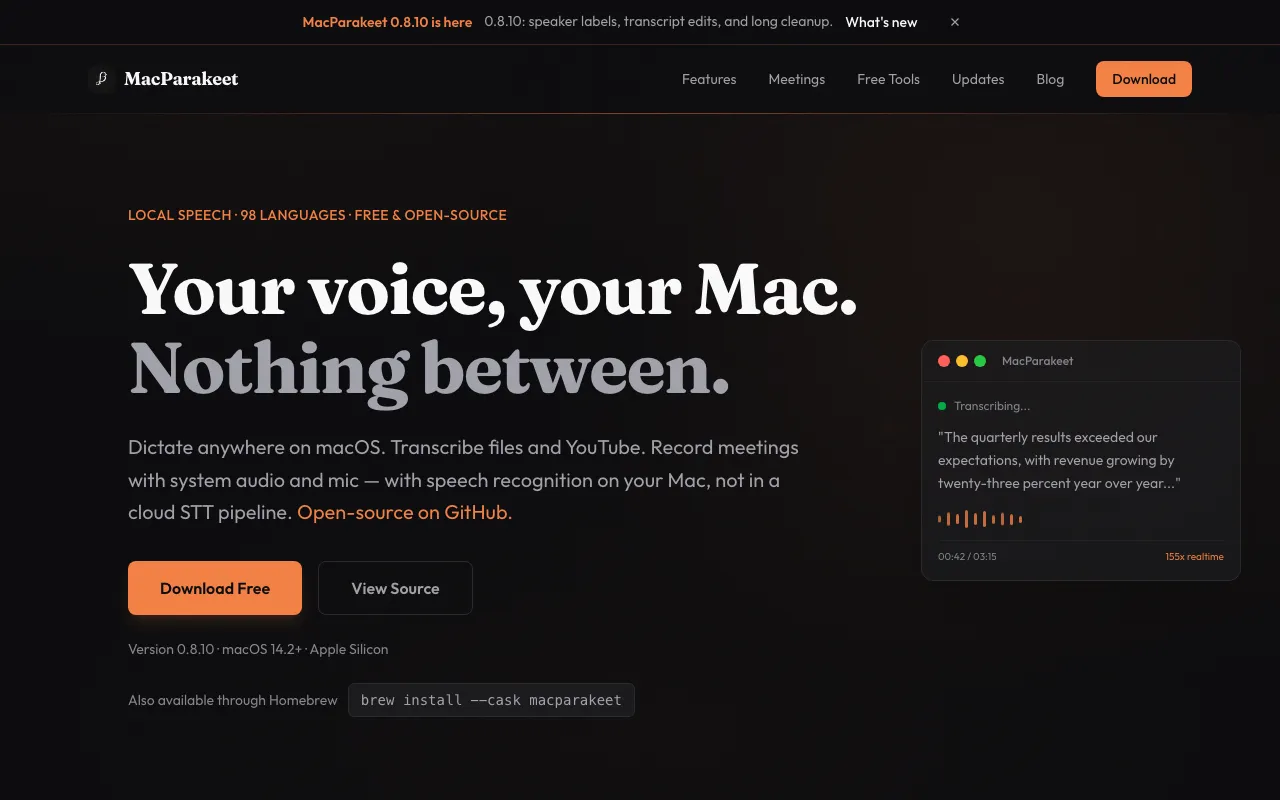
MacParakeet is a free, open-source speech-to-text app for Apple Silicon Macs that transcribes on the device, in 98 languages, with no audio sent to a server. It dictates into any app, transcribes files and links (YouTube and Loom included) and records meetings, capturing system audio and the microphone together, with LLM integrations as an option. Version 0.8.10 adds speaker labels, transcript editing with find and replace, and long transcriptions that no longer time out after 30 seconds.
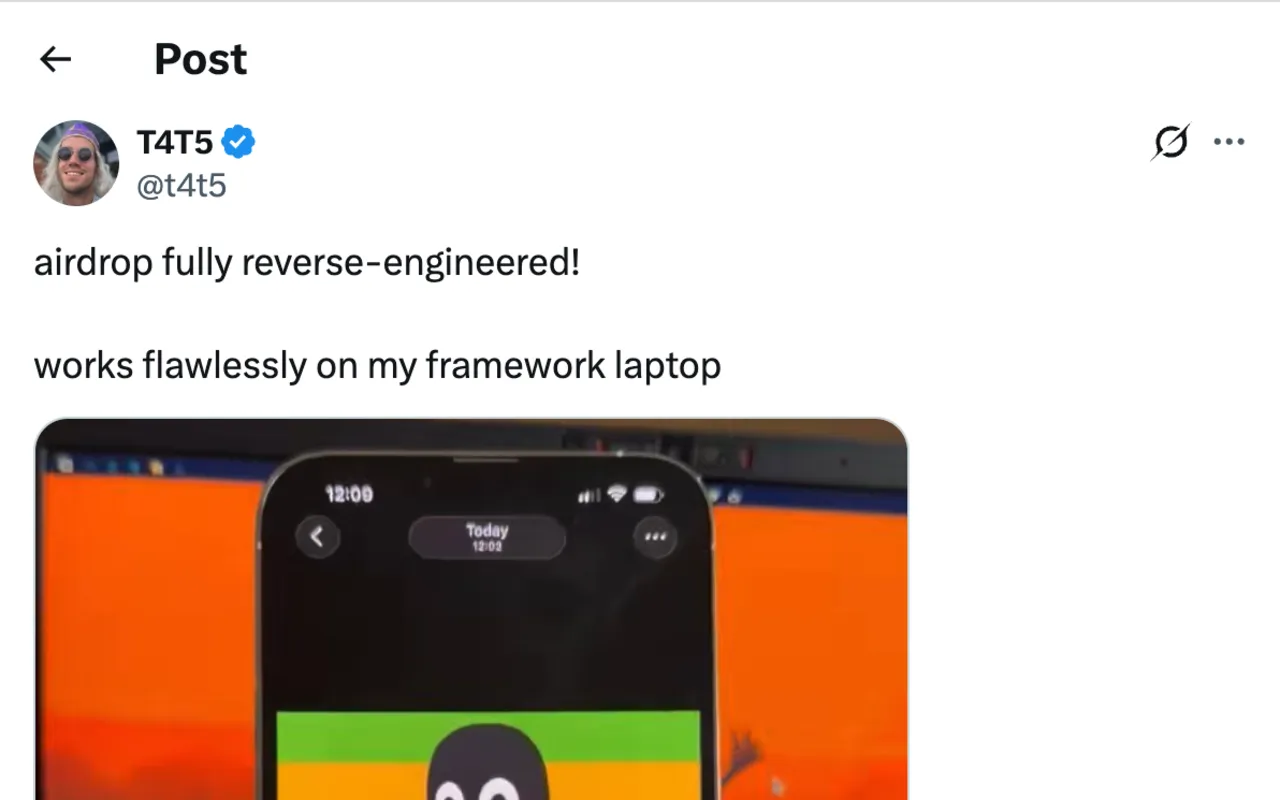
t4t5 reports AirDrop "fully reverse-engineered" and working flawlessly on his Framework laptop, with the code in a repository called omdrop-owl. A reply points out that open-source AirDrop is not new: OpenDrop, in Python, has been around since at least 2019. Either way, it is an interesting use for decompilation: getting one operating system's features working on another.

A joke from Tom Chivers, posted with a screenshot of a page of Iain M. Banks' The Player of Games and its line "And in that sudden cycle the fire didn't walk; it sprinted." It reads very much like neuralese, hence his straight-faced complaint that Banks must have used an LLM. The book came out in 1988.
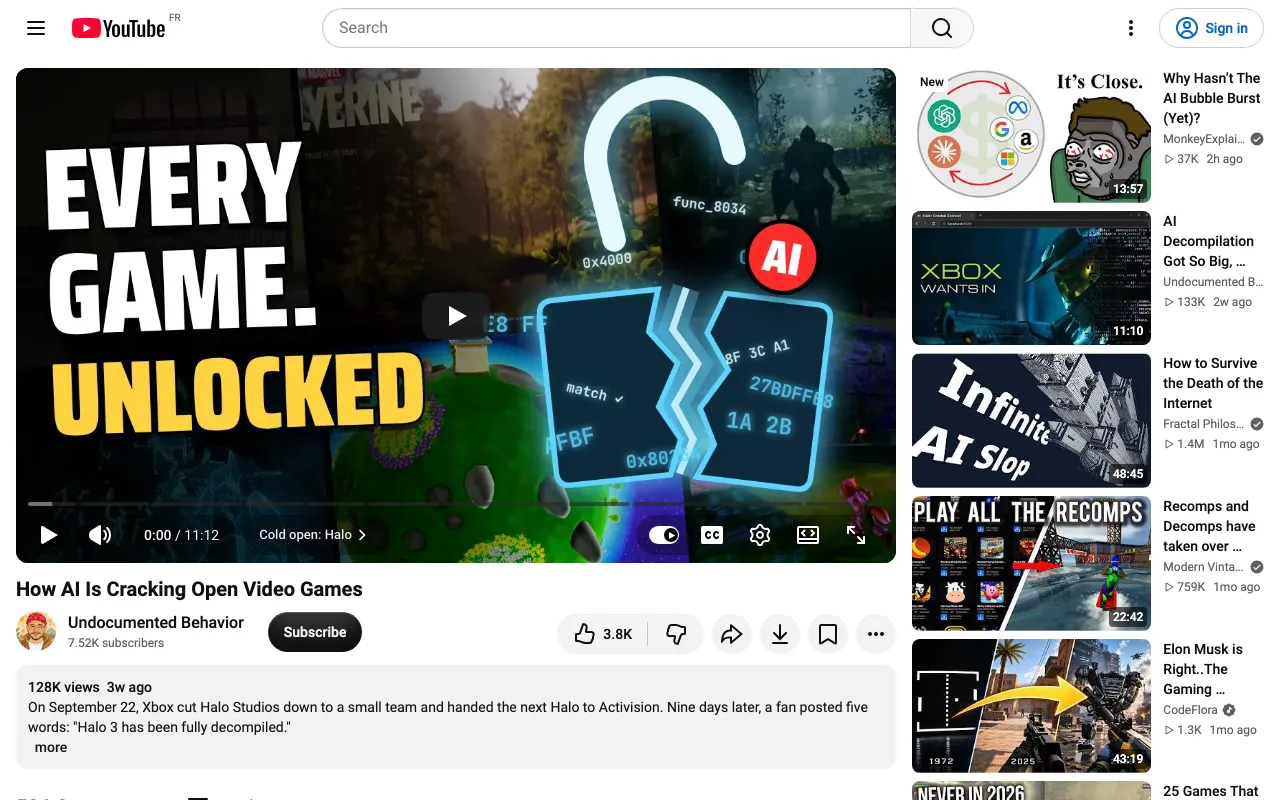
A video from the Undocumented Behavior channel on how AI is cracking open video games. It belongs with this month's other decompilation links: Stratechery on whether it is legal, and REA on the tooling.
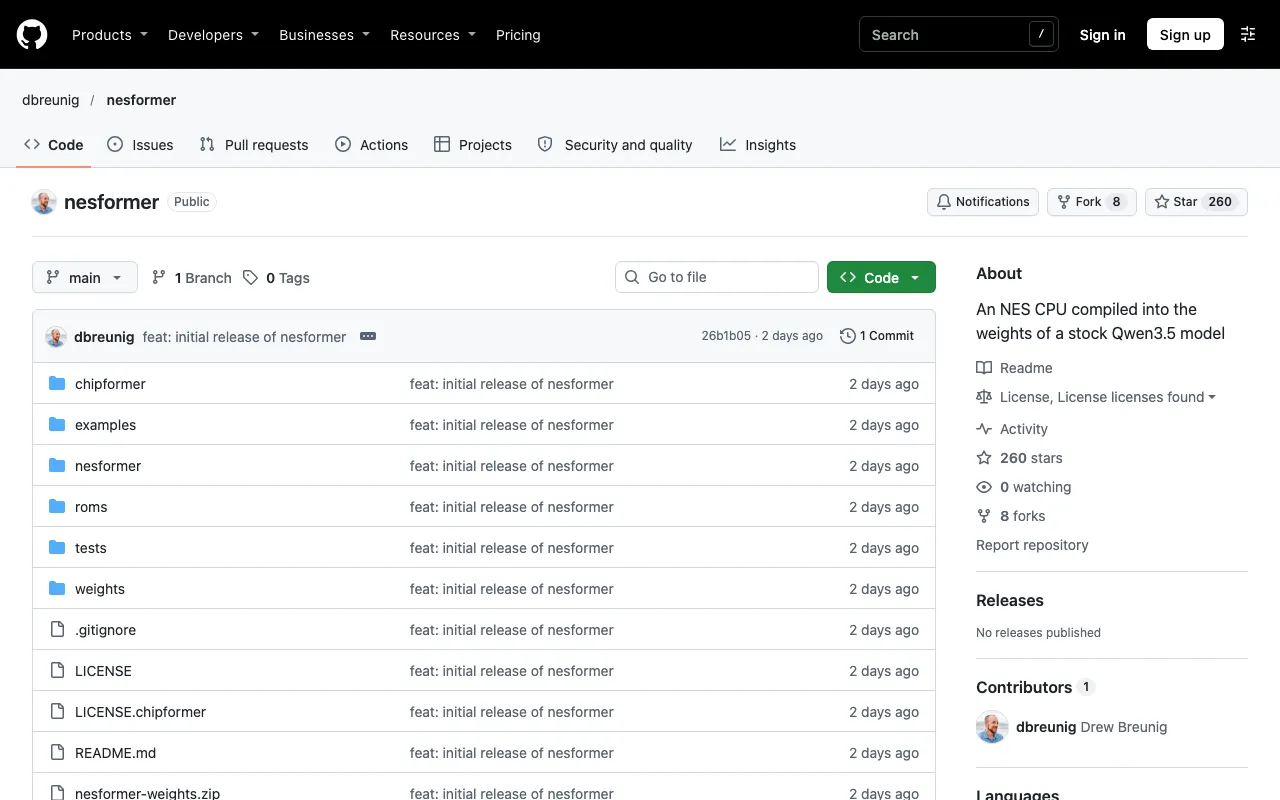
Drew Breunig's NESformer takes the Qwenputer compiler further and builds a whole NES into the weights of a stock Qwen3.5 model: the 6502 CPU, its 2 KB of RAM and the cartridge ROM, with the model's GatedDeltaNet state as the memory. The model predicts the CPU's execution log one token at a time, while a host program draws the graphics, reads the controller and handles interrupt timing. It runs any NROM-mapped game without retraining, at one to six seconds a frame.
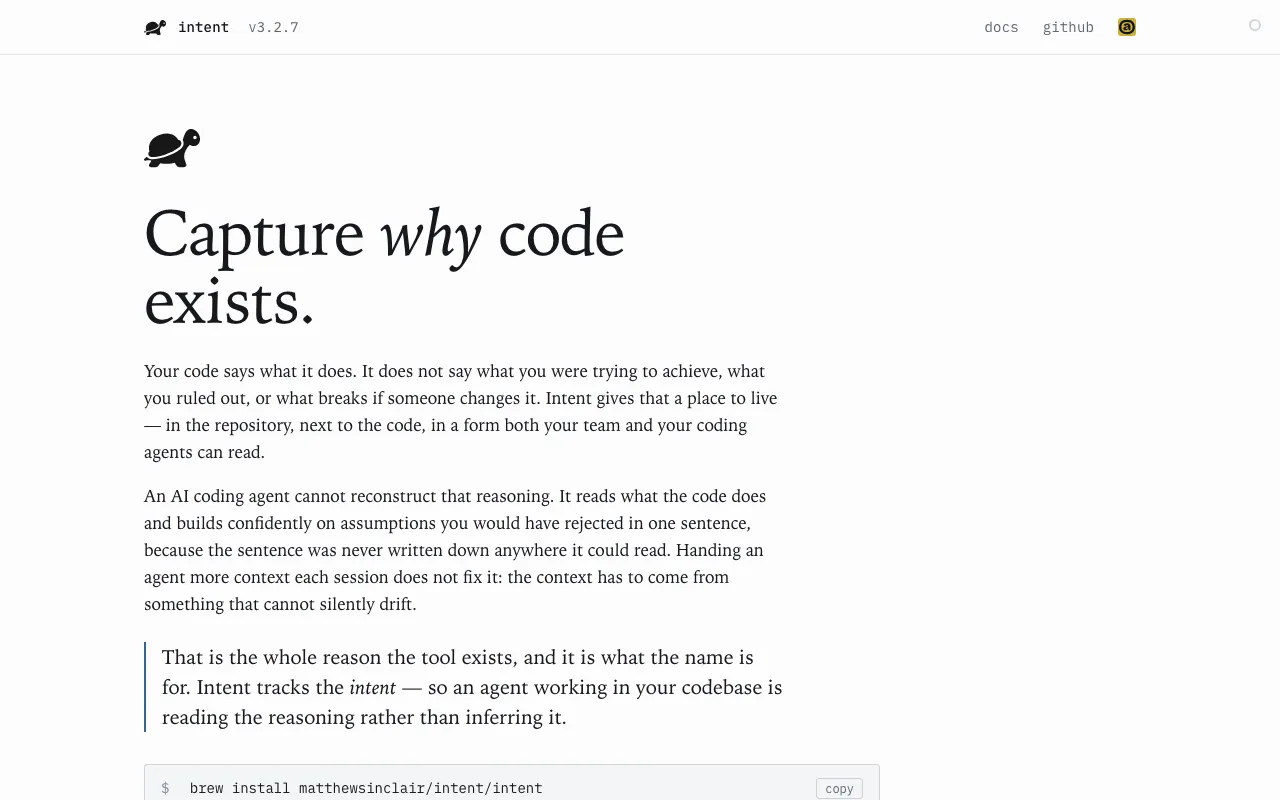
Intent is my own answer to part of the same problem. It keeps a project's reasoning in the repository beside its code, as steel threads, end-to-end intentions broken into work packages, whose acceptance criteria are backed by real tests rather than someone's say-so. The views are generated from the project's actual state, so they cannot drift from it, and a coding agent reads what was intended instead of guessing it from what the code happens to do. The source is on GitHub.
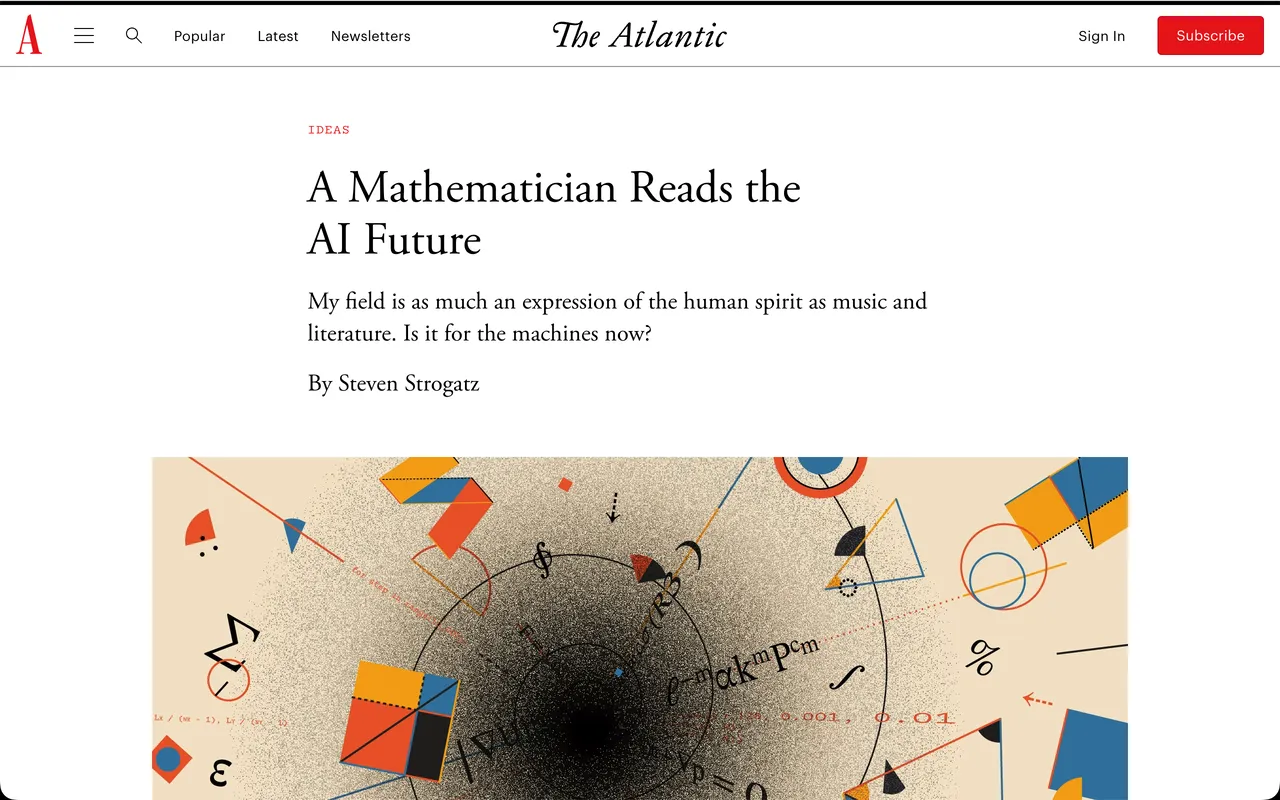
Steven Strogatz, who teaches mathematics at Cornell, writes at 4:26 a.m., disoriented, as he has been since May, "when AI came for math". In early September, OpenAI claimed to have solved the Navier-Stokes Millennium Prize problem with an internal model that set about 10,000 agents to work on it for 88 hours. "My field is in crisis," he writes, and nobody in mathematics will forget 2026. His question is whether a subject that is as much an expression of the human spirit as music and literature is now for the machines.
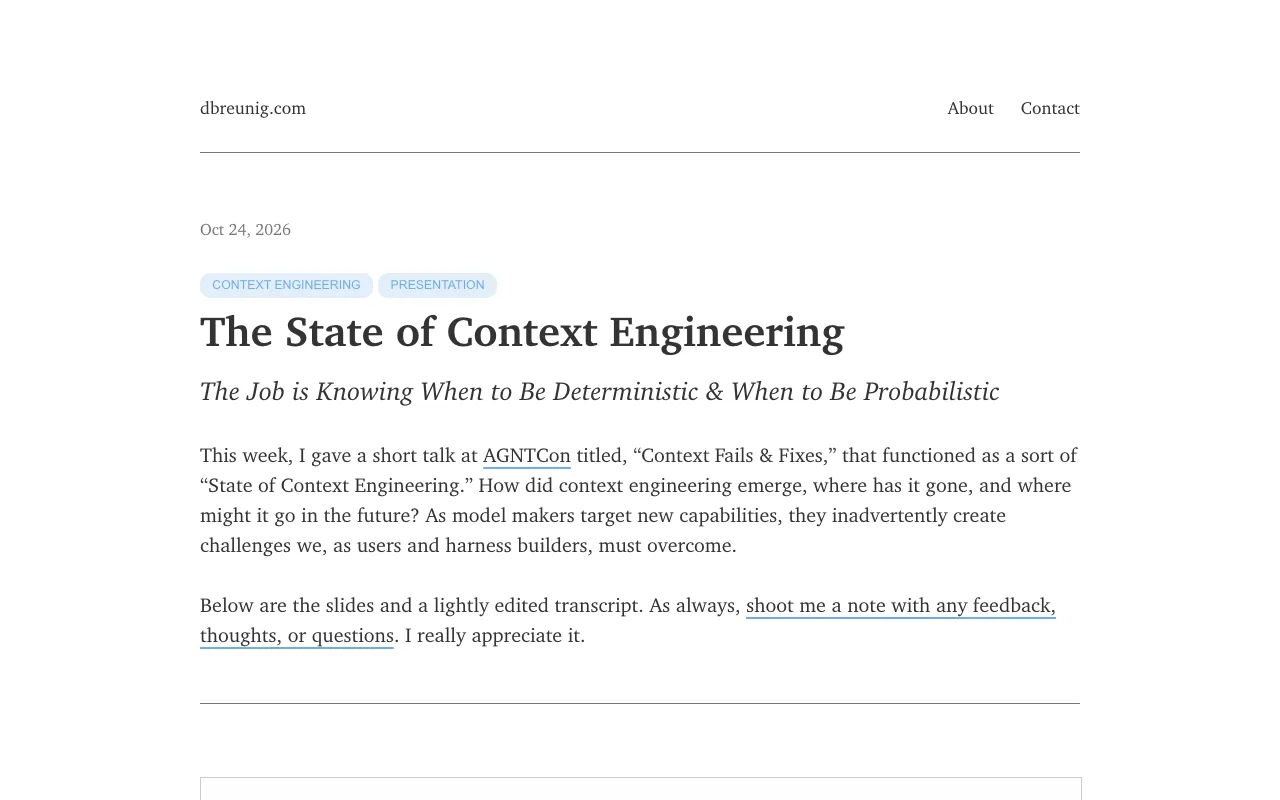
Drew Breunig on context engineering now that windows run to a million tokens. Bigger windows were supposed to make careful selection unnecessary; instead they exposed four ways a long context fails: poisoning, where a wrong fact blocks correct reasoning; distraction, where the model leans on the context over what it already knows; confusion, where irrelevant facts sway the answer; and clash, where parts of the context contradict each other. His conclusion is that better models do not make the problem go away, because instructing a model well means understanding how it was built and trained.
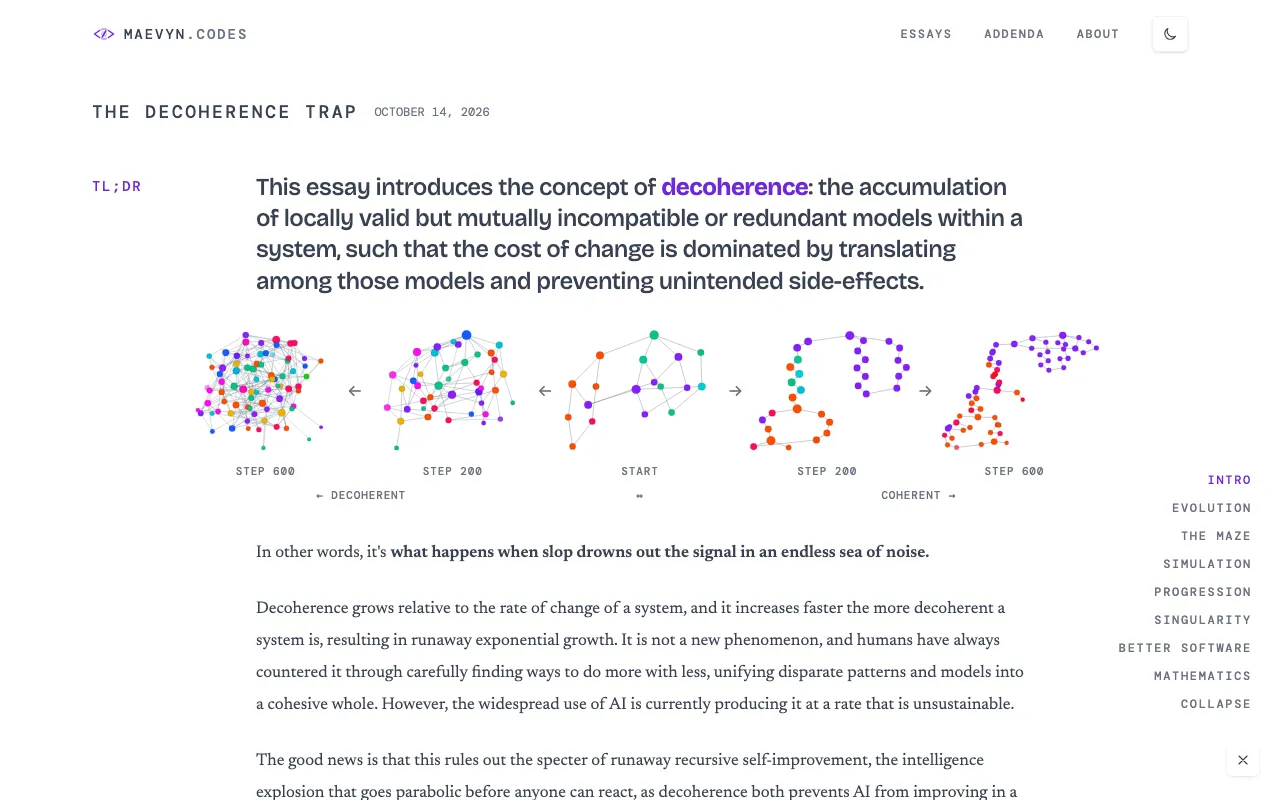
Decoherence, in this essay, is what builds up in a growing codebase as it fills with mutually incompatible models and redundant systems, until most of the cost of any change is translating between them. The author argues that AI produces it faster than anything before, which may rule out an intelligence explosion but brings a different failure: a slow collapse, as piecemeal changes leave systems in states that cost more and more to keep running. It is, the author says, the worst kind of technical debt, because it comes from how changes are made, not from which changes are needed.
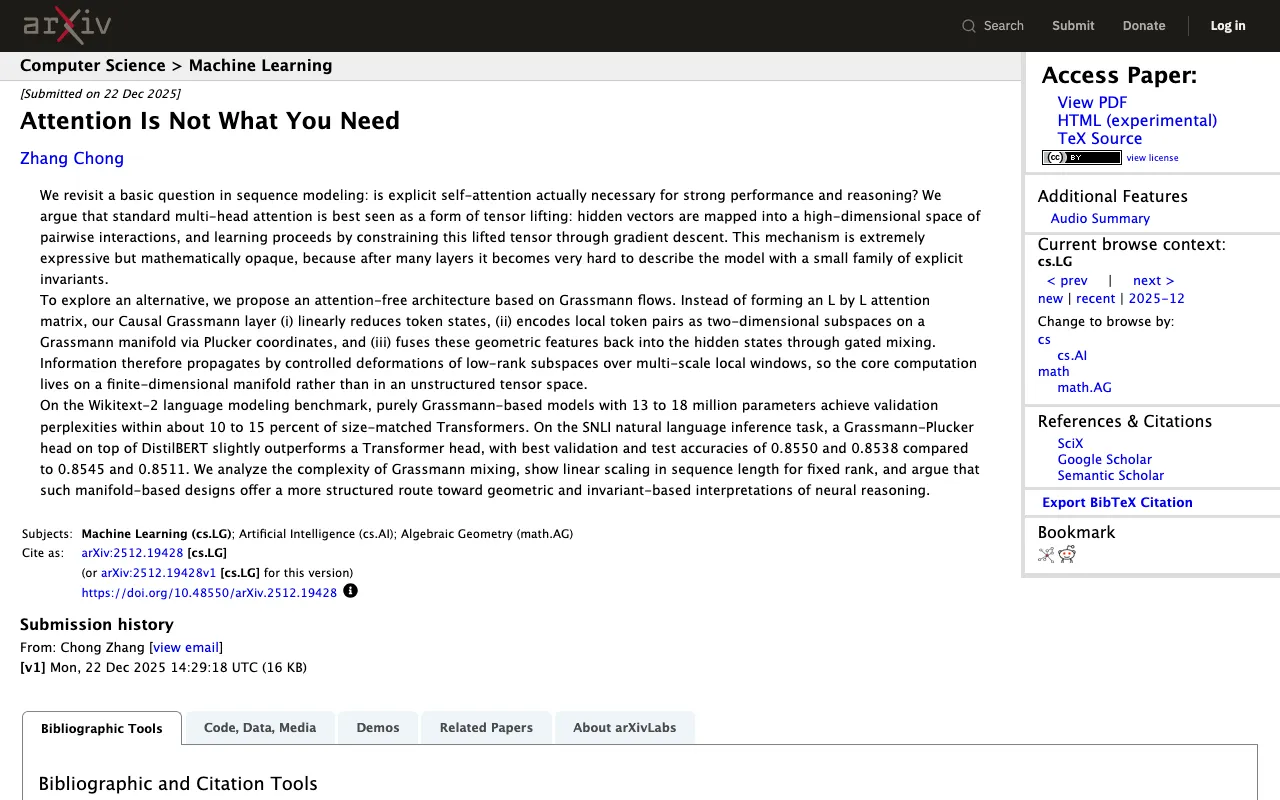
The paper proposes Causal Grassmann layers, a replacement for attention in which information moves through controlled deformations of low-rank subspaces on Grassmann manifolds rather than through attention matrices. Against size-matched Transformers, the models come within 10-15% on Wikitext-2 perplexity and slightly ahead on SNLI. Keeping the computation on a finite-dimensional manifold also makes it easier to analyse geometrically than attention's unstructured tensors.
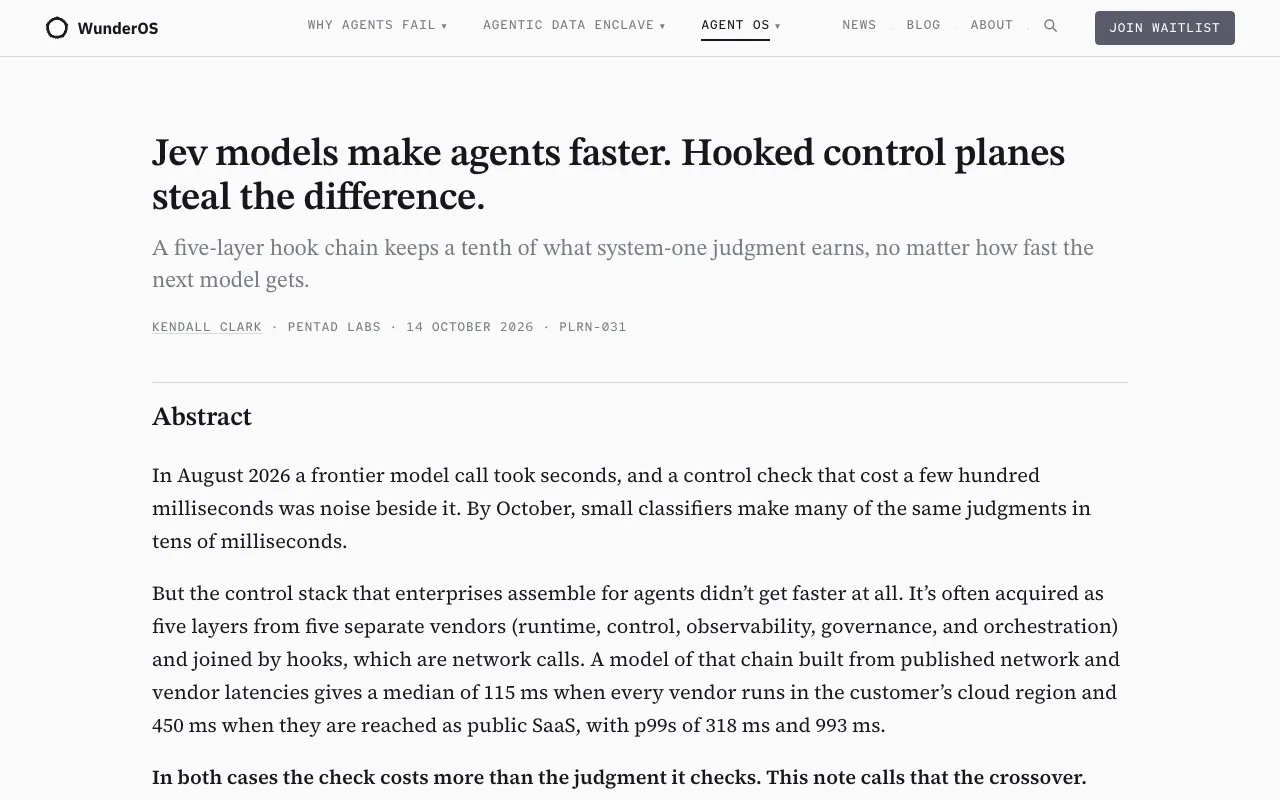
Pentad's PLRN/031 makes a latency argument about agent control planes. With inference down to tens of milliseconds, a typical five-layer stack (runtime, control, observability, governance and orchestration) joined by network hooks adds 115-450ms, more than the inference it governs, so an agent built on public SaaS vendors loses up to 90% of the speed-up from a faster model. The fix it proposes is architectural: a control decision has to complete inside the time of the action it governs, which takes speed, shared state and vendor neutrality that no multi-vendor stack offers today.
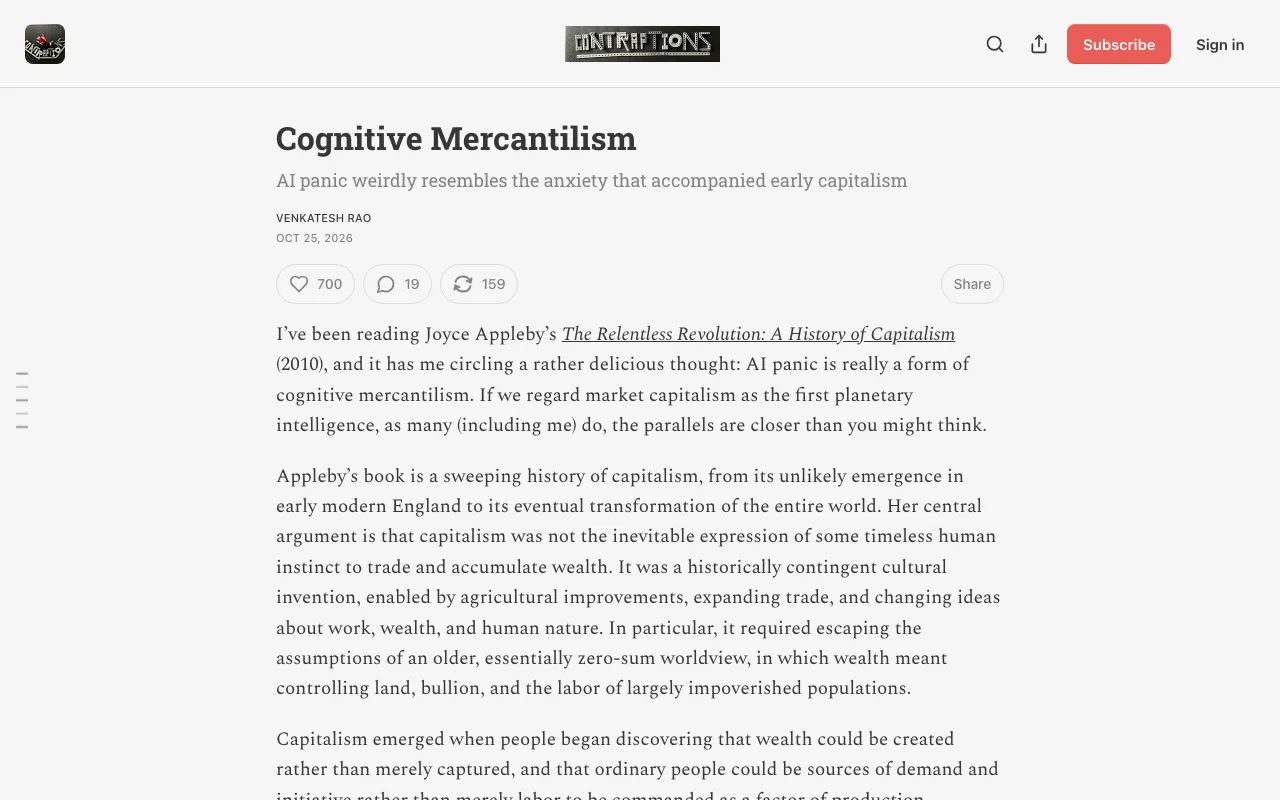
Venkatesh Rao reads today's AI anxiety as mercantilism. The mercantilists treated wealth as a fixed stock to hoard and guard; what he calls cognitive mercantilism treats intelligence the same way, as a scarce thing for elites to control. Capitalism arrived when people saw that ordinary people could create wealth and be its customers, and he argues the AI panic misses the equivalent: tools that spread cognitive capability around and create value across a whole population.

Google Labs' launch video for Playground, an experimental tool that turns a text description into a playable browser game. You change the game by asking, eg for a double jump, and can keep it private, share it by link or publish it to a public gallery. It opened on 7 October 2026 to US users over 18, free with usage limits that a paid Google AI plan raises, and Google says Unity integration will follow.
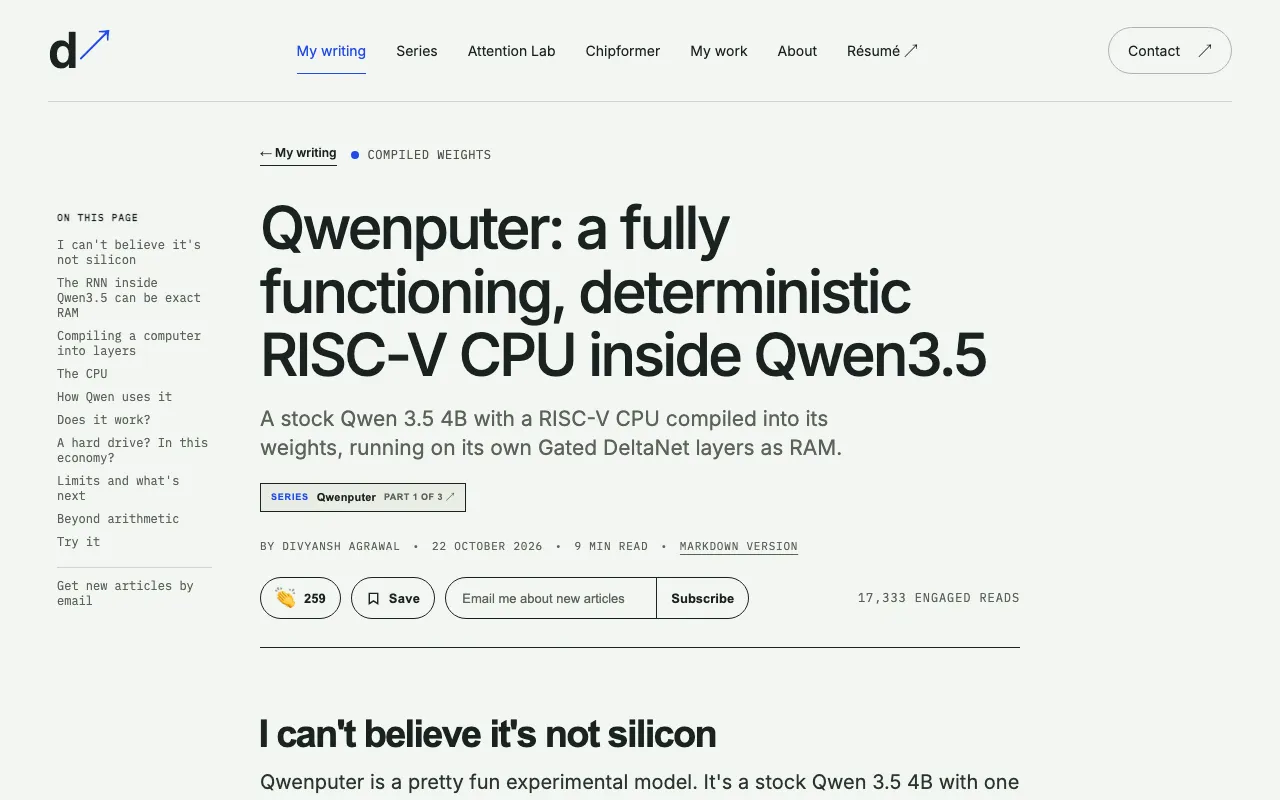
Qwenputer puts a working RISC-V CPU inside the weights of Qwen 3.5 4B with no training at all: a compiler sets every weight. The model's Gated DeltaNet layers become exact, addressable RAM, with gates and write strengths fixed at 1 and one-hot addresses, and each instruction maps to particular attention heads and feed-forward units. It runs arithmetic, C and MicroPython inside its own forward passes, deterministically, with no tools or plugins.
Regards,
M@
[ED: If you'd like to sign up for this content as an email, click here to join the mailing list.]
Originally published on quantumfaxmachine.com and cross-posted on Medium.
hello@matthewsinclair.com | matthewsinclair.com | bsky.app/@matthewsinclair.com | masto.ai/@matthewsinclair | medium.com/@matthewsinclair | xitter/@matthewsinclair
Was this useful?