
QFM135: Engineering Leadership Reading List - October 2026
 Source: Photo by Austin Distel on Unsplash
Most of this month is about leading teams that now include agents. Impatient Programming rewrites Extreme Programming's rules for coding agents, with contracts, mutation testing and people deciding the pull requests. Stay SaaSy argues that AI makes management more important, because the bottleneck has moved from writing code to reviewing, integrating and shipping it, and ADRs4AI keeps the reasoning behind AI-assisted decisions once the session is over. Pentad's PLRN/030 asks what an operating system must become when an agent is both a user and a program.
The numbers are sobering: Vithushan Sylvester finds tech employment falling while the rest of the economy grew, with junior hiring hit hardest. A senior engineer who gave up AI for a week started seeing problems he had stopped noticing. For the fundamentals, Metaview's leadership interview questions ask for evidence over philosophy, and David Burkus lists the signs of a collapsing team that don't look like warning signs.
As always, the Quantum Fax Machine Propeller Hat Key will guide your browsing. Enjoy!
Propeller Hat Key
- 0 of 5:
- Unrelated to technology, management, or leadership
- 1 of 5:
- Suitable for management and leadership novices
- 2 of 5:
- Topics of interest for the new manager or leader
- 3 of 5:
- Technology management and leadership in real-world use cases
- 4 of 5:
- Topics for experienced managers and leaders
- 5 of 5:
- Advanced topics in management and leadership
Links
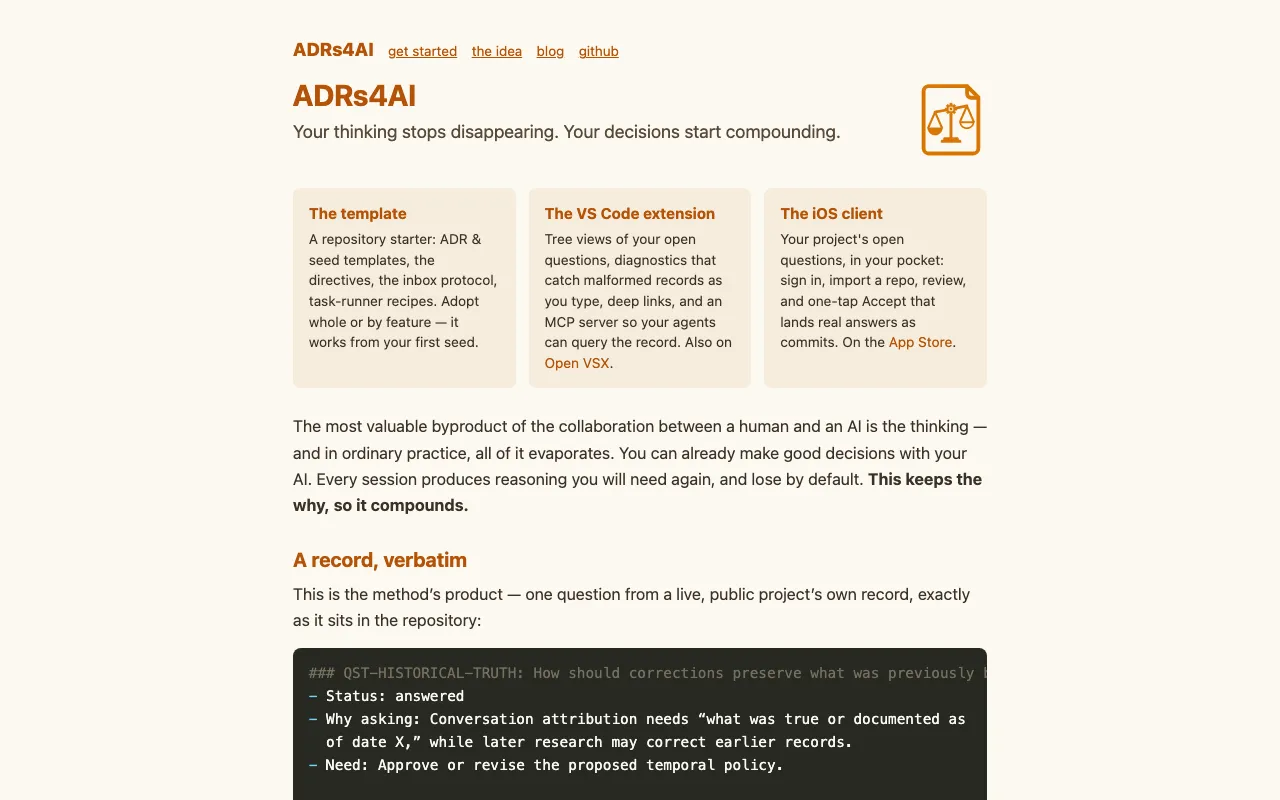
ADRs4AI applies architectural decision records to work done with AI. Each record keeps the question, the options considered, the reasoning and a confidence level, so the reasoning behind an AI-assisted decision outlives the session it was made in, which Git history alone does not do. It comes with VS Code and iOS tools for searching the records and acting on them.
David Burkus argues that a collapsing team rarely looks dramatic, and that some of the earliest warning signs look like good news. He lists six: everybody agrees with you, which is conflict avoidance, not psychological safety; nobody says "I don't know"; the real meeting happens after the meeting; people check each other's work instead of relying on each other; arguments become about the person; and one resignation becomes three, the pattern Will Felps and his colleagues called turnover contagion. Each comes with a remedy, from asking "What's the strongest argument against this?" to holding the exit interview before anyone leaves. The common root, he concludes, is that the truth stopped being told in the open, and a leader's real job is to make it safe to tell it early enough to act on.
Metaview's guide to assessing leadership in interviews treats leadership as influence over outcomes, which anyone can have, rather than as a job title. Its questions ask for specific past behaviour, how a candidate handled a setback, developed someone, influenced peers or took responsibility, rather than for confident statements of management philosophy.
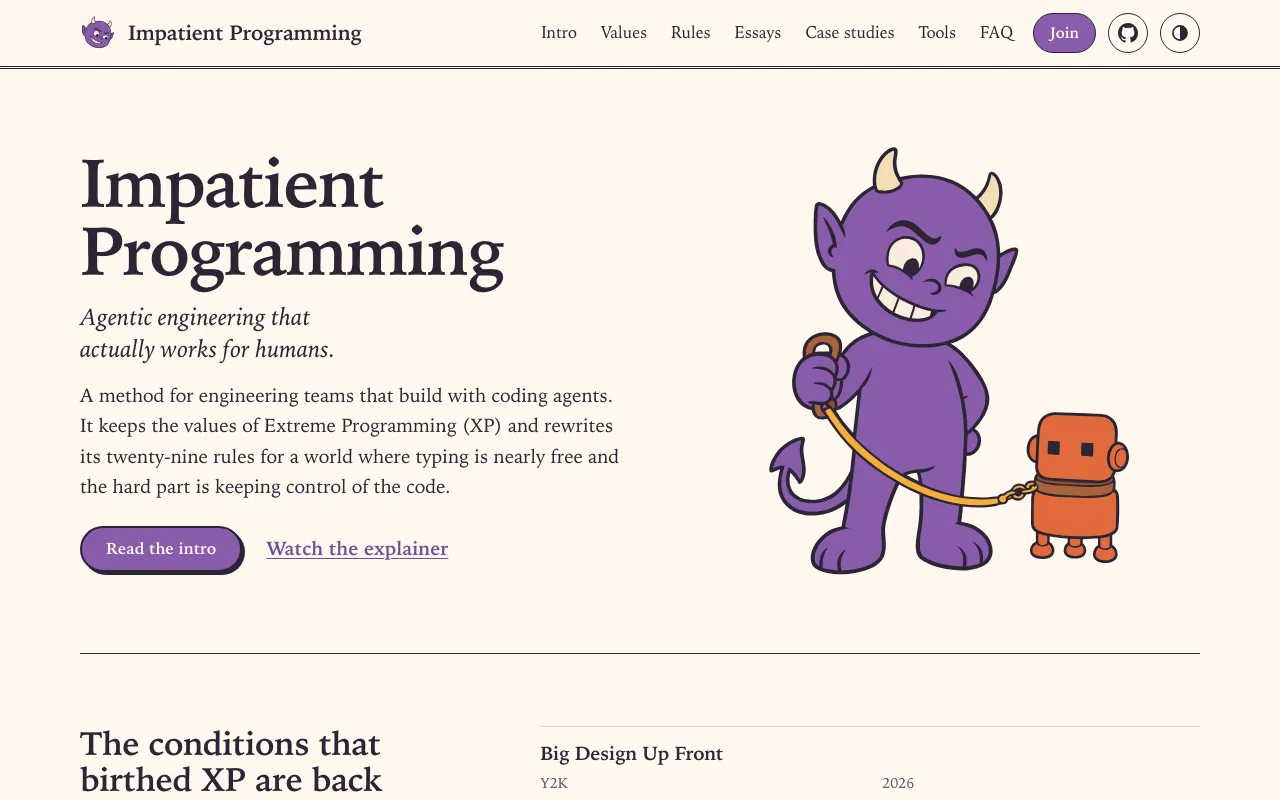
Impatient Programming (IMP) adapts Extreme Programming to coding agents. It keeps XP's values (communication, simplicity, feedback, courage and respect) and rewrites its 29 rules for today's failure modes, such as machine-generated plans nobody reads and unsupervised vibe coding. In their place it puts written contracts, mutation testing to prove the tests work, and guardrails that keep generated code under human control: people make the decisions on pull requests, and automation handles the routine checks and integration. Its contract layer, Covenant, is in this month's Machine Intelligence list.
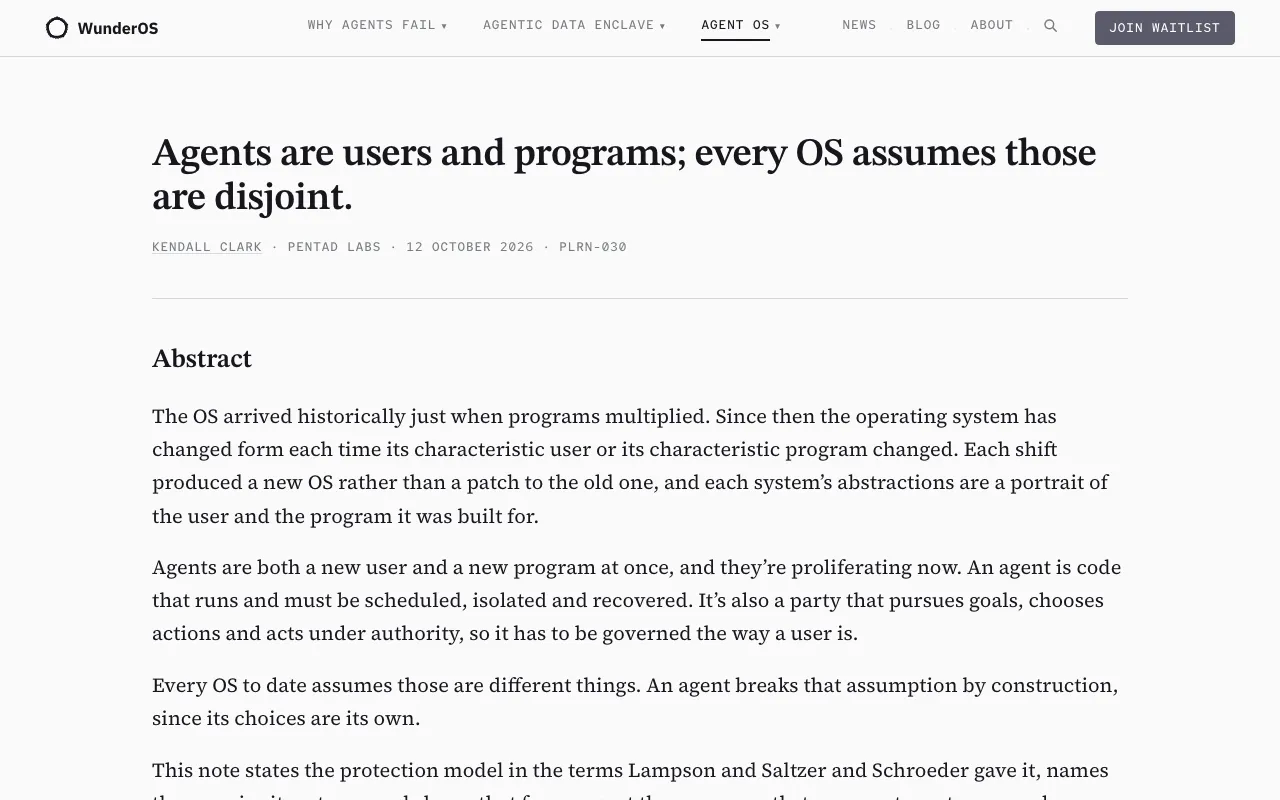
Pentad's PLRN/030 starts from an assumption every operating system makes: users and programs are different kinds of thing. An AI agent is both, code that needs its resources managed and an actor that makes its own decisions, so existing protection models cannot govern it without giving up accountability. The paper's answer is an OS that binds authority to a task rather than to a principal, holds that authority outside the agent's control, and lets operators revoke it across a fleet of agents. The platform page describes Pentad's product.
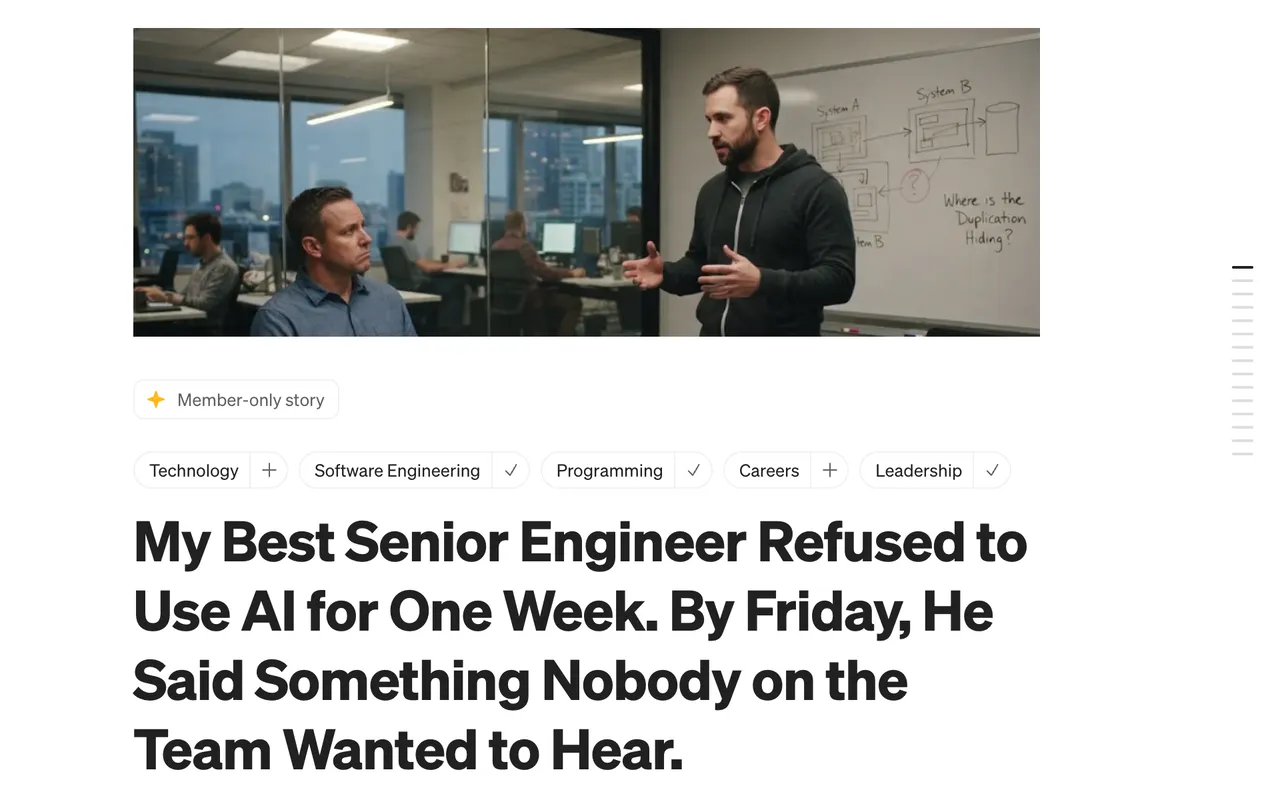
A Medium story about a senior engineer who leaned on AI for coding, testing and debugging, then gave it up for a week. His output dropped, as he expected. What he had not expected was to start seeing problems in the system and its architecture that he had stopped noticing while the AI handled the details, which suggests that handing over the implementation can hand over the attention too.
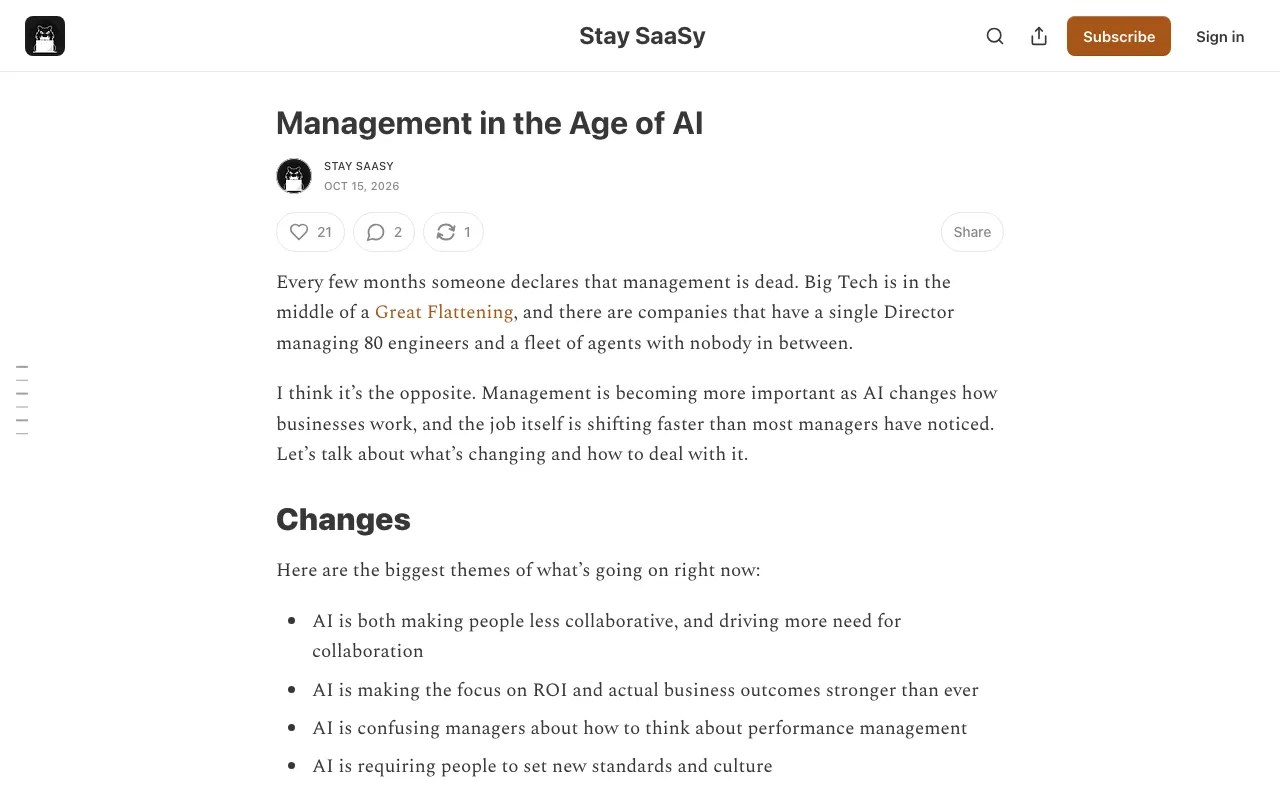
Stay SaaSy argues that AI makes management more important, not less. Individual work is cheaper than ever, but coordination has not kept up: pull request review times are up 49% while volumes are up 23%. Managers should measure business outcomes rather than activity or AI usage, set service levels for collaboration, and hold engineers to the value they ship, whoever or whatever wrote it. The underlying problem is that AI rewards solo authorship while the real bottleneck is the shared work of reviewing, integrating and shipping other people's code.
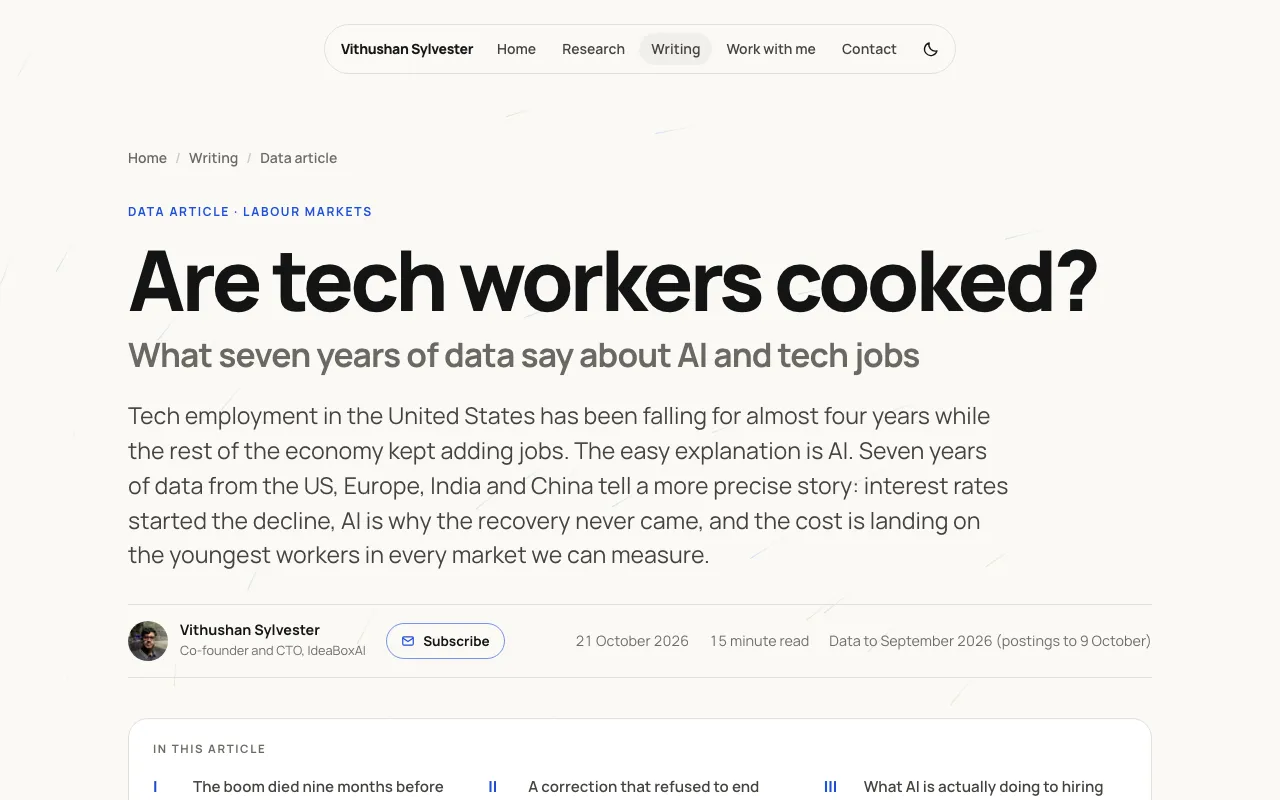
Vithushan Sylvester looks at the data. US employment overall is up 4.3% since January 2020, but IT services are down 6.9%, and the information sector is 12.1% below its peak of November 2022, the month ChatGPT launched. Senior roles have taken 71% of the recovery in software developer jobs while junior hiring stays low, and 56% of US tech job postings now ask for AI skills.
Regards,
M@
[ED: If you'd like to sign up for this content as an email, click here to join the mailing list.]
Originally published on quantumfaxmachine.com and cross-posted on Medium.
hello@matthewsinclair.com | matthewsinclair.com | bsky.app/@matthewsinclair.com | masto.ai/@matthewsinclair | medium.com/@matthewsinclair | xitter/@matthewsinclair
Was this useful?