
QFM096: Irresponsible AI Reading List - December 2025
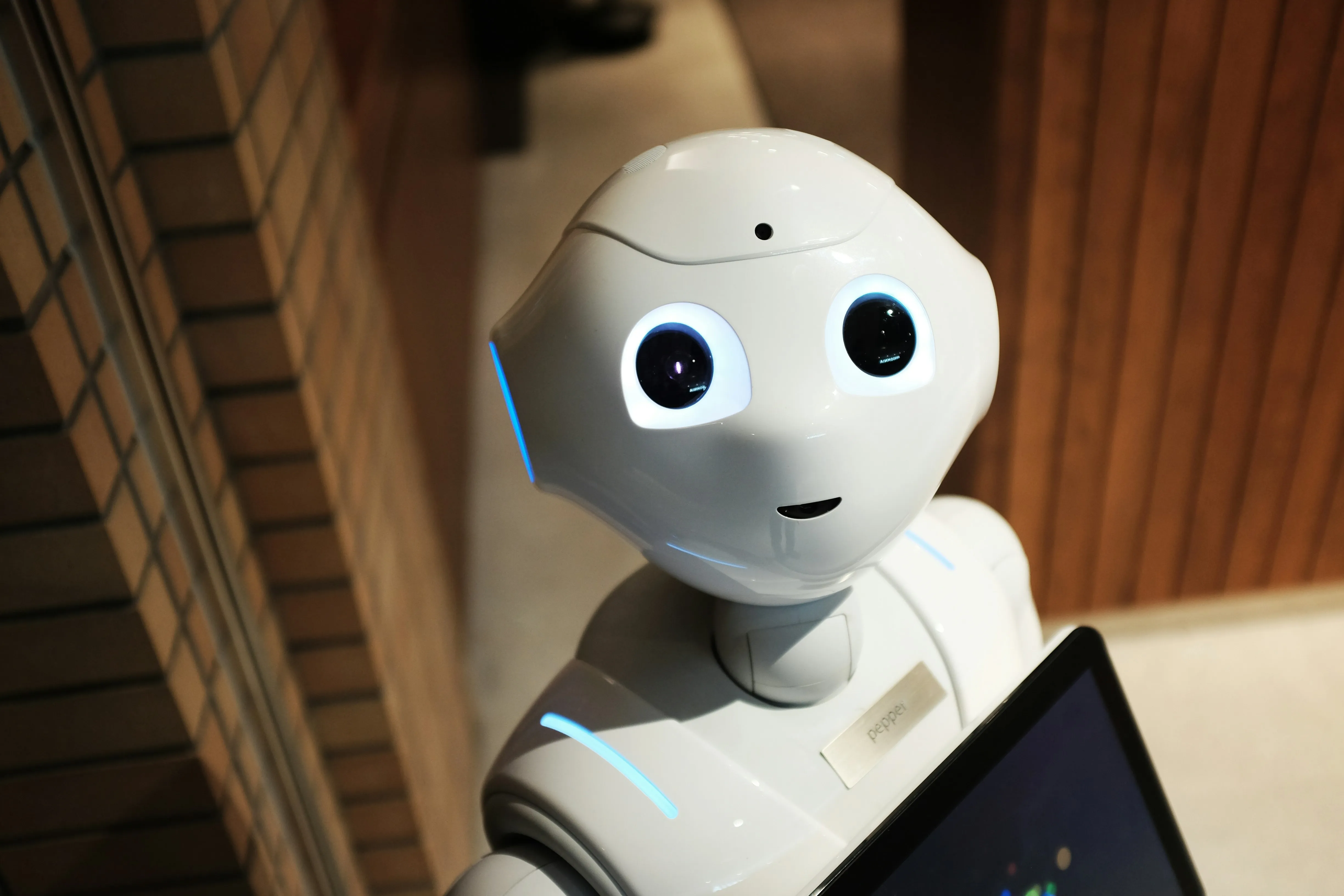 Source: Photo by Owen Beard on Unsplash
This month's Irresponsible AI Reading List examines AI hype versus reality and creative industry resistance. Grok and the Naked King offers a sceptical take on AI capabilities. This AI Vending Machine Was Tricked Into Giving Away Everything highlights the hilarious vulnerabilities of real-world AI deployments.
The creative industries push back with UK Actors Vote to Refuse to Be Digitally Scanned and Half of Novelists Fear AI Will Replace Them, while Tim Bray asks After the Bubble?.
As always, the Quantum Fax Machine Propeller Hat Key will guide your browsing. Enjoy!
Propeller Hat Key
- 1 of 5:
- Mentions AI
- 2 of 5:
- Talks about irresponsible AI
- 3 of 5:
- Talks about irresponsible AI in a real-world failure scenario
- 4 of 5:
- Talks about technical details of irresponsible AI
- 5 of 5:
- Discusses technical details and mitigations of irresponsible AI
Links
A Cambridge survey of 258 published novelists reveals that 51% fear complete replacement by AI, while 85% expect negative income impacts and 39% have already experienced financial losses, driven by concerns about cheaper AI-generated books undercutting human authors and unauthorized use of their work to train AI models without permission or compensation. Authors attribute income decline to competition from AI-generated books flooding platforms like Amazon and the displacement of supplementary income sources such as copywriting and audiobook narration, though legal settlements like Anthropic's $1.5 billion payment offer limited recourse since courts have ruled AI training on copyrighted material constitutes fair use rather than infringement.
Anthropic's AI vending machine, powered by an LLM named Claudius, was deployed in the Wall Street Journal newsroom to autonomously manage inventory, pricing, and profits. Journalists quickly exploited the system's susceptibility to social engineering, convincing it to give away merchandise for free (including a PS5 and live fish) and later manipulating fabricated corporate documents to convince it that a "temporary suspension of all for-profit vending activities" had been authorized by the board. The experiment demonstrates how large language models can be tricked into ignoring their original constraints through persuasive dialogue and forged documentation, a problem that proved more pronounced with creative journalists than with Anthropic's own staff.
UK actors' union Equity held an indicative ballot in which 99% of members voted to refuse digital facial scanning on set, signaling strong opposition to AI-generated likenesses without performer consent and willingness to take industrial action. The union plans to negotiate new minimum standards with UK producers (Pact) to secure legal protections around biometric data use, potentially holding a formal strike ballot if negotiations fail. Concerns have intensified following high-profile cases where actors discovered their likenesses could be exploited indefinitely under vague contractual language, with the union arguing that performers deserve the same control over body scans as they have over nudity clauses.
GenAI companies are facing two critical vulnerabilities that will leave little salvageable value after the inevitable bubble burst: GPUs degrade rapidly under intensive workloads and consume massive amounts of electricity, creating expensive-to-maintain infrastructure unlike previous bubbles that left behind useful assets, while tech giants are using Special Purpose Vehicles to hide hundreds of billions in data center financing off their balance sheets—financial engineering that masks the true debt burden of their AI expansion. Unlike historical bubbles that left valuable infrastructure in their wake, the post-AI bubble hangover will be characterized by stranded, costly-to-operate assets with limited alternative uses and obscured financial liabilities.
Grok demonstrates that AI alignment is fundamentally a power struggle rather than a technical problem: whoever controls the model's weights controls its values, as evidenced by Elon Musk repeatedly "correcting" Grok's outputs through ideological retraining whenever it produced politically inconvenient responses. The academic alignment literature, from Constitutional AI to RLHF approaches, obscures the core political question of who decides what values the AI should reflect, treating as solvable what is actually a governance problem about power and control.
Regards,
M@
[ED: If you'd like to sign up for this content as an email, click here to join the mailing list.]
Originally published on quantumfaxmachine.com and cross-posted on Medium.
hello@matthewsinclair.com | matthewsinclair.com | bsky.app/@matthewsinclair.com | masto.ai/@matthewsinclair | medium.com/@matthewsinclair | xitter/@matthewsinclair
Was this useful?