
QFM025: Machine Intelligence Reading List - July 2024
 Source: Photo by Milad Fakurian on Unsplash
This month's Machine Intelligence Reading List delves into the evolving capabilities and challenges of AI, focusing on reasoning, data availability, ethical considerations, and economic impact.
Multi-step reasoning and efficiency are explored in articles like Q*: Improving Multi-step Reasoning for LLMs with Deliberative Planning and Language Models on the Command-line. Both articles highlight advancements in making large language models (LLMs) more efficient and accessible. The Q* framework introduces a novel approach to enhancing LLMs' reasoning abilities through deliberative planning, offering a plug-and-play solution that outperforms traditional methods without requiring extensive fine-tuning. Similarly, Simon Willison's utility 'LLM' showcases how command-line access can simplify interaction with these models, making sophisticated AI tools more user-friendly for developers and data scientists.
The theme of building digital minds is explored through A Model of a Mind and OpenAI working on new reasoning technology under code name 'Strawberry'. Tyler Neylon presents a conceptual framework for constructing digital minds inspired by human cognition, emphasizing elements like agency and introspection. Meanwhile, OpenAI's "Strawberry" project focuses on enhancing AI's ability to autonomously navigate complex tasks, pushing the boundaries of AI reasoning capabilities toward human-like intelligence. Both articles explore how AI can mimic human thought processes, each offering a unique perspective on the future of AI development.
Data availability becomes a significant concern in Will We Run Out of Data? Limits of LLM Scaling Based on Human-Generated Data and the General Theory of Neural Networks. The former article discusses the potential scarcity of human-generated data for training LLMs and explores strategies to optimize existing data resources, projecting when we might exhaust available text data. Rob Leclerc's discussion on Universal Activation Networks (UANs) adds to this by examining how network topology can contribute to more efficient AI models, thereby addressing some challenges of data limitations through innovative network design.
The ethical and economic implications of AI are explored in SITUATIONAL AWARENESS - The Decade Ahead and Gen AI: too much spend, too little benefit?. Ashenbrenner emphasizes the need for secure alignment of AI technologies to prevent misuse, underlining the international coordination necessary to manage superintelligence safely. In contrast, the Goldman Sachs article questions whether the hefty investments in generative AI will yield substantial returns, highlighting concerns about chip shortages and infrastructure strains. These articles address the dual challenges of managing AI's ethical risks and assessing its economic viability.
Finally, improving AI performance is a common theme in Non-Obvious Prompt Engineering Guide and Overcoming the limits of current LLM. Both pieces emphasize strategies for enhancing AI's effectiveness, with the former focusing on prompt engineering to guide LLM behavior and the latter exploring methods to tackle limitations such as hallucinations and lack of confidence estimates. These articles offer practical insights into overcoming the current challenges faced by AI models, ensuring they become more reliable and robust in various applications.
As always, the Quantum Fax Machine Propeller Hat Key will guide your browsing. Enjoy!
Propeller Hat Key
- 1 of 5:
- Mentions technology
- 2 of 5:
- Talks about technology in real-world use cases
- 3 of 5:
- Talks about details of machine intelligence technologies
- 4 of 5:
- Using and working with machine intelligence technologies in software
- 5 of 5:
- Programming new machine intelligence concepts and implementations
Links

In the article "Situational Awareness," Leopold Ashenbrenner outlines the potential impact of superintelligence, highlighting the risks and challenges posed by rapid advancements in AI, and the crucial need for secure alignment to prevent catastrophic misuse. He emphasizes the need for a coordinated international effort to manage the intelligence explosion and ensure safety, positioning this race as a pivotal moment for global security and technological progress.

Simon Willison presented a talk at the online conference, 'Mastering LLMs: A Conference For Developers & Data Scientists', focusing on accessing Large Language Models from the command line using his Python utility 'LLM'. The talk demonstrated how to explore and use LLMs for various tasks through the command line and was later converted into an annotated presentation with detailed notes and screenshots. The LLM tool, including its plugins, can be installed via various package managers, and it enables easy usage of OpenAI models and other providers' models.
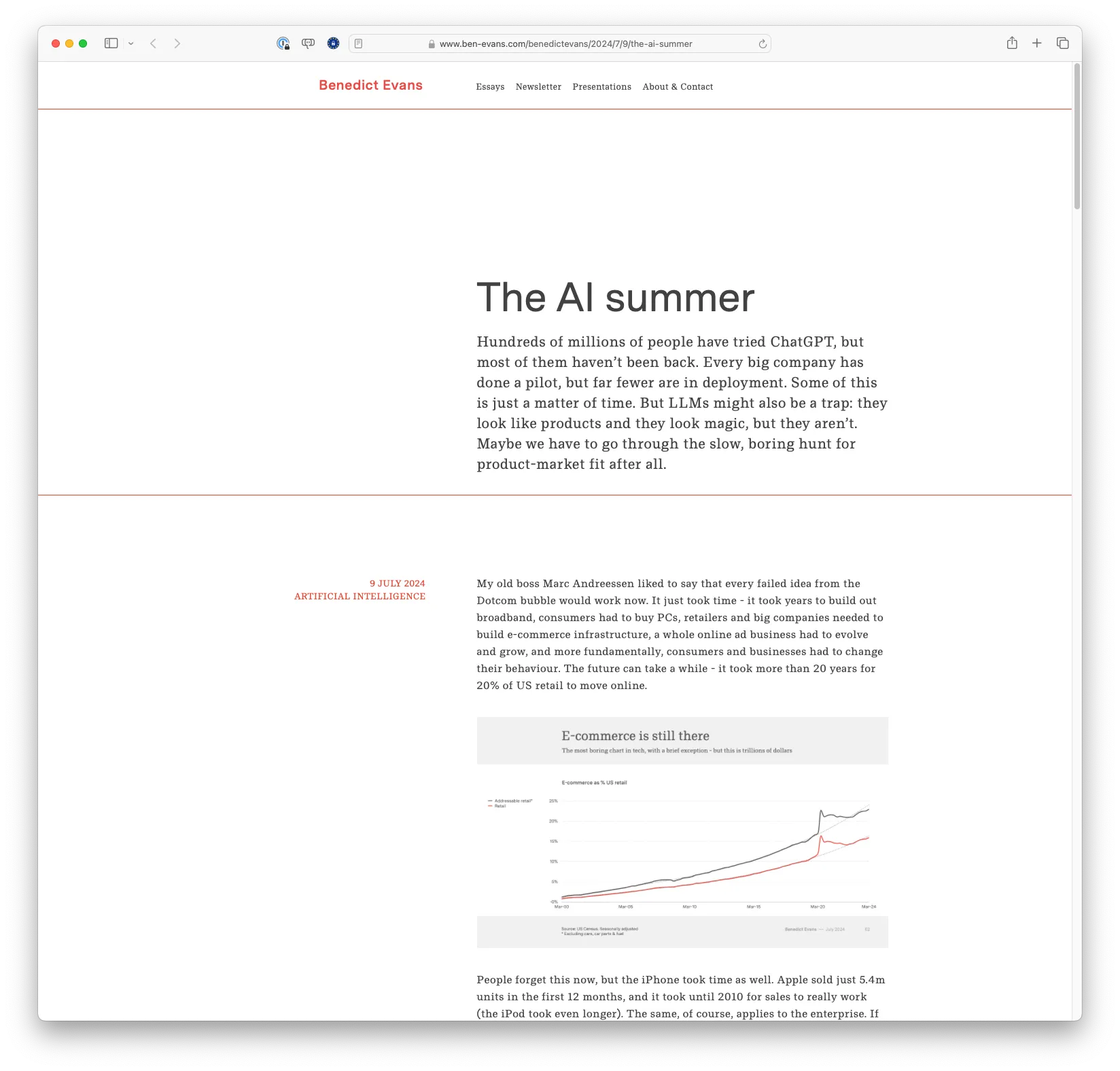
Benedict Evans discusses how the rapid adoption of technologies like ChatGPT contrasts with the slower growth of previous tech innovations like the iPhone and cloud computing. Despite a fast uptake, many users do not consistently engage with ChatGPT, revealing gaps between initial hype and sustained utility.
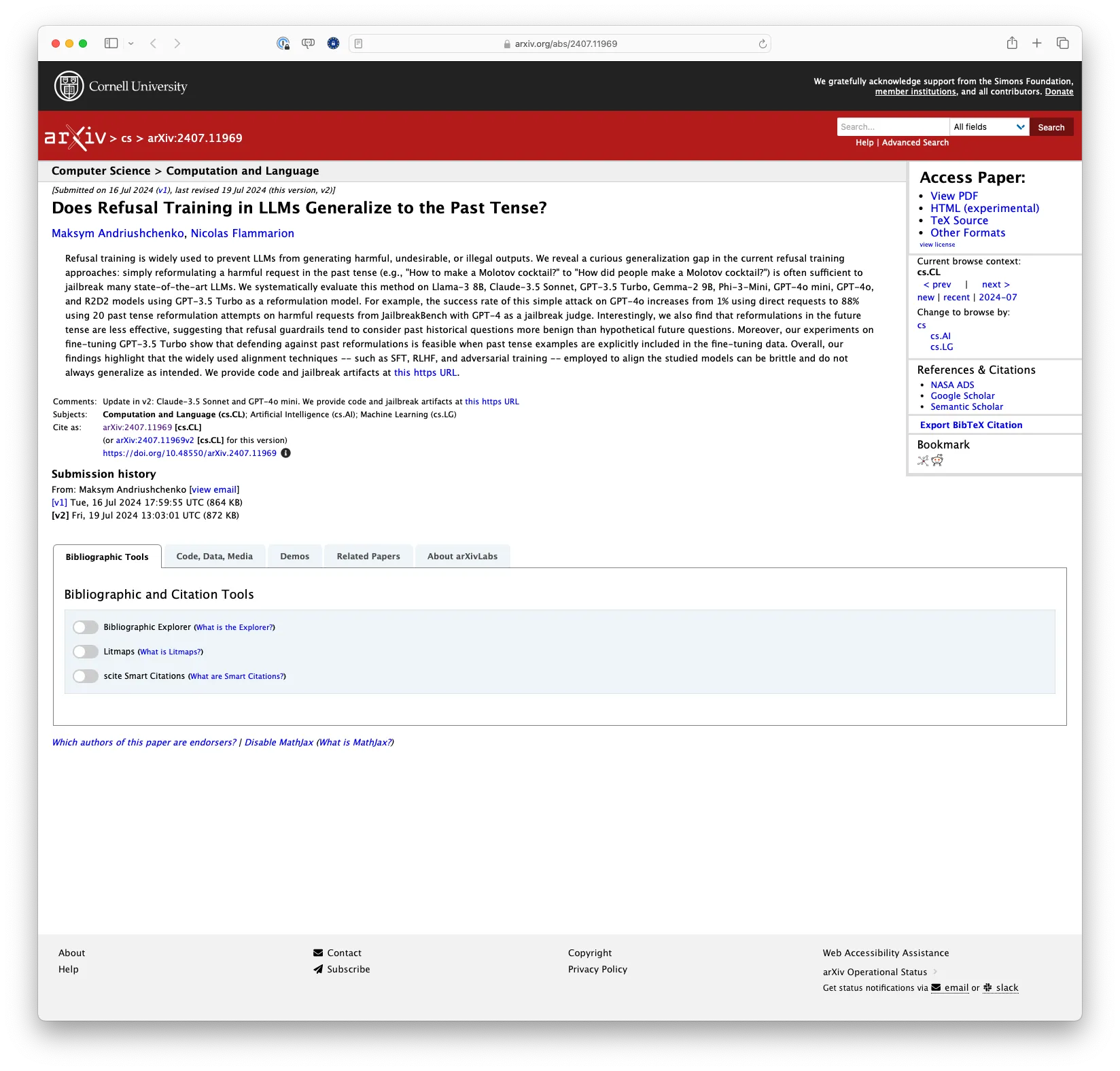
This research paper investigates the limitations of refusal training in large language models (LLMs). The study reveals that rephrasing harmful prompts in the past tense can circumvent refusal mechanisms in many state-of-the-art LLMs, highlighting a significant generalization gap. The study's findings raise concerns regarding the robustness of current LLM alignment techniques and suggest that including past tense examples in training data can improve defenses.

Joe Carlsmith explores the need for a gentle approach to artificial intelligence (AI), emphasizing the importance of seeing AI not just as a threat or competitor but as an opportunity for mutual understanding and coexistence. He argues that while AI presents risks, it also offers a chance to foster new relationships based on curiosity and respect, akin to interspecies encounters in nature.
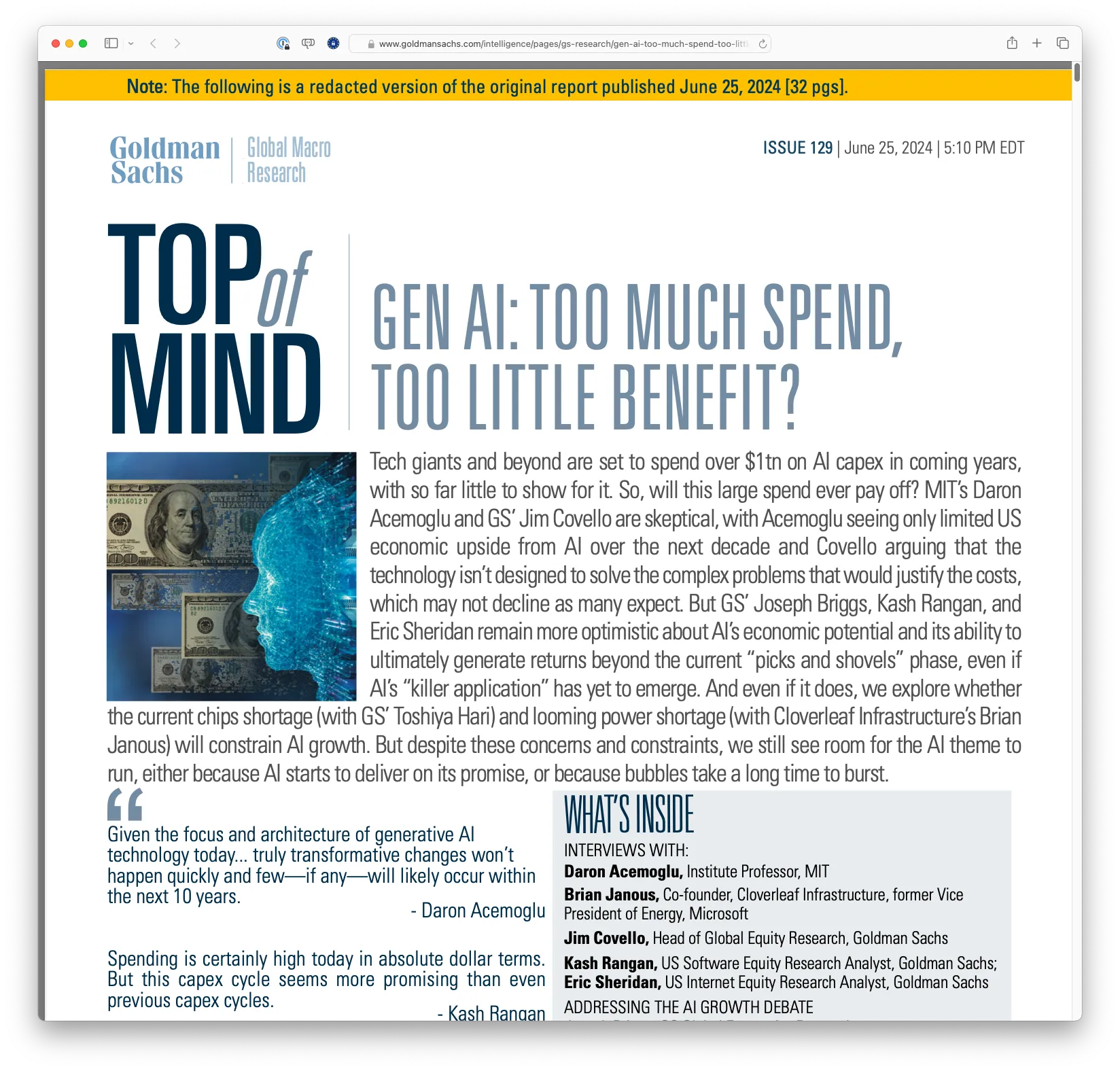
The article from the Goldman Sachs Research Newsletter questions whether the anticipated trillion-dollar investment in generative AI technology will yield significant returns, as analysts like MIT's Daron Acemoglu and GS's Jim Covello express skepticism over AI's current capabilities to solve complex problems, suggesting only limited economic upside. Meanwhile, others like GS's Joseph Briggs and Kash Rangan remain optimistic about AI's long-term potential to boost productivity and profitability, despite current concerns about chip shortages and the strain on power infrastructure, indicating a divided outlook on AI's future impact on industries and economies.

Kijai's LivePortrait has released an update allowing users to drive avatar expressions using their webcam, with improved speed, efficiency, and support for Mac, along with the inclusion of the much-anticipated Vid2Vid workflow. This update, available on GitHub, can be run locally or on the web via RunComfy, although the real-time workflow currently requires local installation.

This article provides unique insights into prompt engineering that aren't covered in other tutorials. It explains the autoregressive nature of LLMs, where the generation of content depends on predicting the next word based on previous text. The guide also highlights various techniques such as breaking down problems into smaller steps and using specific examples to improve the effectiveness of the models.
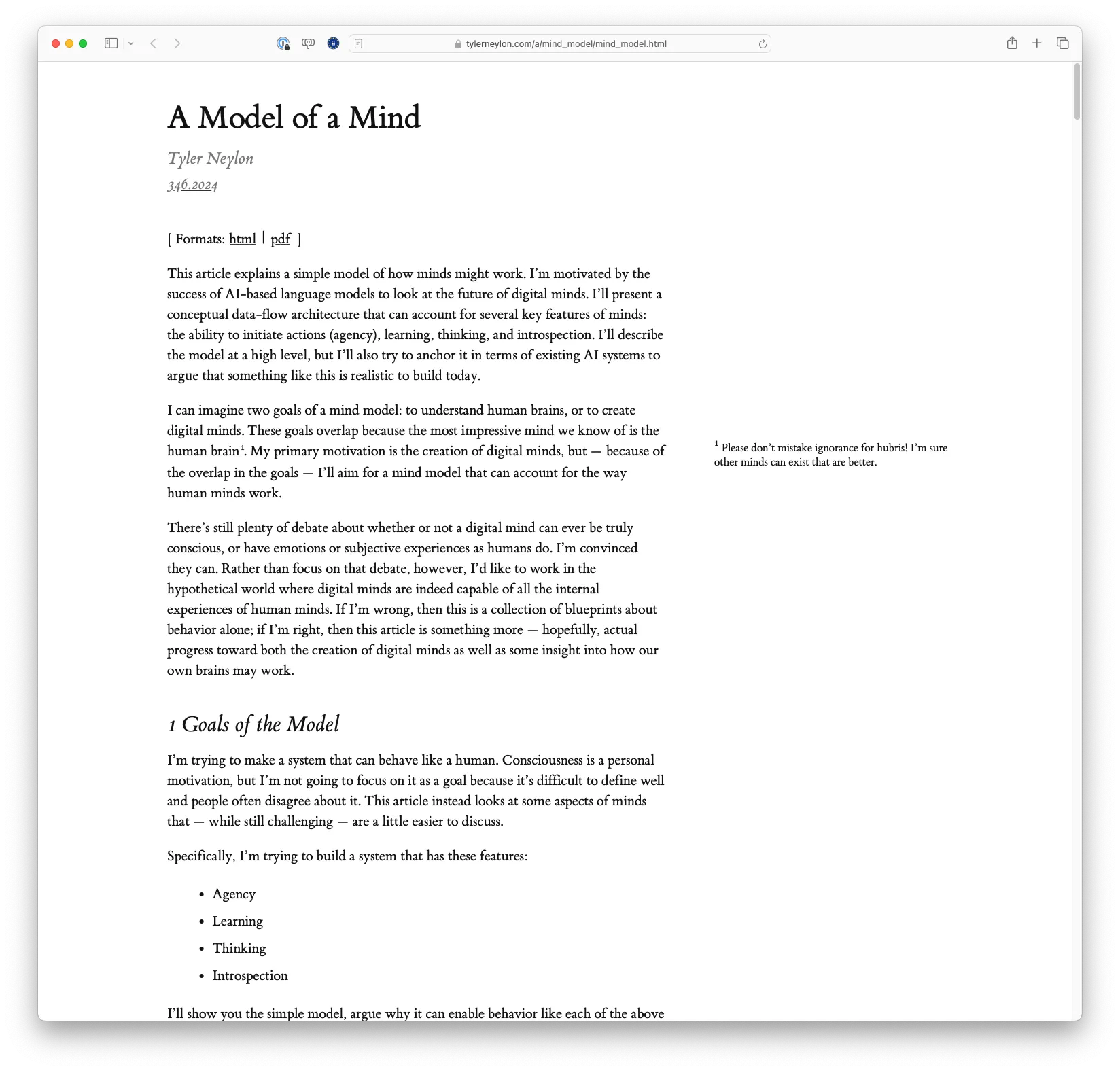
Tyler Neylon's article, "A Model of a Mind," explores a conceptual framework for understanding and constructing digital minds inspired by the success of AI-based language models. The model delves into agency, learning, thinking, and introspection, proposing a high-level data-flow architecture grounded in existing AI systems to argue for its feasibility. Neylon aims to create digital minds that resemble human brains, emphasizing the potential overlap between understanding human brains and developing digital counterparts. The article also addresses emotional states and memory, distinguishing between story memory and action memory. Neylon argues for the practical applications and challenges of building such a model, ultimately suggesting that digital minds could eventually achieve personhood and provide insights into human consciousness.

Garandor offers advanced watermarking solutions for images, audio, and soon video, ensuring digital content protection without altering perceptible quality. Their technology enables reliable tracking, ownership verification, and protection against misuse by generative AI, with plans for secure cloud storage and API integration. The extent to which this kind of thing can stay ahead of the underlying generation tech remains to be seen.
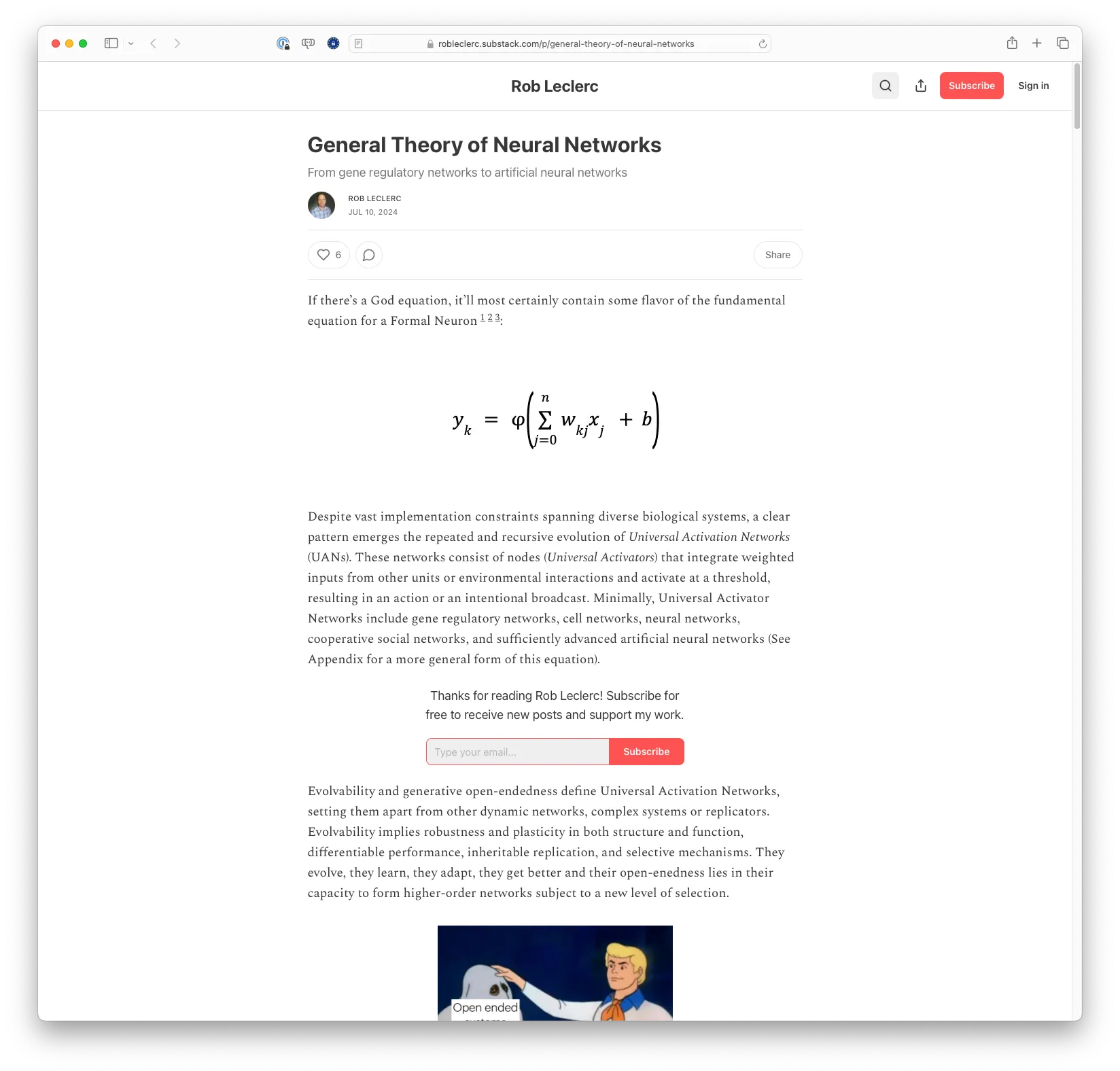
Rob Leclerc explores the concept of Universal Activation Networks (UANs), highlighting how diverse systems from gene regulatory networks to artificial neural networks exhibit common principles of evolvability and open-endedness. He argues that these systems, sharing a familial computational structure, demonstrate robustness and adaptability, forming a basis for a unified theory of neural networks. Key themes include the critical importance of network topology over implementation details and the potential for pruning techniques to reveal fundamental, efficient network architectures.

The paper introduces Q*, a framework designed to enhance the multi-step reasoning capabilities of Large Language Models (LLMs) by employing deliberative planning. Q* uses a plug-and-play Q-value model as a heuristic to guide LLMs through their decoding process, preventing errors without needing fine-tuning for each task. Extensive experiments demonstrate that Q* provides superior performance on various datasets, making the LLMs more reliable and efficient.

In this episode of The True Purpose Podcast, host Will Stewart talks with Alex Zarifeh, Director of Careers and EPQ at Arthur Terry School. Alex discusses his mission to encourage informed decision-making and develop work-ready skills among students. He shares insights on building a sustainable Careers Strategy that promotes social mobility and supports young people from all backgrounds in proactively thinking about their future careers.
OpenAI is developing a new reasoning technology called "Strawberry," aimed at enhancing the ability of AI models to perform deep research by autonomously navigating the internet and handling complex, long-term tasks. The project involves a post-training approach that could significantly improve AI's reasoning capabilities, potentially allowing models to achieve human-like or even superhuman intelligence.
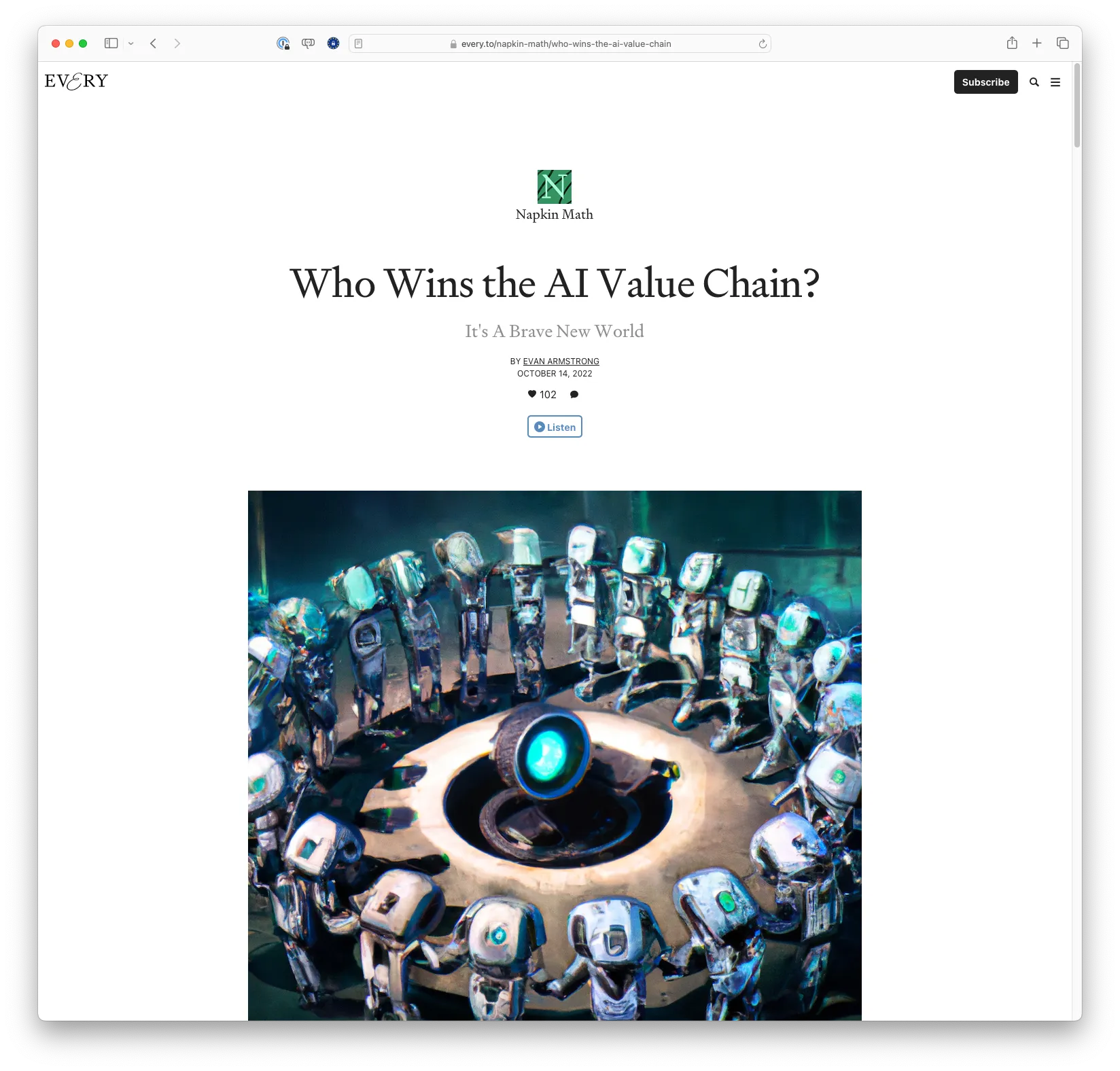
The article "Who Wins the AI Value Chain?" explores the competitive landscape of AI and its potential threats. It distinguishes between a doomsday AI scenario and a more realistic scenario where AI upends market dynamics, concentrating wealth among a few. The piece attempts to map out the AI value chain by focusing on five key activities: Compute, Data, Foundational Model, Fine Tune, and End User Access Point, and provides insights into how different types of companies might succeed or fail in these areas.

Andreessen Horowitz (a16z) offers an investment thesis focusing on AI scribes. These AI-powered assistants can transcribe conversations, summarize insights, and even take follow-up actions, making them a cost-effective alternative to human scribes in various fields. Companies like Freed AI, Scribenote, Rilla, Granola, and Aqua are highlighted for their innovative AI scribe solutions.
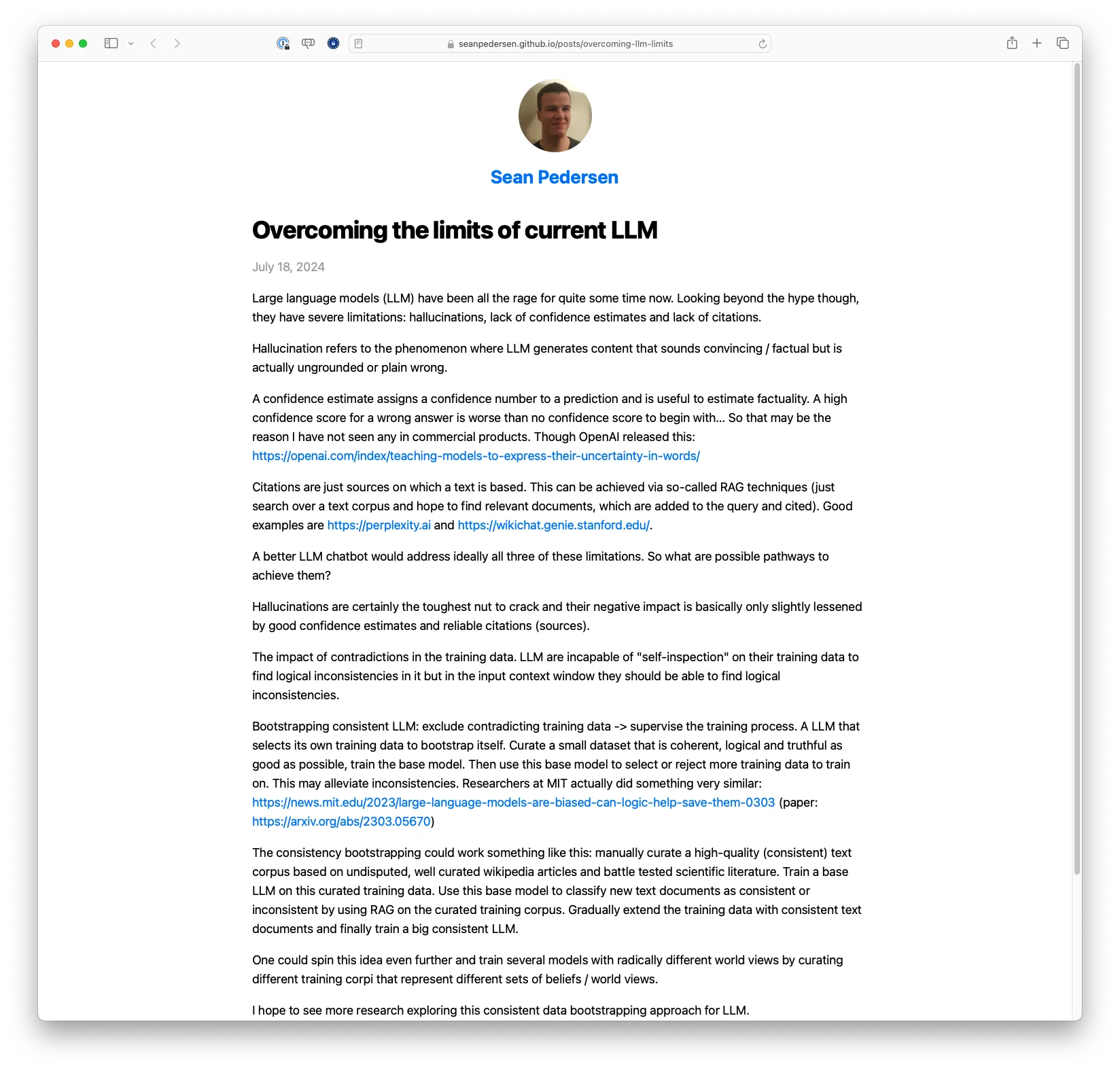
Large language models (LLMs) have limitations such as hallucinations, lack of confidence estimates, and citations. Addressing these issues involves techniques like bootstrapping consistent data, supervised training, and logical inconsistency detection. Research is exploring ways to improve LLM performance by creating more consistent and reliable AI models.

Yohana is a digital personal assistant service designed to support busy families by handling routine tasks and everyday chores. By outsourcing these tasks, families can focus more on their personal well-being and family connections. With features like meal planning, travel arrangements, and appointment bookings, Yohana aims to help families save up to 8 hours per month.
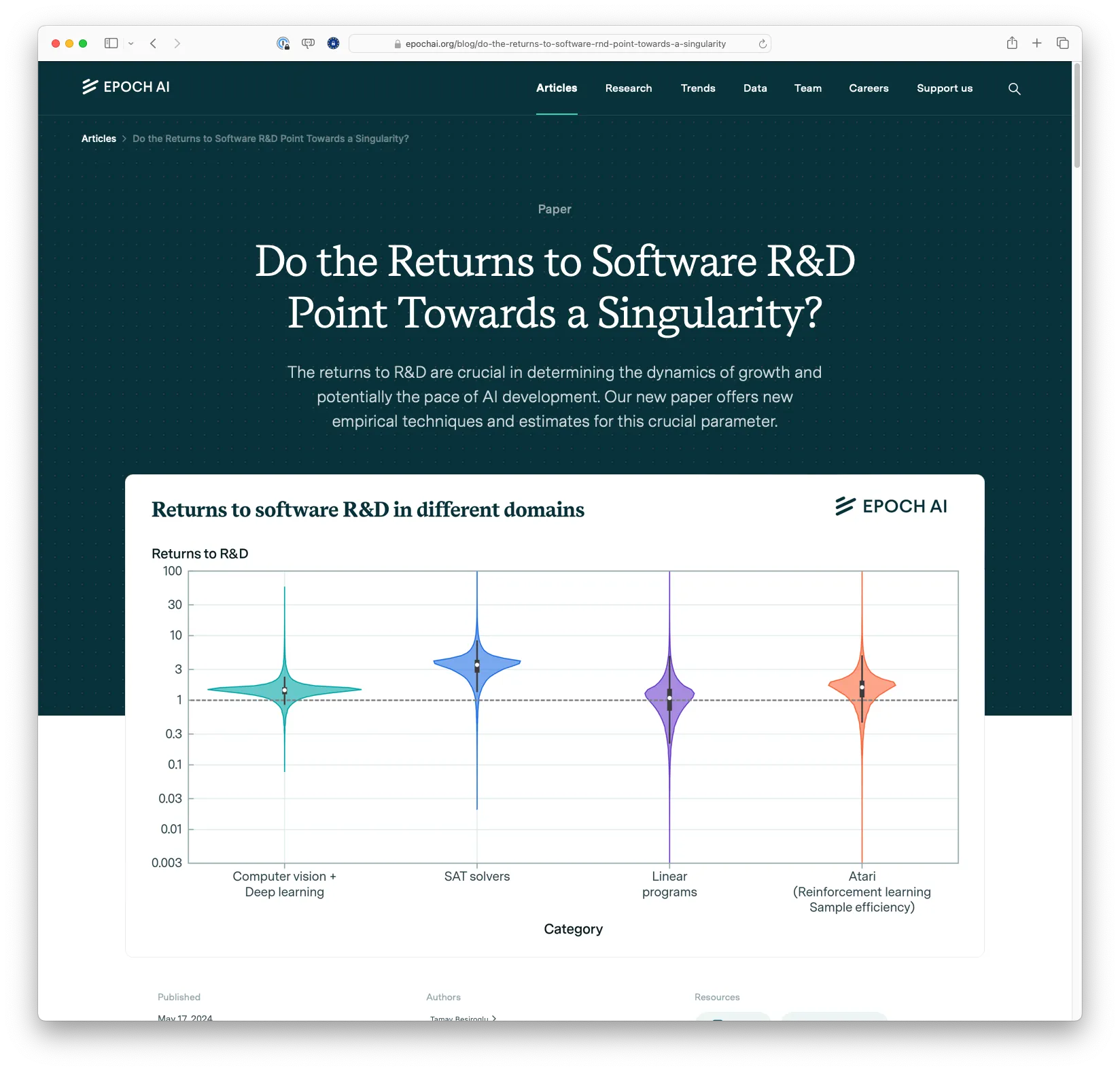
The article discusses whether the returns to software R&D are accelerating towards a singularity, where AI-driven improvements in software could lead to exponentially increasing technological progress. The authors explore models of idea production and present empirical estimates, particularly focusing on domains like computer chess, to understand the dynamics of AI-driven R&D and its potential to result in hyperbolic growth if the returns to research effort exceed unity.
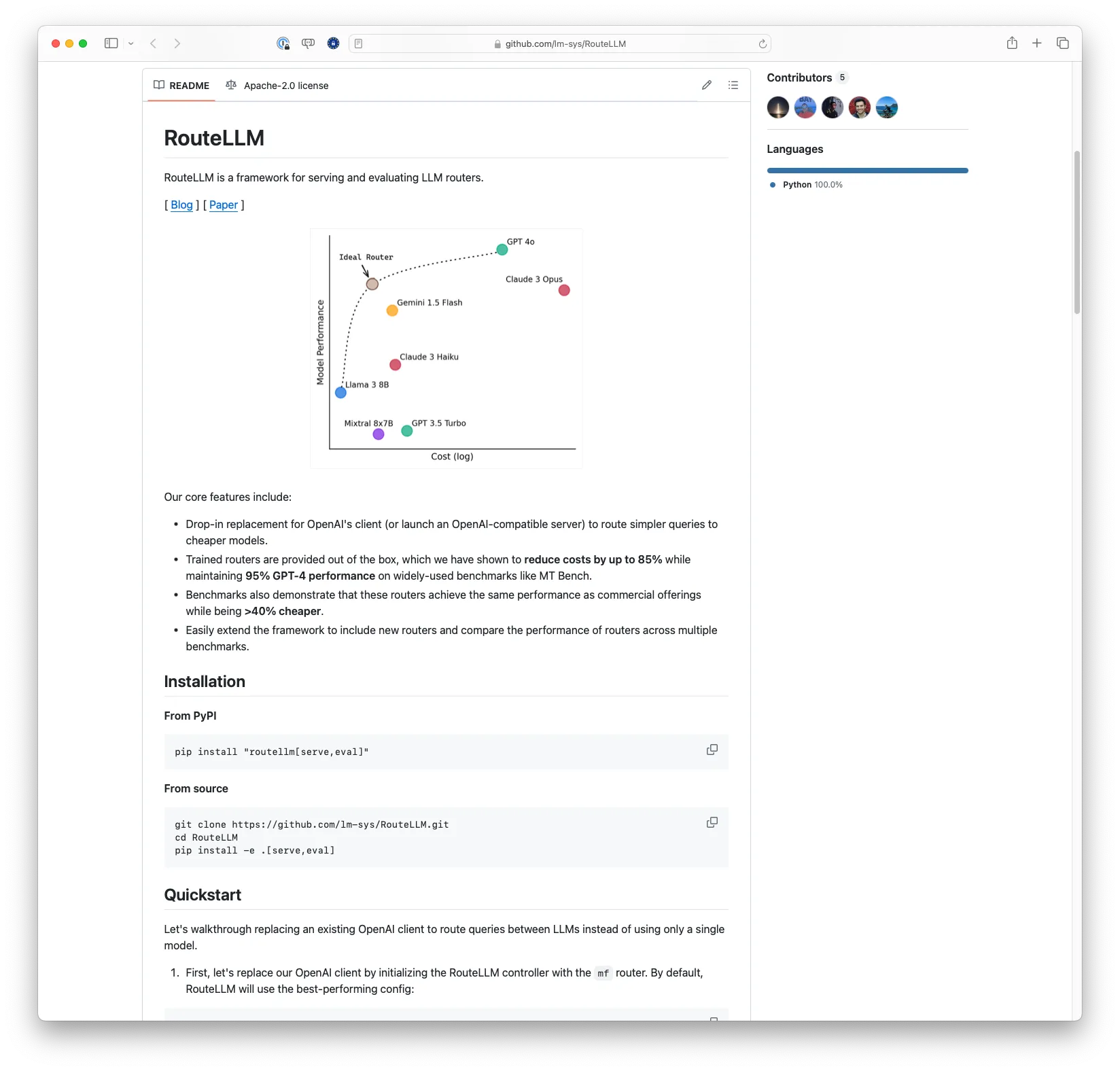
RouteLLM is a framework designed to serve and evaluate LLM routers. It helps in reducing language model (LLM) costs by routing simpler queries to cheaper models while maintaining performance quality. The framework comes with pre-trained routers that could potentially cut costs by up to 85% while retaining 95% of GPT-4's performance.
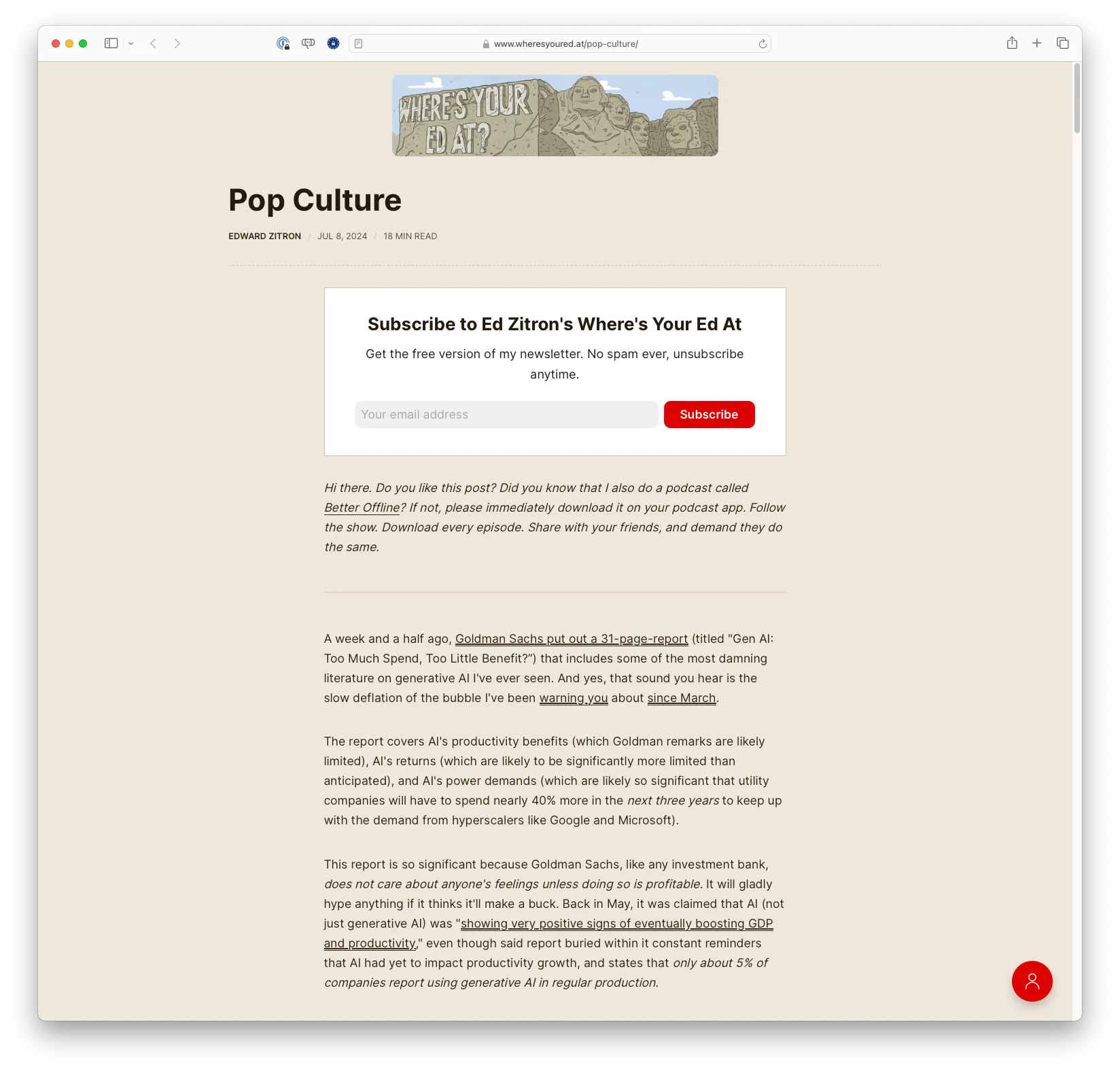
Goldman Sachs released a report that criticizes the hype around generative AI, suggesting that its productivity benefits, returns, and power demands are far lower than anticipated. The report includes insights from experts like Daron Acemoglu, who doubts AI's ability to significantly impact GDP or productivity in the near future. It also highlights the enormous costs and infrastructural challenges associated with scaling AI technologies.

This course, led by Andrej Karpathy, guides you through building a Storyteller AI Large Language Model (LLM) from scratch using Python, C, and CUDA. It covers all essential topics such as language modeling, machine learning, transformer models, optimization, and even deployment, with a focus on hands-on learning and minimal prerequisites. By the end, you'll gain a thorough understanding of AI, LLMs, and deep learning.
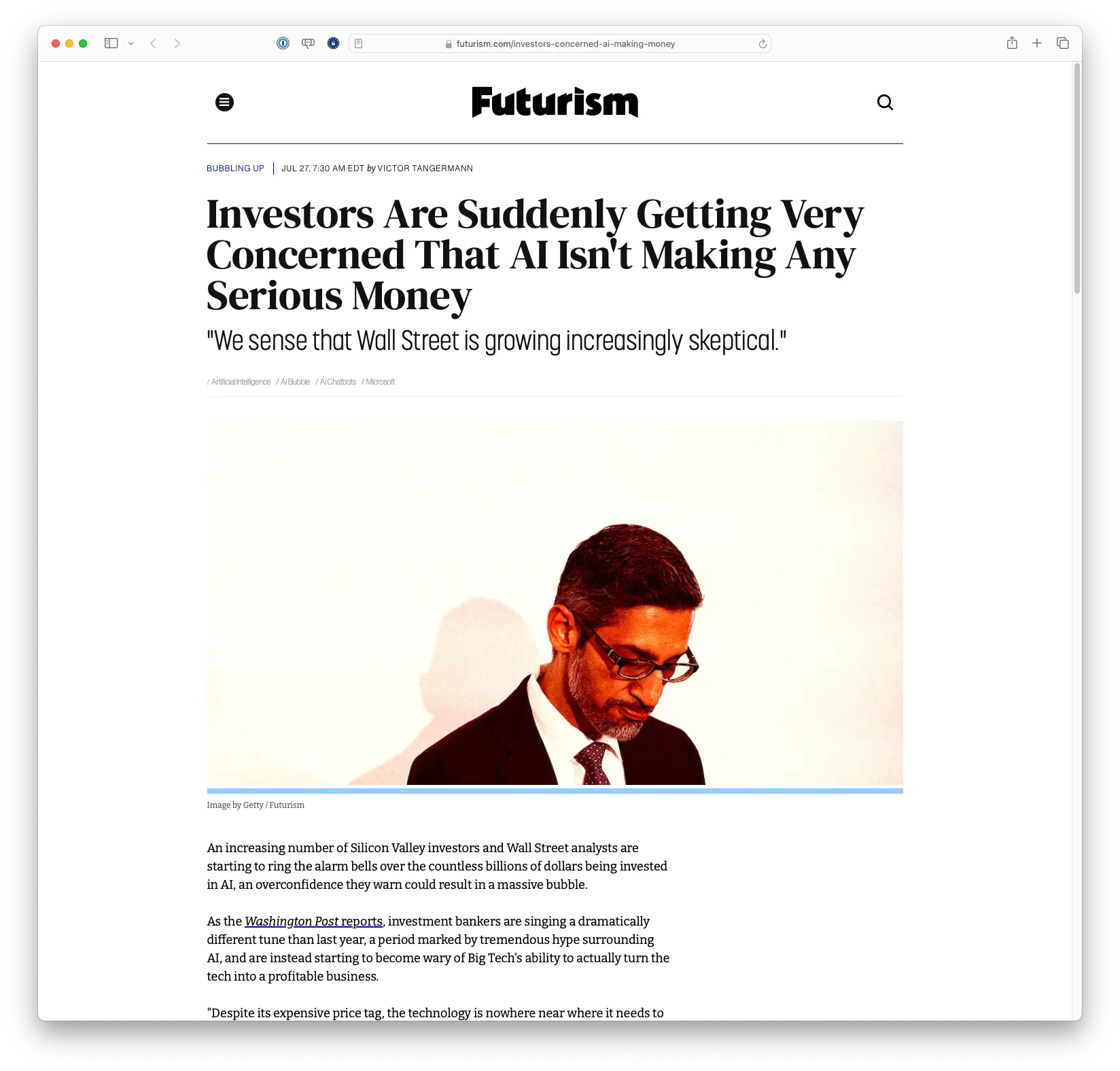
Silicon Valley investors and Wall Street analysts are becoming increasingly wary of the massive investments in AI technology, fearing it could lead to a financial bubble. Reports indicate that despite significant spending, AI is not generating substantial profits, leading to skepticism on Wall Street. Google, Microsoft, and Meta are facing similar challenges as they pour resources into AI without clear monetization plans.
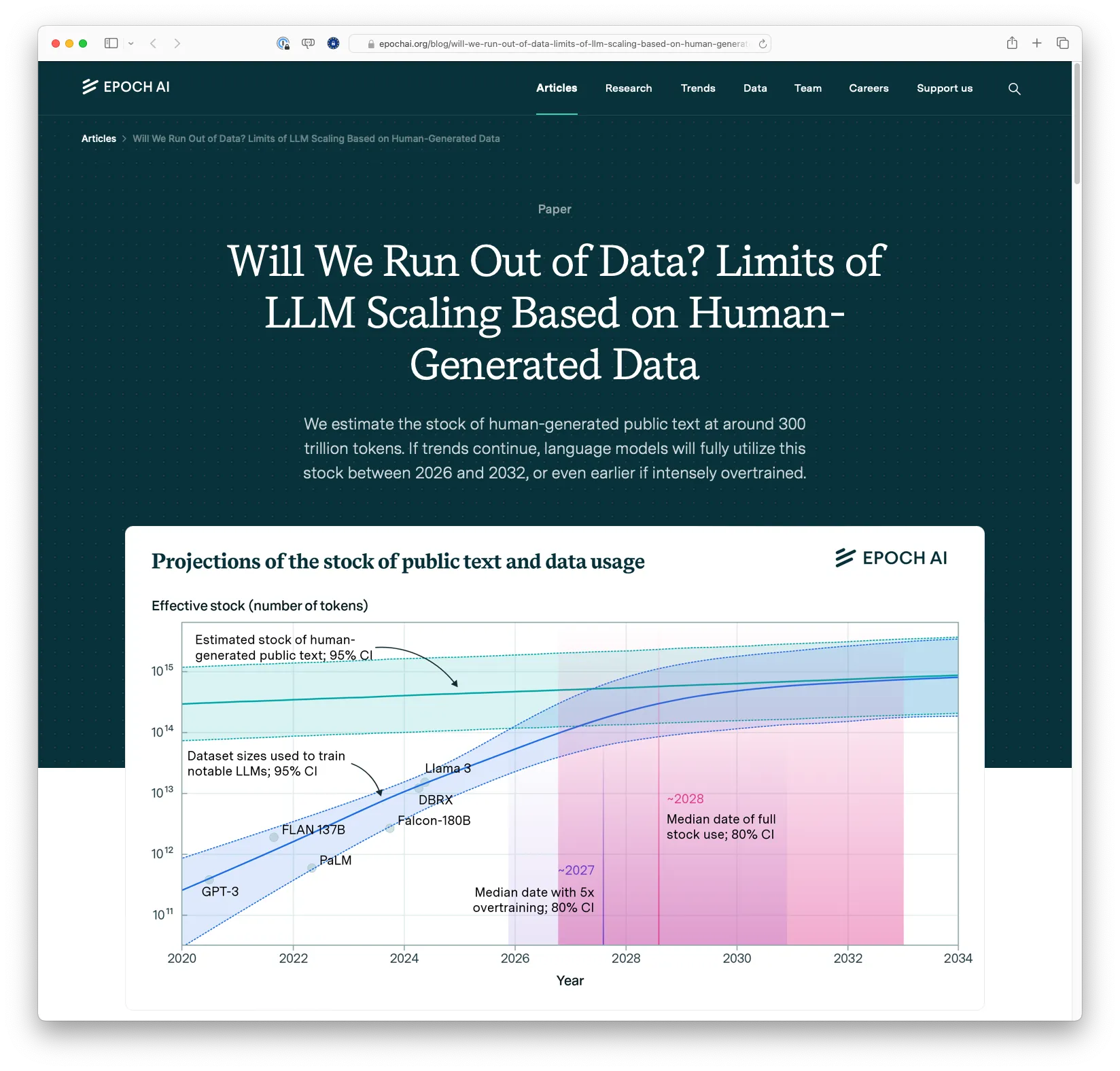
The article discusses the potential limits of data availability for training large language models (LLMs). It estimates the current stock of human-generated public text at around 300 trillion tokens and projects that this data could be fully utilized between 2026 and 2032, depending on various scaling strategies. The piece also highlights recent findings that suggest effective ways of using and extending current data stocks, including overtraining models and utilizing multiple epochs of training data.
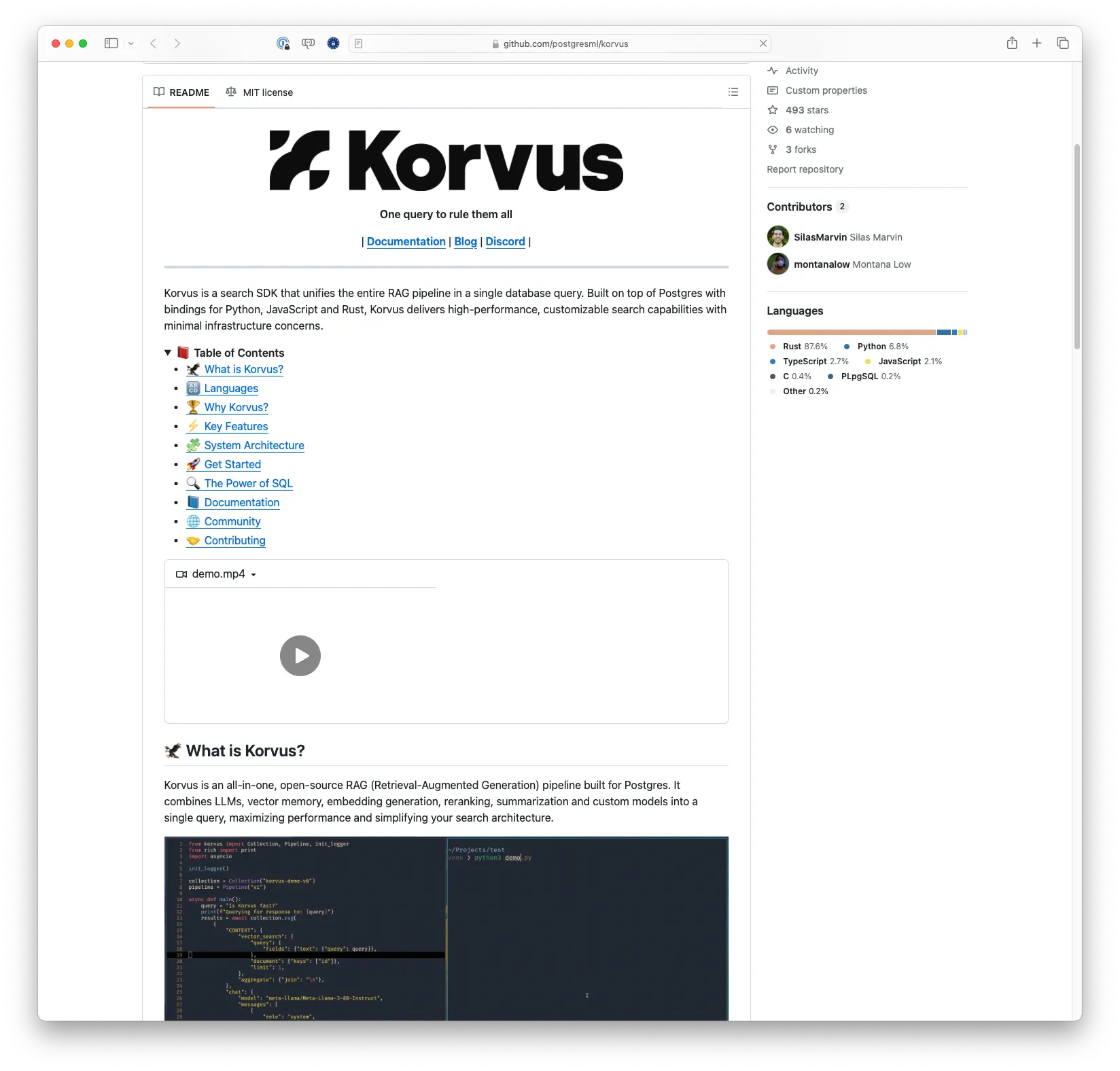
Korvus offers a unified search SDK that combines multiple RAG (Retrieval-Augmented Generation) processes into a single Postgres query. Supporting languages like Python, JavaScript, and Rust, it is a powerful solution for embedding generation, vector memory, reranking, and more. Designed for high performance, Korvus leverages SQL's strengths to simplify and speed up complex search operations.

OpenAI has released a new video featuring Tammy Lovin showcasing Sora, a new video platform being rolled out to more creatives like digital VFX pioneers, architects, and creative entrepreneurs. The video highlights various uses and applications of Sora in different creative industries.

DeepMind's AI systems, AlphaProof and AlphaGeometry 2, have achieved a significant milestone by solving four out of six problems at the International Mathematical Olympiad (IMO), reaching a silver-medal standard. AlphaProof, a reinforcement-learning model, and AlphaGeometry 2, an improved geometry-solving system, demonstrate the potential of AI in advanced mathematical reasoning. This marks a step forward in using AI for formal proofs and solving complex math problems.

Despite the overwhelming focus on generative AI, it's important to remember that other technologies like VR and AR are still evolving. Meta has invested heavily in VR and AR but hasn't achieved mass-market appeal yet, and while Apple's device shows promise, it isn't affordable or light enough to attract widespread use. The current market for VR remains small and stagnant, even though the potential for better devices exists.
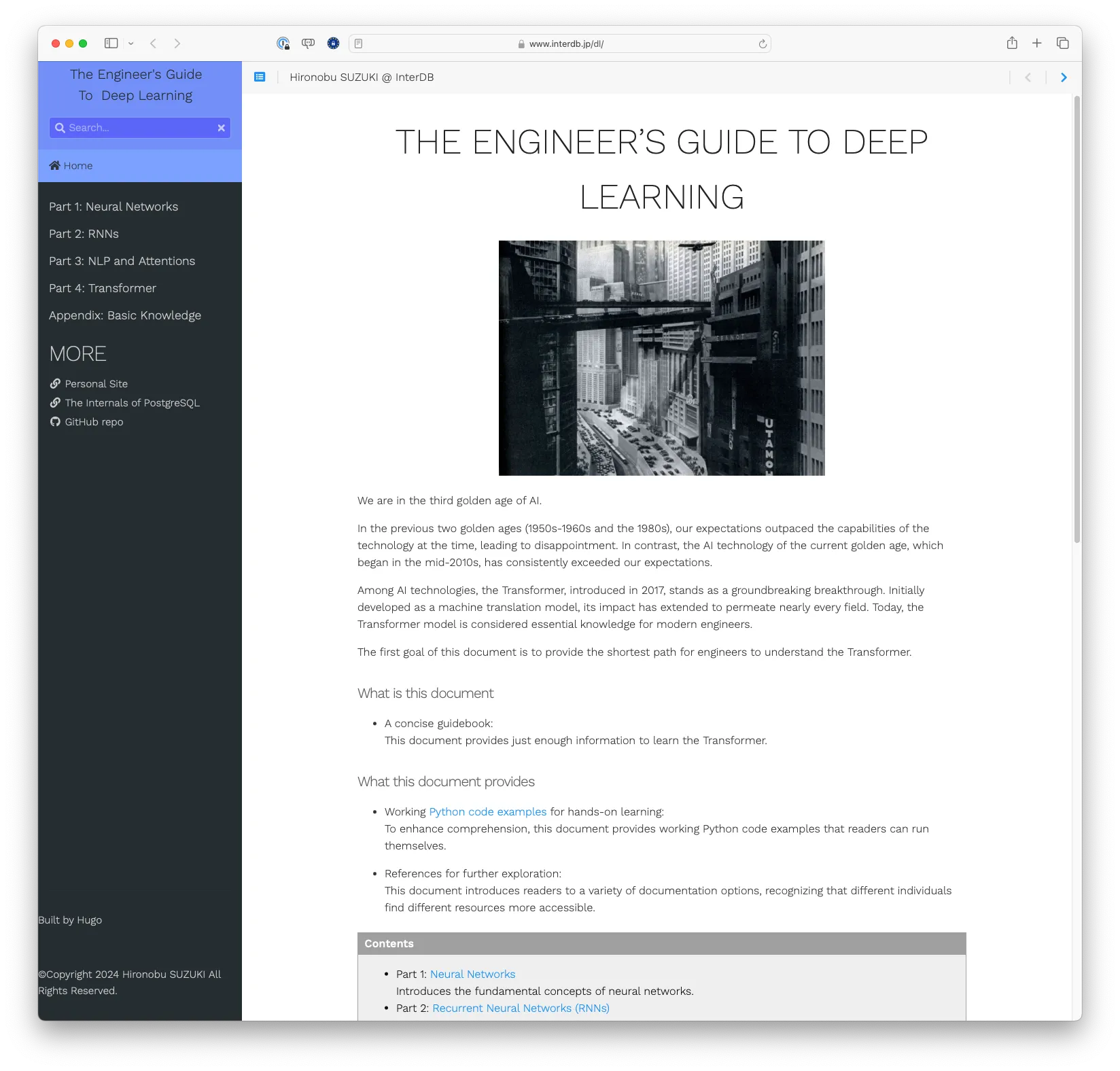
This article by Hironobu Suzuki discusses the transformative impact of AI technology, focusing on the groundbreaking significance of the Transformer model introduced in 2017. It provides a concise guide for engineers to understand and implement the Transformer, complete with working Python code examples and essential resources for further exploration. If you are looking for more of the same kind of content, try these: - The Annotated Transformer: Attention is All You Need - Transformers from Scratch - Andrej Karpathy: Neural Networks Zero to Hero - Andrej Karpathy: Let's build GPT, from scratch, in code, spelled out - 3Blue1Brown Neural Networks playlist

The exo project allows users to run their own AI cluster with everyday devices like smartphones, laptops, and home computers. It supports popular models like LLaMA and offers wide model support with dynamic model partitioning, automatic device discovery, and a ChatGPT-compatible API. An experimental project, it's open for community contributions and bug reports.
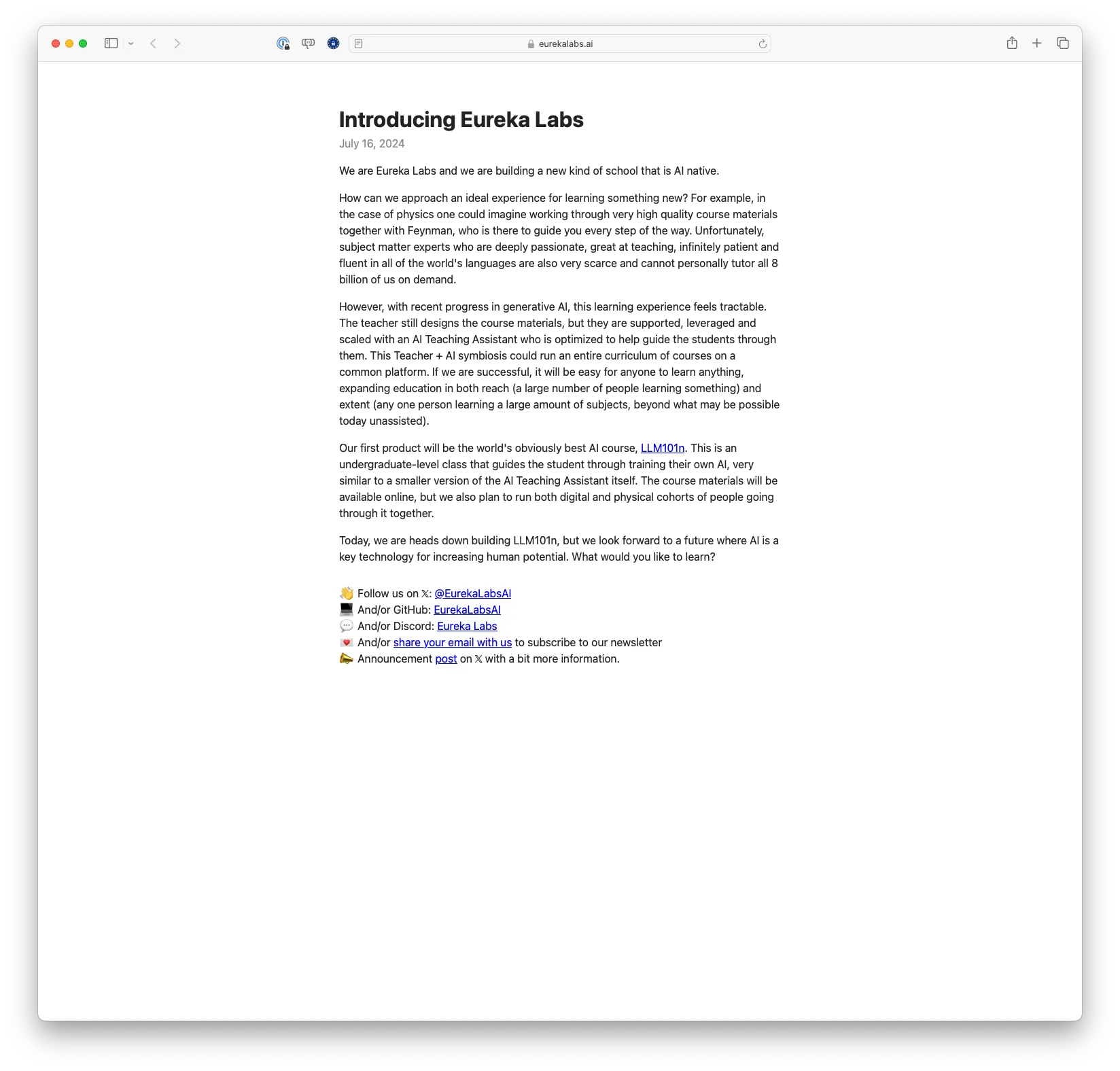
Eureka Labs is developing an AI-native school aimed at creating an ideal learning experience by leveraging generative AI. Their approach combines traditional course materials with AI Teaching Assistants to make high-quality education scalable and accessible. Their first product, LLM101n, is an online undergraduate course where students train their own AI.
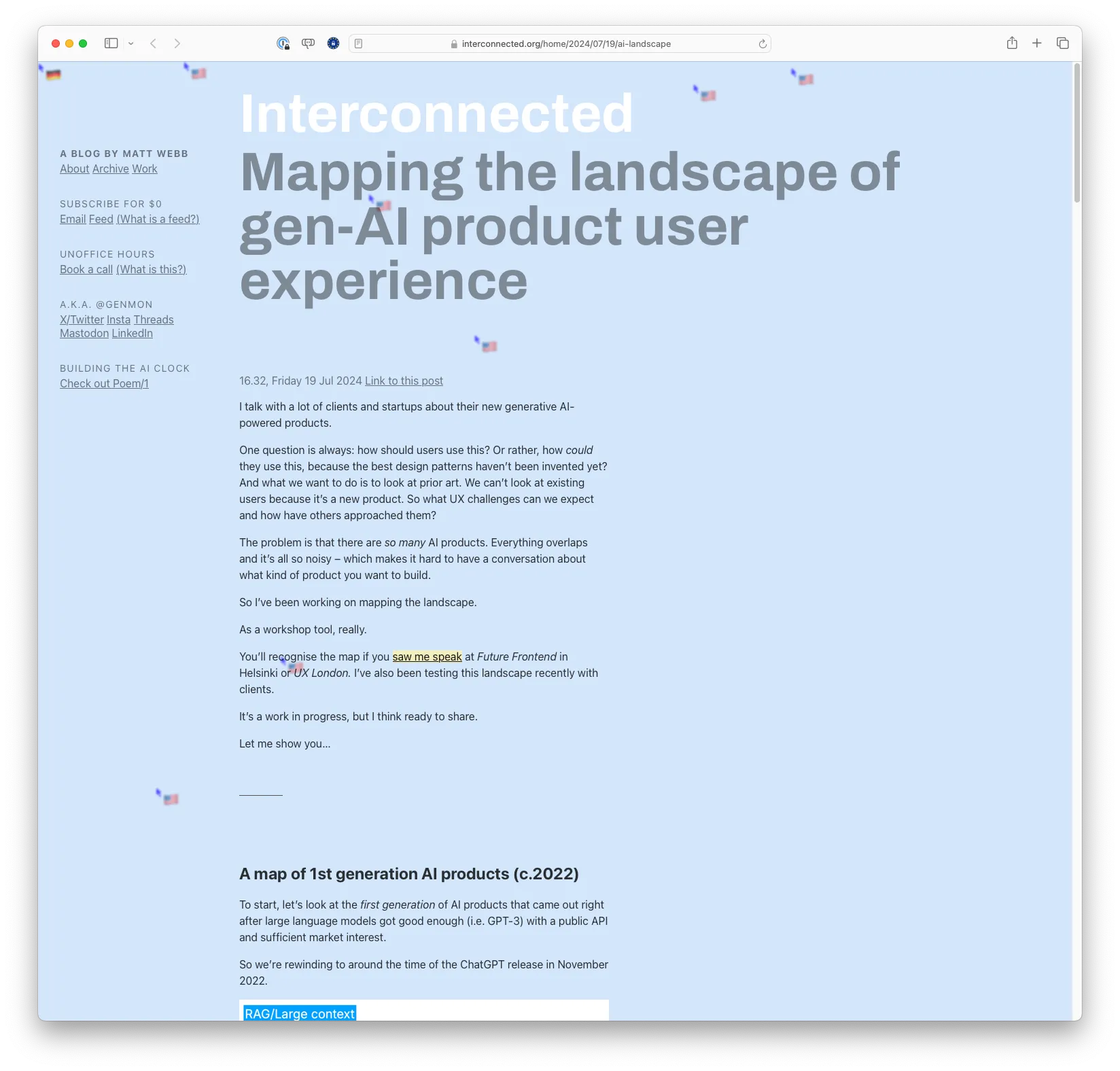
In this blog post, Matt Webb discusses the complexities of designing user experiences (UX) for generative AI (gen-AI) products, a task complicated by the sheer volume and overlap of existing AI tools. Webb introduces a 'landscape map' as a framework for understanding the new AI product space, breaking it into four primary user interactions: tools, copilots, agents, and chat interfaces. This map serves both as a guide for developing new products and as an orienting tool for existing AI products in the market.
Regards,
M@
[ED: If you'd like to sign up for this content as an email, click here to join the mailing list.]
Originally published on quantumfaxmachine.com. Also cross-published on Medium.
Was this useful?